


Forget everything you know about a normal breakfast. A Turkish breakfast is not a quick bowl of cereal. It is not a slice of toast eaten while standing at the counter.
It is a full table of small plates, warm bread, and endless cups of tea. People sit down and enjoy it slowly, often for an hour or more.
If you have ever visited Istanbul, you already know this. A Turkish breakfast is more than food. It is an experience built on tradition, fresh ingredients, and time spent with family.
This article will show you everything about this famous morning meal. You will learn what it includes, how it changes by region, and how to make it at home.
A Short History Behind the Tradition
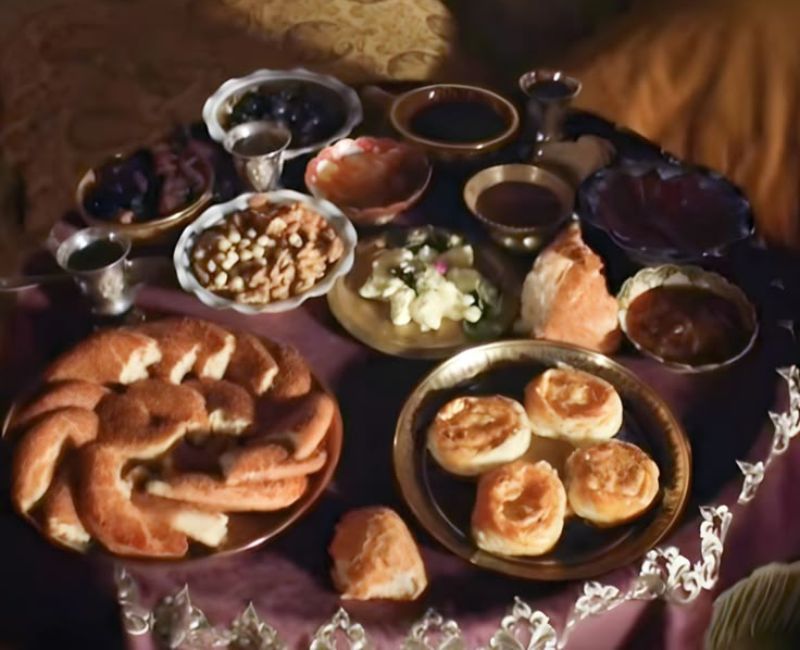
The roots of this meal go back many generations. Ottoman-era households often ate simple morning food, but over time the spread grew richer and more varied.
Farming families played a big part in shaping it. Fresh milk, homemade cheese, garden vegetables, and local honey were naturally part of daily life, so they found their way onto the table.
As cities grew, the tradition did not disappear. Instead, it became a symbol of home comfort, something people looked forward to on weekends and holidays.
Today, this history is still visible on every table. Many ingredients used in a Turkish breakfast are the same ones families have relied on for generations.
What Is Turkish Breakfast?
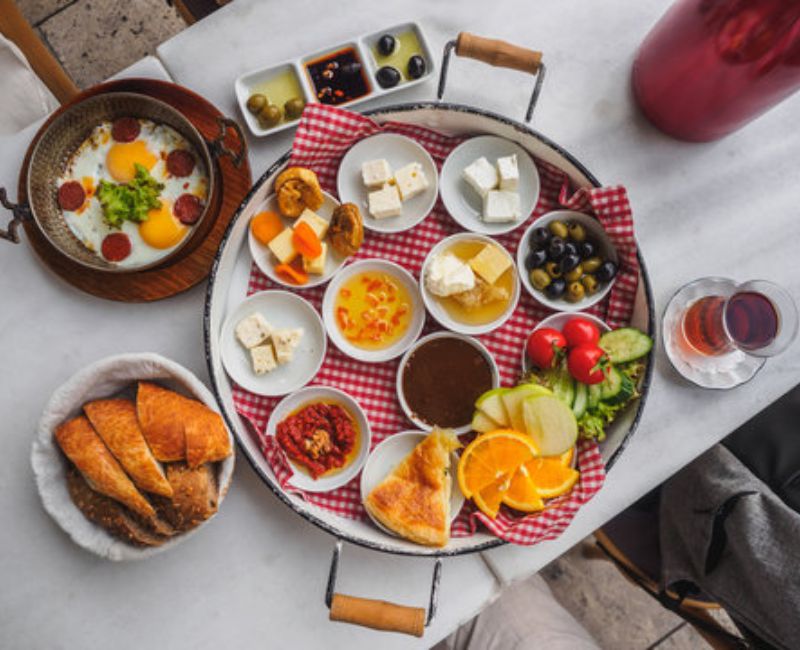
A Turkish breakfast is a spread of many small dishes. Instead of one big plate, you get many small ones.
The idea is simple: a little bit of everything. This way, every bite tastes different.
In Turkey, this meal is called “kahvaltı.” It usually includes cheese, olives, tomatoes, cucumbers, eggs, honey, jam, butter, and bread. Sometimes cured meats are added too.
The goal is not speed. The goal is to relax, talk, and enjoy good food with good company.
What makes it special is the mix of flavors. You get salty cheese and olives, sweet honey and jam, fresh vegetables, and rich butter and eggs. All in one sitting.
Main Parts of a Turkish Breakfast Table
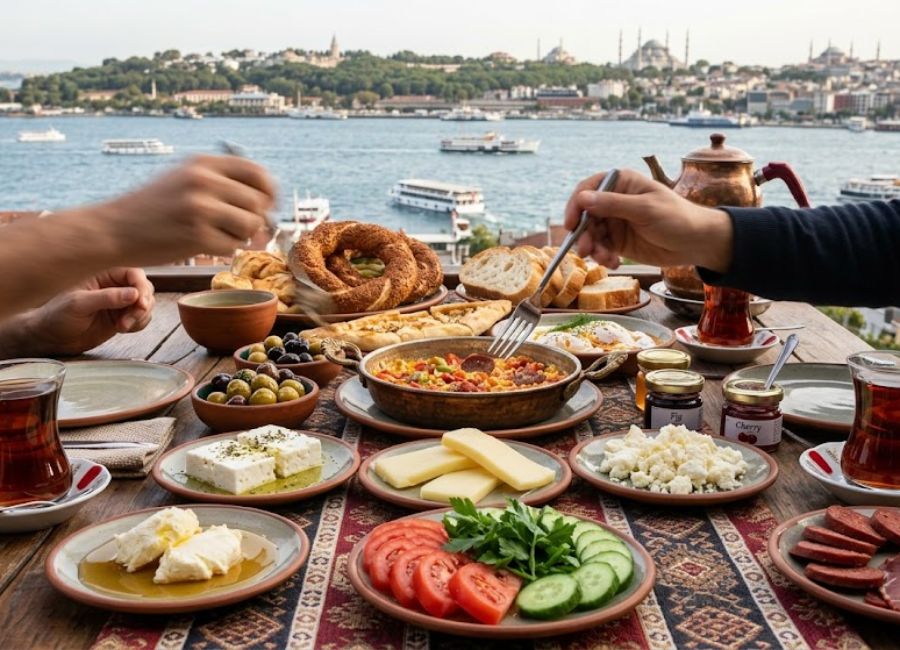
No two Turkish breakfast tables look exactly the same. But some foods almost always appear.
Cheese
Cheese is a star of any Turkish breakfast. Beyaz peynir is a soft white cheese, similar to feta.
You may also find kashar cheese, which is semi-hard and yellow. Tulum cheese is another option, aged inside a goat skin, with a strong flavor.
A good spread often has three or four cheeses on the table at once.
Olives
Olives are never missing from a Turkish breakfast. You will see both green and black types.
Turkey grows many kinds of olives. Some are soft and mild. Others are salty and cured in oil.
Eggs
Eggs come in many forms. Simple fried or boiled eggs are common.
But the real favorite is menemen. This is scrambled eggs cooked with tomatoes, peppers, and sometimes spicy sausage.
Another popular dish is çılbır. This is poached eggs served over yogurt, topped with chili butter.
Bread
Fresh bread is a must. Simit is a round bread covered in sesame seeds and is very popular.
Plain crusty bread or pide also works well. People use the bread to scoop up cheese, jam, and eggs.
Honey, Jam, and Kaymak
Something sweet always joins the table. Honey with kaymak, a thick cream, is a classic pairing.
Homemade jams are common too. Fig, cherry, and rose petal jams are favorites in many homes.
Tomatoes and Cucumbers
Fresh tomatoes and cucumbers add crunch and color. They are usually sliced thin and served plain.
Sometimes a light drizzle of olive oil is added. This lets the natural taste shine.
Cured Meats
Sucuk is a spicy garlic sausage. Pastırma is cured beef, similar to pastrami.
Both are common in heartier versions of this meal. They are often cooked lightly with eggs.
Tea
No Turkish breakfast is complete without tea. It is served hot, in small tulip-shaped glasses.
Tea is refilled again and again during the meal. It is just as important as the food itself.
How Turkish Breakfast Changes by Region
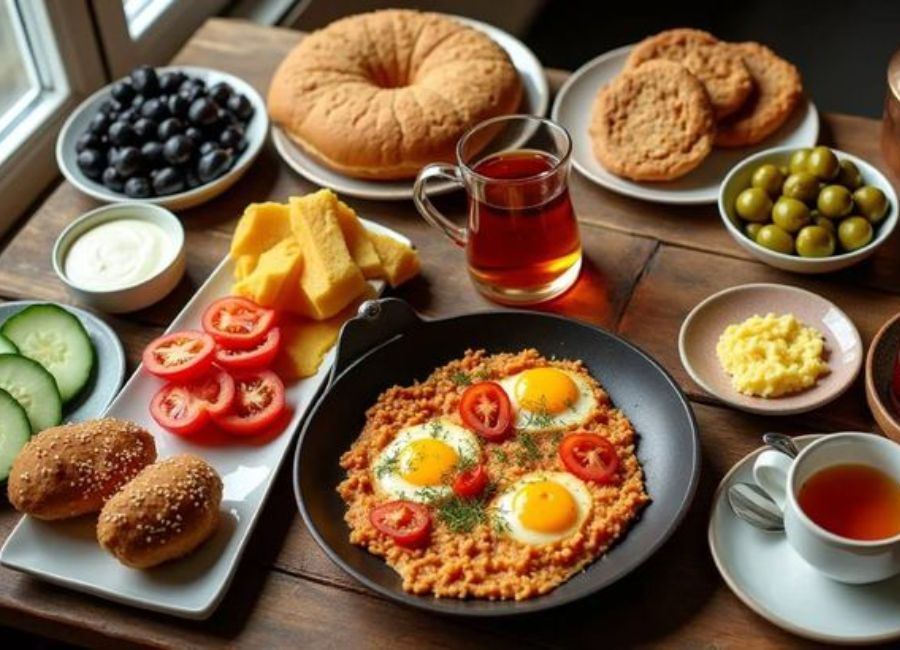
The basics stay the same across Turkey. But small differences make each region unique.
In the Aegean region, people use more olive oil and fresh herbs. Local vegetables also play a bigger role here.
In the Black Sea region, cornbread is common. A local cheese called kolot often replaces other cheeses.
In the southeast, near Gaziantep, food is spicier. Local cheeses and pistachio sweets sometimes join the table.
Istanbul mixes all these styles together. A hotel buffet in the city can feel like a tour of the whole country.
If you want to try many dishes at once, Istanbul is a great place to start. If you are planning a trip, knowing the best time to visit Turkey can help you enjoy outdoor breakfast spots and local food experiences even more.
Why Turkish Breakfast Became So Popular
In the last ten years, this meal has become famous around the world. Social media is one big reason.
Photos of colorful, full tables spread quickly online. Food bloggers and travelers love sharing them.
But it is not just about looks. People also love the idea behind it: a slow, shared meal instead of a rushed one.
Because of this, many restaurants outside Turkey now offer their own version. Cities like London and Los Angeles have places serving this style of breakfast.
These restaurants try to copy the relaxed feeling of a real Turkish home. Guests are meant to stay, eat slowly, and enjoy many small plates.
How to Make Turkish Breakfast at Home
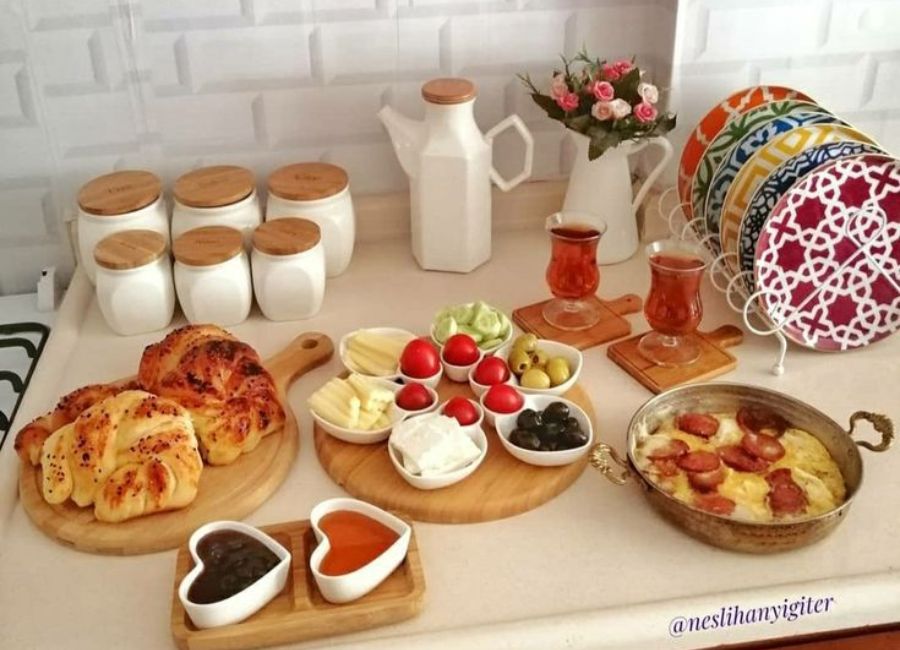
You do not need to fly to Turkey to enjoy this meal. With a little planning, you can build your own table at home.
Start with cheese. A good deli usually sells feta-style cheese and a semi-hard yellow cheese.
Next, slice fresh tomatoes and cucumbers. Add a small bowl of green and black olives.
For eggs, try menemen. Cook onions, peppers, and tomatoes in olive oil. Add beaten eggs and cook until just set. Season with salt, pepper, and chili flakes if you like heat.
Do not skip the sweet items. If you cannot find kaymak, mascarpone or clotted cream works well. Pair it with good honey and a jar of fig or cherry jam.
Warm some crusty bread, or bake simit at home if you have time. Brew strong black tea and serve it in small glasses.
Place everything on a large table. Let guests serve themselves a little of everything. Do not rush anyone.
Is Turkish Breakfast Healthy?
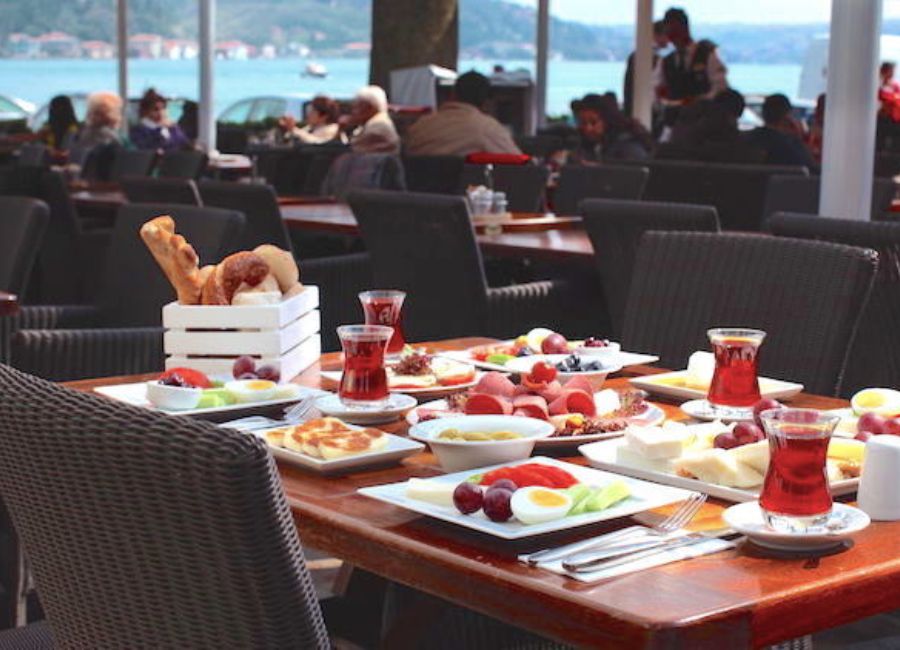
This meal can actually be quite balanced. It has protein from eggs and cheese, healthy fats from olives, fiber from vegetables, and natural sugar from honey and jam.
Because it is eaten slowly, in small portions, it also supports mindful eating. People tend to feel full without overeating.
Still, some parts should be enjoyed in moderation. Sucuk and sweet jams are tasty, but best in small amounts.
Overall, fresh vegetables, good dairy, and whole bread make this a fairly healthy way to start the day.
Vegetarian Options on the Table
Good news for vegetarians: most of this meal is already meat-free. Cheese, olives, eggs, bread, honey, and vegetables make up the bulk of the spread.
Only sucuk and pastırma need to be removed or skipped. Everything else can stay exactly as it is.
This makes it easy to host a vegetarian-friendly version at home. Simply leave the cured meats off the table and add extra cheese or a second vegetable dish instead.
Vegans can also enjoy parts of this meal, though some substitutions are needed. Plant-based butter, dairy-free cheese, and maple syrup instead of honey can help recreate a similar experience.
Turkish Breakfast Culture and Manners
Sharing this meal is about more than food. It is about culture and connection.
In Turkish homes, breakfast is often the one time the whole family sits together. This happens especially on weekends.
Guests are always welcomed warmly. Hosts often insist that visitors try a bit of everything on the table.
Tea plays a big role here too. Conversations can last for hours, with glasses refilled again and again.
If you are invited to a Turkish home for breakfast, expect a warm welcome. Be ready to stay a while.
Best Places to Try Turkish Breakfast
If you visit Turkey, skip the hotel buffet when you can. Try a local breakfast spot instead.
In Istanbul, neighborhoods like Kadıköy and Beşiktaş have cozy breakfast houses. Exploring these areas is also one of the best things to do in Turkey Istanbul for food lovers. Prices are usually fair, and portions are generous.
Along the Black Sea coast, small family cafes serve their own version. Many use ingredients grown right nearby.
Trying this meal in a small village, with mountains or sea views nearby, can be unforgettable. The setting adds to the whole experience.
Turkish Breakfast Drinks Beyond Tea
Tea is the star drink, but it is not the only one. Turkish coffee sometimes appears too, though it is more common later in the day.
Fresh fruit juice is often served alongside a Turkish breakfast, especially orange juice. It adds a light, refreshing note next to the richer foods.
Ayran, a salty yogurt drink, is another option some families enjoy. It pairs well with spicy sucuk or heavier egg dishes.
Turkish Breakfast on Special Occasions
During holidays like Ramadan Bayram, this meal becomes even bigger. Families add extra sweets, pastries, and treats to the table.
Guests often visit multiple homes on these days. Each host offers their own version of a Turkish breakfast, so people end up trying several spreads in one morning.
Weddings and family gatherings in Turkey may also start with a shared breakfast. It sets a warm, relaxed tone before the main celebration begins.
Tips for Enjoying a Turkish Breakfast Buffet
Many hotels in Turkey offer breakfast buffets inspired by this tradition. Some of the best hotels in Istanbul are especially known for their extensive Turkish breakfast spreads. Knowing a few tips can help you enjoy it fully.
Start small. Take a little of each item first, rather than filling your plate with just one thing. This way, you get to taste more.
Pace yourself. A Turkish breakfast is meant to be slow, so avoid rushing through the buffet line. Sit, relax, and go back for more later.
Try something new each time. A buffet like this often includes regional dishes you may not recognize right away, so ask staff what they recommend.
How It Compares to Other Mediterranean Breakfasts
Greece, Lebanon, and other Mediterranean countries also enjoy morning spreads with cheese, olives, and bread. On the surface, they can look similar.
But this style stands out for its sheer variety and pace. Few other traditions bring together so many small dishes at once, paired with hours of unhurried conversation.
Tea also sets it apart. While coffee often leads in other cultures, hot tea in small glasses remains the true centerpiece here, refilled again and again as the meal continues.
A Simple Shopping List
If you want to plan ahead, a short shopping list makes things easier. Here are the basics you will need.
For cheese, look for feta or a similar white cheese, plus a semi-hard yellow cheese if available. For produce, pick up firm tomatoes, fresh cucumbers, and both green and black olives.
For the sweet side, buy good honey, a jar of fruit jam, and butter or clotted cream. For protein, grab a carton of eggs and, if you like, a small pack of sucuk or another cured meat.
Finish the list with fresh bread and loose-leaf tea. With these items in the fridge, you are ready to build a full spread any morning you like.
Hosting Your Own Breakfast Gathering
If you enjoyed reading about this tradition, why not host your own version for friends or family? It is easier than it sounds.
Set a date and ask everyone to arrive with plenty of time to spare. This is not a meal to squeeze into a busy schedule.
Prepare a few dishes the night before, such as jam or boiled eggs, so the morning feels relaxed instead of rushed. Keep the tea kettle close by so you can refill glasses often.
Most importantly, encourage guests to slow down and talk. The food matters, but the shared time at the table is really the whole point.
Common Mistakes to Avoid
One common mistake is treating this meal like a quick stop. Rushing through it means missing the point entirely.
Another mistake is skipping the tea. Even if you do not usually drink tea, it is worth trying a small glass, since it is central to the experience.
Some people also stick to only one or two items. Trying a wider mix of cheese, eggs, bread, and vegetables gives a much better sense of what this meal is really about.
Conclusion
A Turkish breakfast is more than food on a table. It is about variety, warmth, and the joy of eating with people you love.
Whether you enjoy a big spread in Istanbul or make a smaller version at home, the spirit stays the same. Slow down. Share generously. Enjoy every bite.
If you have never tried it, now is a good time to start. Gather cheese, olives, eggs, bread, and tea. Invite friends over. Enjoy one of the world’s best breakfast traditions.
FAQs
1. What is included in a traditional Turkish breakfast? It usually includes cheese, olives, tomatoes, cucumbers, eggs, honey, jam, butter, and bread. Cured meats like sucuk are also common, along with hot tea.
2. Is Turkish breakfast healthy? Yes, it can be quite balanced. It offers protein, healthy fats, fiber, and natural sugar. Moderation is still important, especially with richer items.
3. How is Turkish breakfast different from a Western breakfast? The biggest difference is pace and variety. A Western breakfast is often one quick dish. This meal is many small plates, enjoyed slowly over time.
4. Can I make Turkish breakfast at home without special ingredients? Yes, easily. You can swap kaymak for mascarpone and use regular feta cheese. It still tastes close to the real thing.
5. Why is tea so important in Turkish breakfast? Tea shows Turkish hospitality. It is poured in small glasses and refilled often, making conversation and connection part of the meal.