

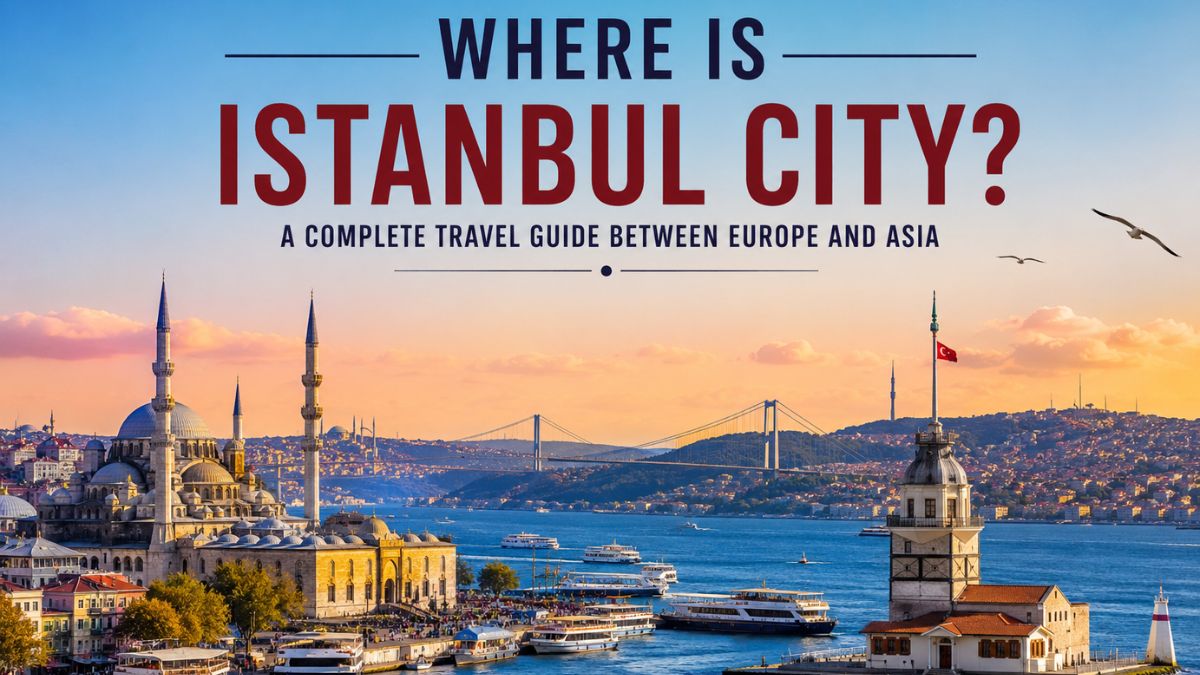
Have you ever wondered, “Where Is Istanbul City?” Imagine standing in a place where one foot is in Europe and the other is in Asia. A city where ancient mosques cast long shadows over modern cafes, where the smell of fresh simit mixes with the sea breeze, and where every street tells a story from the past. That place is Istanbul, one of the most fascinating destinations in the world.
Where Is Istanbul City located? Istanbul is the largest city in Turkey and the only major city in the world that spans two continents, Europe and Asia. This unique location has shaped its rich history, diverse culture, famous cuisine, stunning architecture, and vibrant atmosphere. For centuries, Istanbul has connected East and West, attracting travelers, traders, and explorers from around the globe.
Today, millions of tourists visit Istanbul every year, and many wish they had more time to explore it. In this complete guide, you will discover where Istanbul is located, why it is famous, the best places to visit, what to eat, when to travel, and how to experience the city like a local.
Where Is Istanbul City Located?
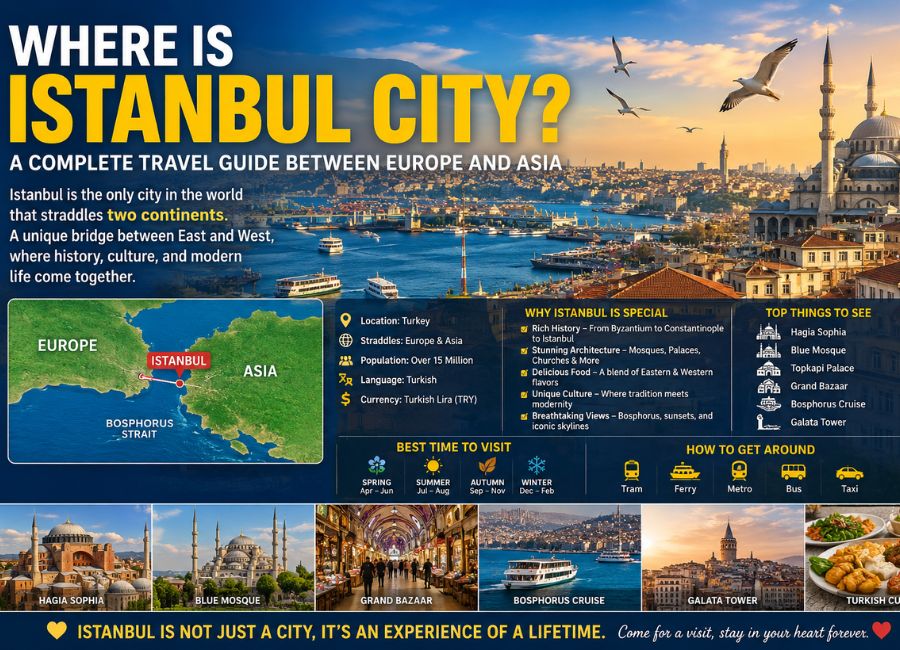
Istanbul is located in the northwestern part of Turkey and is famous for being the only major city in the world that spans two continents, Europe and Asia. The city is divided by the Bosphorus Strait, a natural waterway that separates the European and Asian sides of Istanbul.
This important strait connects the Black Sea to the Sea of Marmara, making Istanbul a key link between different regions of the world. Because of its unique location, the city has played a major role in trade, culture, and history for centuries.
The approximate coordinates of Where Is Istanbul City are 41.0082° N latitude and 28.9784° E longitude. These coordinates place Istanbul at one of the most strategic locations on Earth, where Europe meets Asia. For more than 2,500 years, this remarkable position has made Istanbul a center of commerce, travel, and civilization.
The European Side : Where History Lives
The European side is one of the most popular areas for visitors exploring Where Is Istanbul City. This part of the city is home to many of Istanbul’s most famous attractions, making it the first stop for many travelers. If you are researching Where Is Istanbul City and what makes it special, the European side offers some of the best experiences in Turkey.
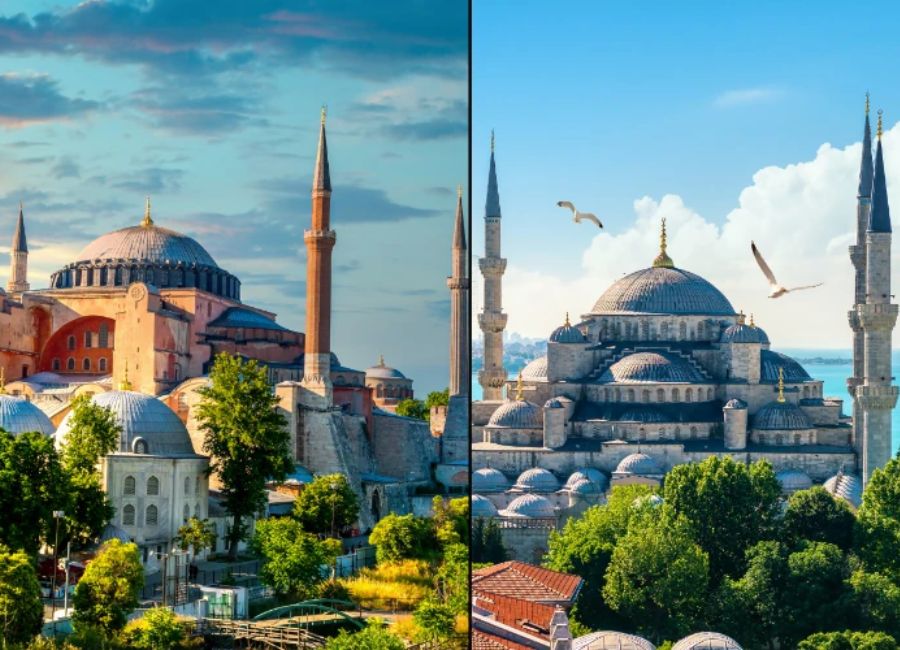
Here, you can visit world-famous landmarks such as Hagia Sophia, the Blue Mosque, Topkapi Palace, and the Grand Bazaar. The streets are filled with history, stunning architecture, and a vibrant atmosphere that reflects centuries of cultural heritage.
Some of the most popular neighborhoods on the European side include Sultanahmet, the historic center of the city, Beyoğlu, known for its lively nightlife and shopping, Karaköy, famous for its art galleries and cafes, and Eminönü, a busy waterfront district. When people ask Where Is Istanbul City and why it attracts millions of tourists every year, the European side is a perfect example of its rich history and unique charm.
The Asian Side : Where the City Breathes
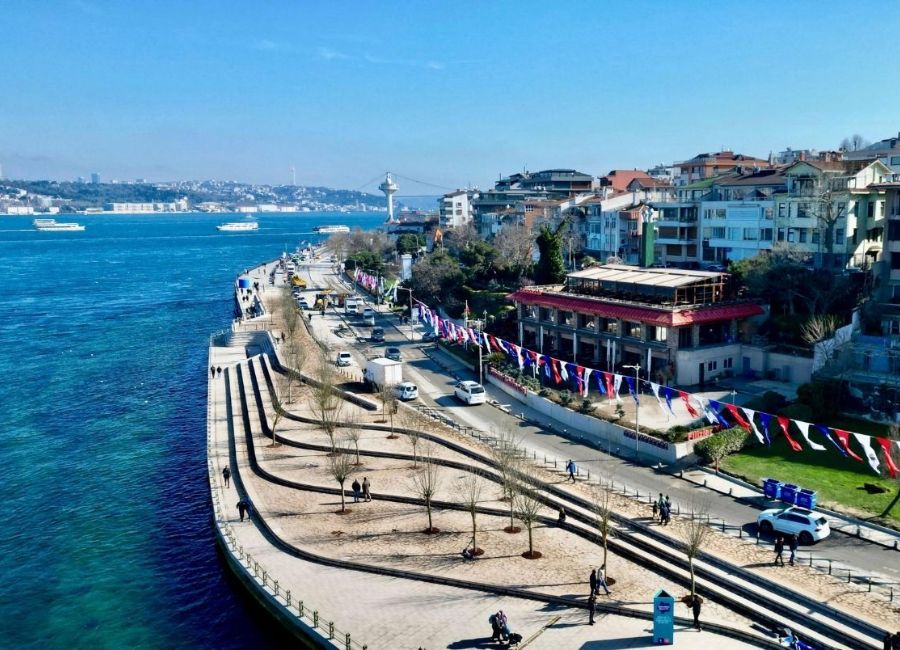
Crossing the Bosphorus by ferry allows visitors to experience a completely different side of Istanbul. While exploring Where Is Istanbul City, many travelers are surprised to discover that the city extends into both Europe and Asia. The Asian side offers a quieter atmosphere, residential neighborhoods, and a more authentic look at everyday Turkish life.
Life moves at a slower pace here. Locals relax in traditional tea houses, markets sell fresh fruits, vegetables, and handmade products, and the waterfront provides stunning views of the European skyline. If you are learning Where Is Istanbul City and what makes it unique, the Asian side is an important part of the answer.
The most popular districts on the Asian side are Kadıköy and Üsküdar. Kadıköy is famous for its vibrant food scene, colorful street art, trendy cafes, and weekend markets. Üsküdar offers a more traditional atmosphere with historic mosques, beautiful waterfront promenades, and impressive views across the Bosphorus.
One reason Where Is Istanbul City is such a popular question is because Istanbul is one of the few cities in the world that spans two continents. Thanks to its unique location between Europe and Asia, Istanbul has earned the nickname “The Bridge Between Two Continents,” a title that is both symbolic and geographically accurate.
A Brief History of Istanbul : Three Names, One Eternal City
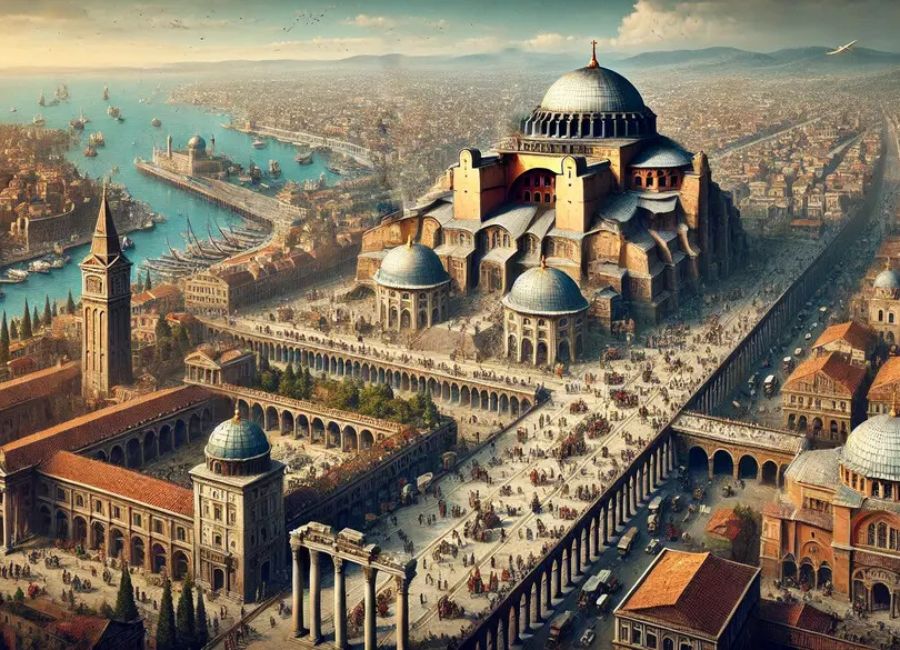
Istanbul’s story stretches back more than 2,600 years. For those asking, “Where Is Istanbul City?”, it is one of the world’s most historic destinations. Few cities on earth have witnessed as much history, hosted as many empires, or survived as many transformations while still retaining their soul.
Byzantium : The Greek Settlement
When exploring Where Is Istanbul City, it is important to know that around 660 BC, Greek colonists established a settlement on a peninsula jutting into the Bosphorus and named it Byzantium. The location was almost perfect—surrounded on three sides by water, easy to defend, and positioned along the most important trade routes of the ancient world. The city grew quickly, attracting merchants and settlers from across the Mediterranean.
Constantinople : Capital of Empires
Where Is Istanbul City? In 330 AD, Roman Emperor Constantine the Great chose Byzantium as the new capital of the Roman Empire and renamed it Constantinople. This decision transformed the city overnight. Magnificent buildings rose from the ground, and the population exploded. Constantinople became the most important city in the known world, serving as the capital of the Roman Empire and later the Byzantine Empire for over a thousand years.
For those wondering Where Is Istanbul City and why it is so famous, it was during this era that Hagia Sophia was first constructed in 537 AD. It stood as the largest church in the world for nearly a thousand years and remains one of the greatest architectural achievements in human history.
The Ottoman Era : A City Reborn
Where Is Istanbul City? In 1453, Sultan Mehmed II led the Ottoman army to victory against Constantinople in one of the most consequential battles in world history. The city fell, and with it, the Byzantine Empire came to an end. But rather than destroy what he had conquered, Mehmed II transformed it. Constantinople became the new capital of the Ottoman Empire, and the Ottomans set about building a city worthy of their ambitions.
For those exploring Where Is Istanbul City and its rich history, the Ottoman period was one of its most remarkable eras. Grand mosques were constructed, palaces rose along the Bosphorus, and schools, public baths, markets, and caravanserais filled the city. The Ottomans took what was already an extraordinary city and made it even more spectacular. Many of the buildings they constructed are still standing today and remain among Istanbul’s greatest treasures.
Modern Istanbul :Turkey’s Cultural Capital
In 1923, the Republic of Turkey was founded, and the capital was moved to Ankara. However, Istanbul never lost its importance. Today, with a population of more than 15 million people, it remains Turkey’s largest city and its cultural, commercial, and artistic center.
For travelers searching Where Is Istanbul City, modern Istanbul offers a unique blend of history and innovation. Ancient landmarks stand alongside modern skyscrapers, while Ottoman mosques echo with the call to prayer as boutique hotels and rooftop cafes welcome visitors from around the world. Where Is Istanbul City is more than a location—it’s a city that has continuously reinvented itself and continues to evolve today.
Culture and Daily Life in Istanbul
To truly understand Istanbul, you have to go beyond the monuments and spend some time simply living in the city. The culture here is layered, warm, and endlessly fascinating.
Hospitality That Feels Genuine
Turkish hospitality is not a cliché . It is a deeply ingrained cultural value. Walk into almost any shop in Istanbul and the owner will likely offer you tea before you even look at the merchandise. Ask for directions and a local may walk you to your destination rather than just pointing the way. This warmth is one of the things visitors remember most.
The Bazaars — The Soul of the City
Istanbul’s markets are not just places to shop. They are social institutions. The Grand Bazaar has been operating continuously since the 15th century, and on any given day you can find thousands of vendors selling carpets, ceramics, leather goods, jewelry, spices, and handcrafted souvenirs. The Spice Bazaar near Eminönü is smaller but arguably even more atmospheric, a riot of color and fragrance that overwhelms the senses in the best possible way.
Beyond these famous covered markets, every neighborhood has its own open-air market where locals shop for fresh produce, fish, and everyday goods. These are the places where you really see the city as it lives and breathes.
Tea, Coffee, and the Art of Slowing Down
For visitors exploring Where Is Istanbul City, tea (çay) is the lifeblood of Istanbul. It is consumed at all hours and in all situations—in offices, in shops, at street corners, on ferry boats, and in countless tea houses (çay bahçesi) scattered across the city. Turkish tea is strong, served in small tulip-shaped glasses, and almost always without milk.
Another important part of the culture of Where Is Istanbul City is Turkish coffee. It is thick, intensely flavored, and traditionally served with a small sweet. Drinking it is a ritual, and there is even a tradition of reading fortunes in the coffee grounds left at the bottom of the cup.
Art, Music, and Festivals
Istanbul has a rich and growing contemporary arts scene. For travelers researching Where Is Istanbul City, the city offers much more than historical landmarks and famous attractions. It hosts several major international festivals each year, including the Istanbul Film Festival, the Istanbul Jazz Festival, and the Istanbul Biennial, one of the most respected contemporary art events in the world.
Galleries, live music venues, and cultural centers are spread throughout the city, making it as rewarding for culture lovers as it is for history enthusiasts. Anyone exploring Where Is Istanbul City will discover a thriving creative community that blends traditional Turkish culture with modern artistic expression.
This vibrant cultural atmosphere is another reason why Where Is Istanbul City is such a popular search among travelers looking for unique experiences in Turkey.
Top Attractions in Istanbul : What You Cannot Miss
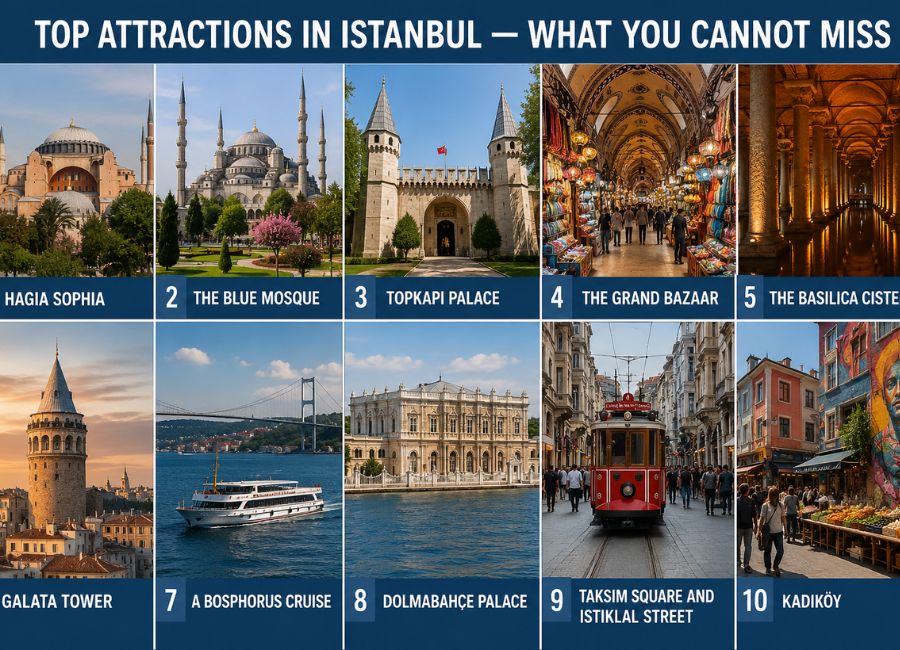
Before visiting these attractions, explore our complete guide to the best things to do in Istanbul for more travel tips and hidden gems.
1. Hagia Sophia
There are buildings that impress, and then there are buildings that change you. Hagia Sophia is the second kind. Originally built as a Christian cathedral in 537 AD, it was later converted into a mosque by the Ottomans, then into a museum in the 20th century, and has functioned as a mosque again since 2020. Its enormous dome, towering minarets, ancient mosaics, and sheer scale leave visitors speechless. Whatever your interests, Hagia Sophia is non-negotiable.
2. The Blue Mosque
Directly across from Hagia Sophia stands the Sultan Ahmed Mosque, better known as the Blue Mosque. Built in the early 17th century, it is famous for its six minarets, its cascading domes, and its breathtaking interior lined with more than 20,000 hand-painted blue Iznik tiles. Visitors are welcome, but dress modestly and avoid visiting during prayer times.
3. Topkapi Palace
For nearly four centuries, Topkapi Palace was the administrative and residential heart of the Ottoman Empire. Today it is a sprawling museum complex where you can wander through royal chambers, explore courtyards, admire priceless artifacts including jewels, weapons, and religious relics and enjoy some of the finest views of the Bosphorus anywhere in the city. Set aside at least half a day.
4. The Grand Bazaar
The Grand Bazaar is one of the largest and oldest covered markets in the world, with more than 4,000 shops spread across a labyrinth of vaulted passages. Even if you have no intention of buying anything, it is worth getting deliberately lost in here for an hour. The sensory experience alone, the colors, the voices, the smell of leather and spice is worth the visit.
5. The Basilica Cistern
Hidden beneath the streets of Sultanahmet, the Basilica Cistern is one of Istanbul’s most atmospheric and underrated attractions. This vast underground water reservoir was built in the 6th century and is supported by 336 ancient marble columns. The dim lighting, the gentle dripping of water, and the eerie reflections on the surface create an experience unlike anything else in the city.
6. Galata Tower
The Galata Tower has dominated the skyline of the Beyoğlu district since the 14th century. Climb to the top and you are rewarded with a stunning 360-degree panoramic view of Istanbul.The Bosphorus, the Golden Horn, the minarets of Sultanahmet, and the hills stretching away into the distance. Go at sunset for maximum impact.
7. A Bosphorus Cruise
If you only do one thing in Istanbul, make it a Bosphorus cruise. Gliding along the strait between the two continents, watching the city unfold on both sides, is an experience of rare beauty. You can choose from full-day cruises, evening dinner cruises, or the public ferry which is just as scenic and far cheaper. The views of the palaces, fortresses, and waterfront mansions (yalılar) along the shore are unforgettable.
8. Dolmabahçe Palace
Built in the 19th century, Dolmabahçe Palace reflects the Ottoman Empire’s embrace of European architectural styles. For travelers exploring Where Is Istanbul City, this magnificent palace is one of the city’s most impressive landmarks. Its crystal chandeliers, hand-woven carpets, and grand ceremonial halls showcase extraordinary luxury and craftsmanship.
Visitors researching Where Is Istanbul City will also discover the palace’s historical importance. It was here that Mustafa Kemal Atatürk, the founder of modern Turkey, passed away in 1938. This rich history is another reason why Where Is Istanbul City continues to attract visitors from around the world.
9. Taksim Square and Istiklal Street
Taksim Square is the modern heart of Istanbul. From here, Istiklal Street stretches nearly a mile through Beyoğlu — lined with shops, restaurants, music venues, art galleries, and historic buildings. The old-fashioned red tram still runs along it. On weekends especially, the energy here is electric.
10. Kadıköy
Cross to the Asian side and spend some time in Kadıköy, one of the most vibrant districts in Istanbul. For travelers exploring Where Is Istanbul City, Kadıköy offers a different experience from the busy European side. It is more local, youthful, and full of energy.
The Kadıköy Market is a popular attraction, featuring fresh seafood, local produce, and specialty food shops. Visitors researching Where Is Istanbul City will also enjoy the area’s colorful street art and excellent coffee culture. This lively neighborhood is another reason why Where Is Istanbul City attracts travelers from around the world.
Food in Istanbul A Culinary Journey

Istanbul’s food scene is one of the great pleasures of visiting the city. The cuisine draws on centuries of Ottoman cooking traditions, Middle Eastern flavors, Mediterranean freshness, and Balkan influences to create something truly distinctive.
Doner Kebab
The world knows doner, but eating one in Istanbul is a different experience. Freshly carved meat, warm bread, crisp vegetables, and tangy sauces come together in a way that the exported versions rarely match. Doner Kebab tastes even better when enjoyed at a best Turkish kebab house known for traditional recipes.
Simit
This sesame-coated bread ring is Istanbul’s signature street food. Sold from carts throughout the city, it is best eaten fresh and warm, ideally with a glass of tea and a view of the Bosphorus.
Balık Ekmek
The fish sandwich sold from boats moored at Eminönü is an Istanbul institution. Fresh mackerel, grilled on the boat, tucked into bread with onions and lettuce. Simple, cheap, and absolutely delicious.
Baklava
Layers of paper-thin pastry, chopped nuts, and sweet syrup make baklava one of Turkey’s most beloved desserts. The version sold in Istanbul’s dedicated baklava shops is far superior to anything you will find elsewhere.
Turkish Breakfast
Do not underestimate the Turkish breakfast (kahvaltı). It is a feast: fresh bread, a selection of cheeses, olives, sliced tomatoes and cucumbers, honey, clotted cream, soft-boiled eggs, and multiple cups of tea. It is a meal designed to be lingered over.
Turkish Coffee
Thick, strong, and served without milk, Turkish coffee is an experience in itself. Order it at a traditional coffeehouse, drink it slowly, and if someone offers to read your fortune on the grounds, say yes.
Best Time to Visit Istanbul
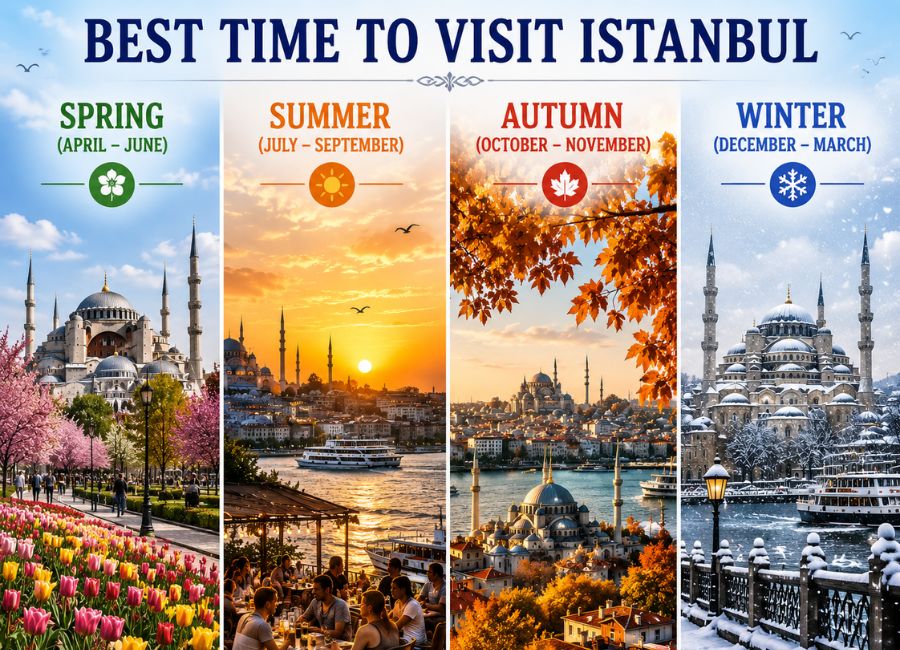
Spring (April – June) The Ideal Season
pring is widely considered the best time to visit Istanbul. Temperatures are mild and comfortable, flowers bloom across the city’s parks and gardens, and the streets are lively without being overwhelmingly crowded. April and May are particularly beautiful.
Summer (July – September) Hot and Energetic
Summer brings heat, larger crowds, and higher prices. But it also brings long evenings, rooftop bars, Bosphorus cruises at sunset, and a city buzzing with energy. If you visit in summer, book accommodation well in advance and plan outdoor activities for the cooler morning and evening hours.
Autumn (October – November) The Traveler’s Secret
Autumn is Istanbul’s hidden gem season. The heat breaks, the summer tourists leave, and the city takes on a softer, more contemplative mood. Temperatures are comfortable for walking, queues at major attractions are shorter, and the light — warm and golden — makes for stunning photography.
Winter (December – March) Quiet and Affordable
Winter in Istanbul is cool and sometimes rainy, but it has its own appeal. Hotel prices drop significantly, popular sites are far less crowded, and on rare occasions, snow falls over the domes and minarets, a sight of extraordinary beauty. If you are traveling on a budget and do not mind cooler weather, winter is worth considering. Travelers planning their journey can also read our detailed New York to Istanbul travel guide covering flights, travel tips, and essential information.
Getting Around Istanbul
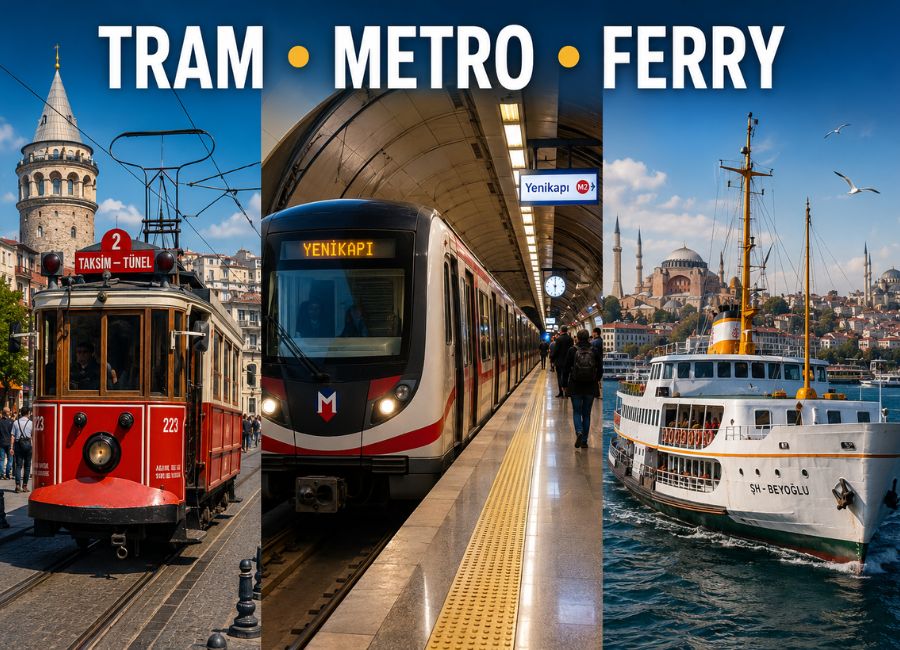
Istanbul is a large city, but its public transport network is efficient and affordable.
Metro
The metro system is fast and connects key areas including the airport and city center. It is the quickest way to cover longer distances.
Tram
The T1 tram line is particularly useful for tourists, running from Kabataş through Sultanahmet and on to the Grand Bazaar. Scenic and convenient.
Ferry (Vapur)
Taking a public ferry across the Bosphorus is not just practical, it is one of the great pleasures of Istanbul. The ferries run frequently between Eminönü, Karaköy, Kadıköy, Üsküdar, and many other stops. Cheap, scenic, and quintessentially Istanbul.
Istanbulkart
This rechargeable transport card works on the metro, tram, buses, and ferries. Pick one up at any major station. It saves money on every journey and eliminates the need to buy individual tickets.
Taxis
Taxis are plentiful, but always make sure the meter is running before you set off. Ride-hailing apps are a reliable alternative.
Essential Travel Tips for Istanbul
- Carry some Turkish Lira.
- Many local shops, markets, and smaller restaurants do not accept cards.
- Learn a few basic Turkish phrases.
- “Merhaba” (hello), “Teşekkür ederim” (thank you), and “Lütfen” (please) go a long way.
- Dress modestly for mosques.
- Women should cover their hair and shoulders; men should avoid shorts. Scarves are often available at mosque entrances.
- Be vigilant in busy areas.
- Pickpocketing can occur in crowded places like the Grand Bazaar and on the tram. Keep valuables secure.
- Use public transport where possible.
- It is cheaper, often faster, and more reliable than taxis in heavy traffic.
- Eat where locals eat.
- Venture a few streets away from the main tourist sites and you will find better food at much lower prices.
- Book major attractions in advance.
- Hagia Sophia, Topkapi Palace, and the Basilica Cistern can have long queues, especially in peak season.
- Respect local customs.
- Istanbul is a cosmopolitan city, but it is also home to deeply held traditions. Be respectful, be curious, and be open.
Why Millions of People Visit Istanbul Every Year
Every year, millions of travelers visit Istanbul, and the number continues to grow. For anyone searching Where Is Istanbul City, the answer is more than just a location. It is a city where history, culture, food, and modern life come together in a unique way.
History lovers, food enthusiasts, shoppers, and photographers all find something special here. Anyone exploring Where Is Istanbul City will discover unforgettable experiences around every corner. This is one reason why Where Is Istanbul City remains a popular search among travelers worldwide.
Istanbul is not just another city.it is an experience of its own.
conclusion
So where is Istanbul city? Located in northwestern Turkey, Istanbul connects Europe and Asia across the Bosphorus Strait. For those searching Where Is Istanbul City, its unique position between two continents makes it one of the world’s most fascinating destinations.
Known throughout history as Byzantium, Constantinople, and Istanbul, the city has been shaped by great empires and rich cultures. Anyone exploring Where Is Istanbul City will discover a place filled with history, stunning landmarks, and unforgettable experiences.
From Hagia Sophia to Bosphorus ferry rides, Istanbul offers something special for every traveler. It’s easy to see why Where Is Istanbul City remains a popular question among visitors worldwide.
FAQs
Where is Istanbul city located?
Istanbul is located in northwestern Turkey, spanning both the European and Asian continents, divided by the Bosphorus Strait.
Why is Istanbul famous?
Istanbul is famous for its rich history, iconic landmarks including Hagia Sophia and the Blue Mosque, its unique position on two continents, vibrant culture, and world-class cuisine.
Is Istanbul in Europe or Asia?
Istanbul is in both. It is a transcontinental city, with its European and Asian sides connected by bridges and ferries across the Bosphorus.
What is the best time to visit Istanbul?
Spring (April to June) and autumn (October to November) offer the most comfortable weather and manageable crowds.
How many people live in Istanbul?
More than 15 million people live in Istanbul, making it the largest city in Turkey and one of the largest in Europe.