

Introduction
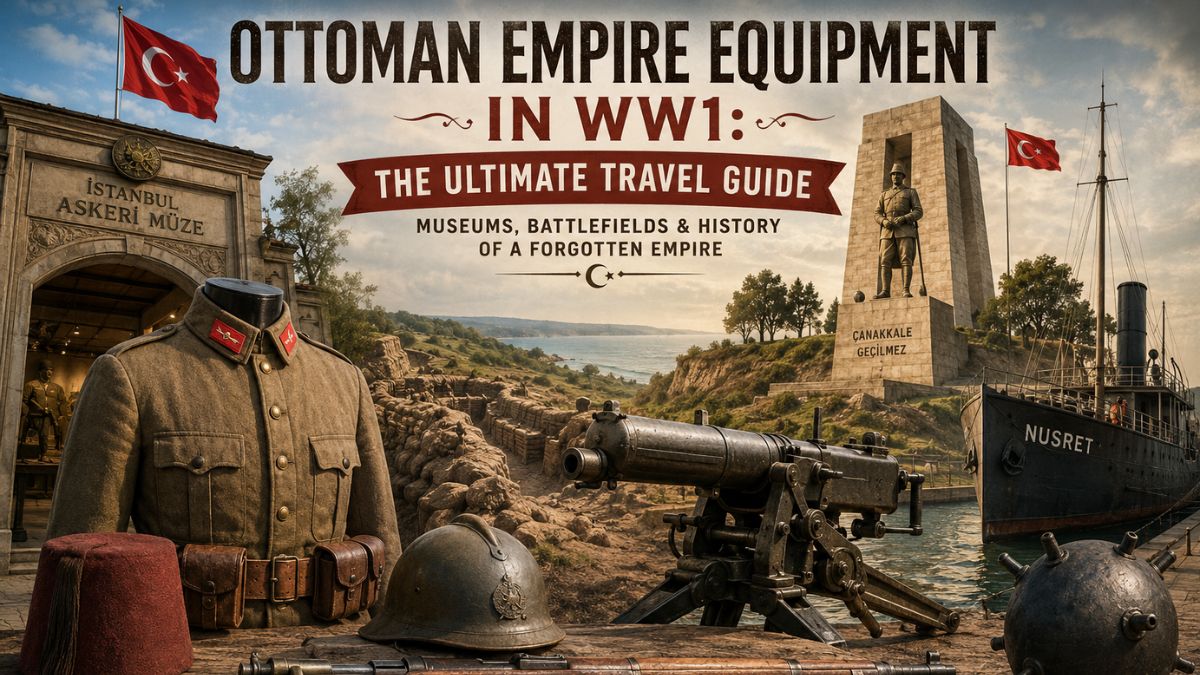
The Ottoman Empire played a major role in World War 1, making the conflict one of the most important chapters in Ottoman Empire history. As the empire fought its final major battles, it relied on a wide range of weapons, uniforms, and military equipment that shaped the course of the war. Today, the legacy of the Ottoman Empire can still be explored through preserved battlefields, museums, and historic military collections.
Countries like Turkey and Jordan are home to outstanding museums that display authentic Ottoman Empire weapons, soldier uniforms, medals, and battlefield equipment. These remarkable artifacts reveal how Ottoman forces fought more than 100 years ago and help visitors better understand this fascinating period of history.
This travel guide will show you the best places to see Ottoman Empire equipment, what you can expect to find at each destination, and how to plan an unforgettable historical journey. Whether you are a military history enthusiast or a curious traveler, exploring the Ottoman Empire through its surviving WW1 heritage is an experience you will never forget.
What Equipment Did Ottoman Soldiers Use in WW1?
Rifles and Weapons
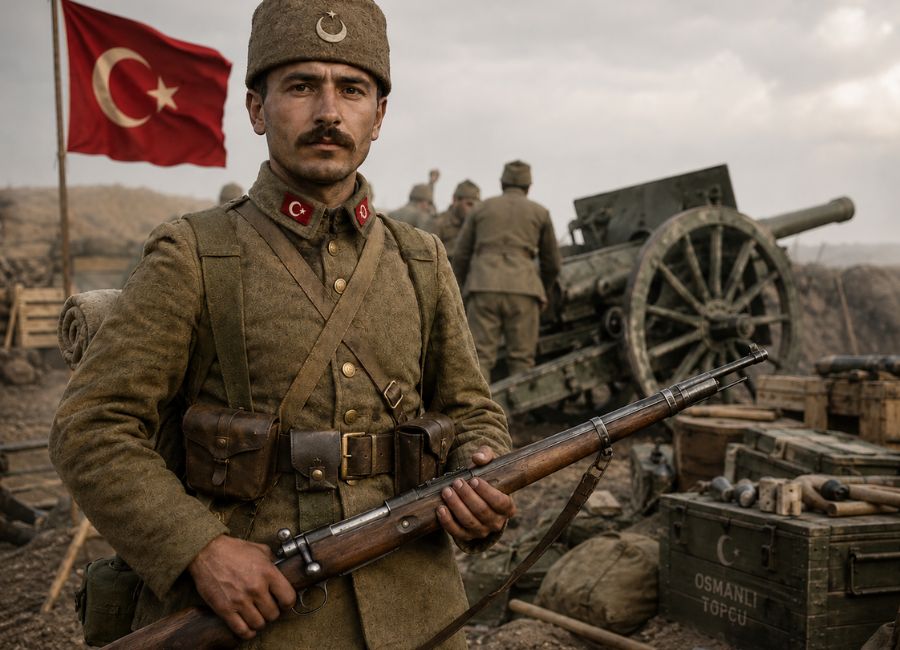
The Ottoman Empire equipped its soldiers with a variety of weapons during World War 1. Most infantry troops of the Ottoman Empire carried German-made Mauser rifles, which were known for their reliability, durability, and accuracy in combat. These rifles became the standard infantry weapon across Ottoman Empire frontlines.
The Ottoman Empire also relied heavily on powerful artillery to defend key positions. German-manufactured Krupp artillery guns played a vital role in major battles, including the famous Gallipoli Campaign. Machine guns were equally important, with the MG08 Maxim proving highly effective at stopping enemy advances. Today, visitors can see many of these original Ottoman Empire weapons on display in military museums across Turkey, offering a fascinating look into the empire’s wartime equipment.
Uniforms and Soldier Equipment
Ottoman soldiers wore khaki-colored uniforms suited to the harsh conditions of war. Officers had special badges that indicated their rank, while regular soldiers wore simpler versions of the same uniform. Every soldier carried a leather belt, bullet pouches, and a water bottle for long marches across desert and mountain terrain.
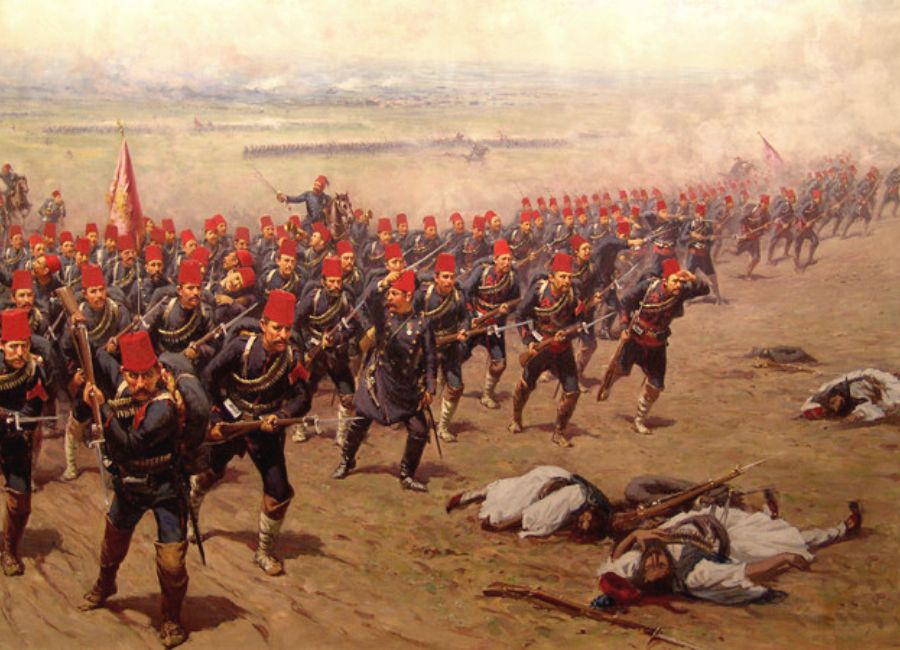
In the early stages of the war, many soldiers still wore the traditional fez cap. However, as the war progressed, German-style steel helmets replaced the fez, offering much better protection in battle. Authentic examples of these uniforms and helmets are displayed in museums across Turkey.
Naval Equipment
The Ottoman navy used a combination of older warships and new German submarines. One of the most well-known vessels was the battlecruiser Goeben, which escaped British naval forces and joined the Ottoman fleet. The Ottoman navy also made effective use of underwater mines to protect its coastlines. These mines sank several enemy battleships, making them one of the most impactful weapons in the Ottoman naval arsenal.
Best Places to See Ottoman WW1 Equipment
Istanbul Military Museum
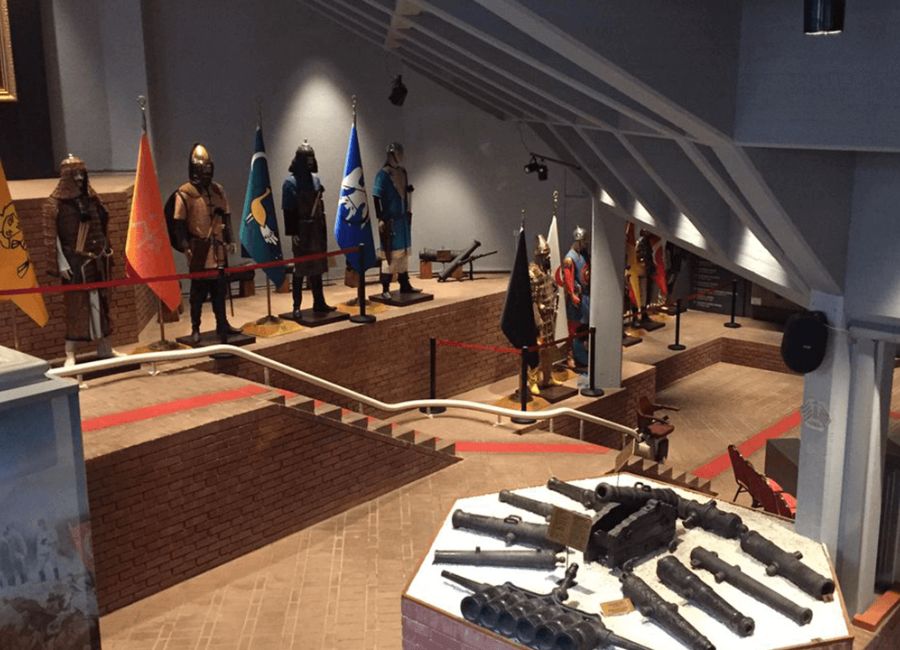
The Istanbul Military Museum is the most important destination for anyone interested in Ottoman Empire equipment from WW1. Located in the Harbiye district of Istanbul, the museum houses thousands of historical artifacts, including Ottoman Empire weapons, uniforms, medals, letters, and personal belongings of Ottoman Empire soldiers.
Visitors can see original Mauser rifles carried into battle, large Krupp artillery pieces, and MG08 Maxim machine guns used by the Ottoman Empire during World War 1. Dedicated WW1 galleries allow you to view authentic Ottoman Empire soldier uniforms up close while learning about the major battles and military campaigns in which they were used. English-speaking guides are also available to provide additional historical insights.
Open Tuesday through Sunday, the museum usually takes three to four hours to explore. It is a must-visit destination for anyone wanting to discover the military history and equipment of the Ottoman Empire while traveling in Istanbul.
Gallipoli Battlefields
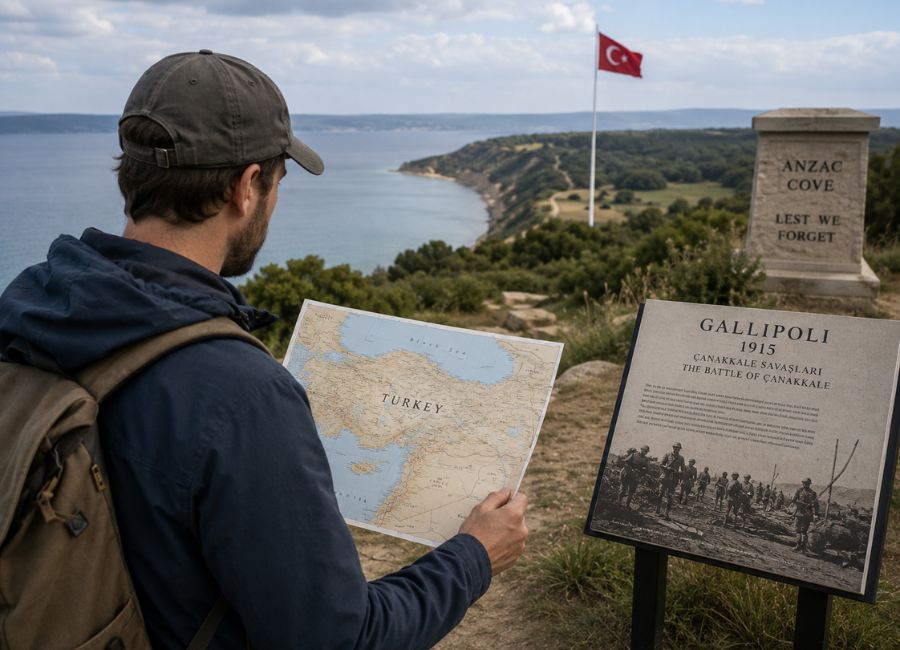
Gallipoli is one of the most historically significant sites in the world. Located near the Dardanelles strait in northwestern Turkey, it was the site of the Ottoman Empire’s greatest victory in World War 1. Today, visitors can walk across the actual battlefields where fierce fighting took place in 1915.
Many of the original trenches from the war still exist. You can see the defensive positions where Ottoman soldiers held back Allied forces, as well as some original gun emplacements. The visitor center at Gallipoli houses a well-organized museum displaying WW1 Ottoman artifacts recovered from the battlefield, including rifles, helmets, bullets, and personal items belonging to soldiers.
Several monuments stand in honor of the Ottoman fighters who fell here. The most famous monument features Mustafa Kemal Ataturk, who commanded troops at Gallipoli and later became the founder of modern Turkey. Guided tours run daily from the nearby city of Canakkale.
Canakkale Naval Museum
The Canakkale Naval Museum highlights the naval history of the Ottoman Empire during World War 1. Located along the waterfront in Canakkale, the museum offers a detailed look at how the Ottoman Empire navy defended the Dardanelles Strait against powerful Allied forces using advanced naval tactics and equipment.
One of the museum’s most famous exhibits tells the story of the minelayer ship Nusret, which played a decisive role in the Ottoman Empire’s defense of the Dardanelles. On March 18, 1915, Nusret laid a strategic minefield that sank three British battleships, making it a turning point in the campaign. Visitors can view original sea mines, naval guns, torpedoes, sailor uniforms, navigation tools, and a replica of the Nusret ship docked outside.
With stunning views of the Dardanelles, the museum is an essential destination for anyone interested in Ottoman Empire naval history, World War 1 military equipment, and the remarkable achievements of the Ottoman Empire during the war.
Other Military Museums Worth Visiting
Ankara is home to the War of Independence Museum, which, while primarily focused on later events, includes important World War 1 sections featuring Ottoman army gear and historical documents. The Kayseri Ataturk Museum displays personal items from the commander’s service during the war, including his pistol, binoculars, and uniform. It is a smaller museum but very meaningful for history lovers.
If you are traveling to Jordan, the Amman Military Museum is worth a visit. It houses captured Ottoman weapons from battles fought in the Arabian desert and gives insight into how Ottoman troops operated in harsh desert conditions.
Planning Your Ottoman History Trip
Best Time to Visit
The best seasons to visit Ottoman WW1 sites are spring (April to June) and autumn (September to November). The weather is pleasant during these months, making outdoor exploration of battlefield sites much more comfortable. Summer months can be extremely hot, especially at Gallipoli. Winter brings cold and rainy conditions across most of Turkey, so it is best avoided if possible.
If you want to attend the ANZAC Day ceremonies at Gallipoli on April 25th, be aware that large crowds gather for this event. If you prefer a quieter experience with more personal space to explore, plan your visit at another time.
How to Get There
Flying into Istanbul is the most convenient option for international travelers. Istanbul has two major international airports with connections to cities worldwide. From Istanbul, you can easily reach all the major historical sites by bus, train, or rental car.
For Gallipoli specifically, you can join an organized guided tour from Istanbul, which typically takes five to six hours including travel time. Alternatively, staying in Canakkale gives you more freedom to explore the battlefields at your own pace. Rental cars are available in Canakkale and allow you to reach more remote parts of the battlefield.
Where to Stay
Istanbul has hotels for every budget. The Taksim and Sultanahmet neighborhoods are ideal bases, as they are close to museums and have excellent restaurants and transport connections.
For visiting Gallipoli, Canakkale is the best base. This small waterfront city has comfortable hotels, tour companies, and car rental services. Many accommodations offer special packages for history tourists. It is advisable to book hotels in advance, especially during the spring and autumn peak seasons.
What to Bring
Comfortable walking shoes are essential, particularly for visiting battlefield sites like Gallipoli, where you will cover a lot of ground on uneven terrain. Bring a water bottle, especially during warmer months. A hat and sunscreen are recommended for outdoor exploring.
Most museums allow photography without flash. It is always polite to check with staff before photographing sensitive items. A notebook or journal is useful for recording information, and binoculars can help you appreciate distant battlefield features.
Understanding the Historical Context
Why This History Matters
The Ottoman Empire’s experience in World War 1 fundamentally changed the entire Middle East. When the war ended, the empire collapsed and broke apart into many of the countries we know today, including Turkey, Syria, Iraq, and others. Understanding the military equipment and tactics of the Ottoman forces gives us deeper insight into how those battles were fought and why they had such lasting consequences.
The rapid development of new military technology during WW1 made the conflict deadlier than any previous war. These historical sites help us understand that reality. They also teach us about courage and sacrifice, reminding us of the enormous human cost of war.
A Different Perspective on WW1
Most Western history books focus on the Allied perspective of World War 1. Visiting Ottoman WW1 sites gives you access to a different and equally important side of the story. You gain a more complete and balanced understanding of the war by seeing it through the eyes of the Ottoman soldiers who fought in it.
Walking through Gallipoli’s preserved trenches is a deeply moving experience. Standing where history happened over a century ago creates a powerful emotional connection to the past that no textbook can replicate. Seeing real Ottoman army equipment makes history tangible in a way that brings it to life.
Tips for Getting the Most From Your Visit
Prepare Before You Go
Reading books or watching documentaries about World War 1 in the Middle East before your trip will make your visit much richer. Understanding the basic timeline of events and key battles will help you appreciate what you see at each site. Many museums have websites where you can download visitor guides and maps in advance.
Consider hiring a local guide at major sites. A knowledgeable guide will share stories and historical details that you might miss on your own, and they can bring the history to life in a memorable way.
Respect the Sites
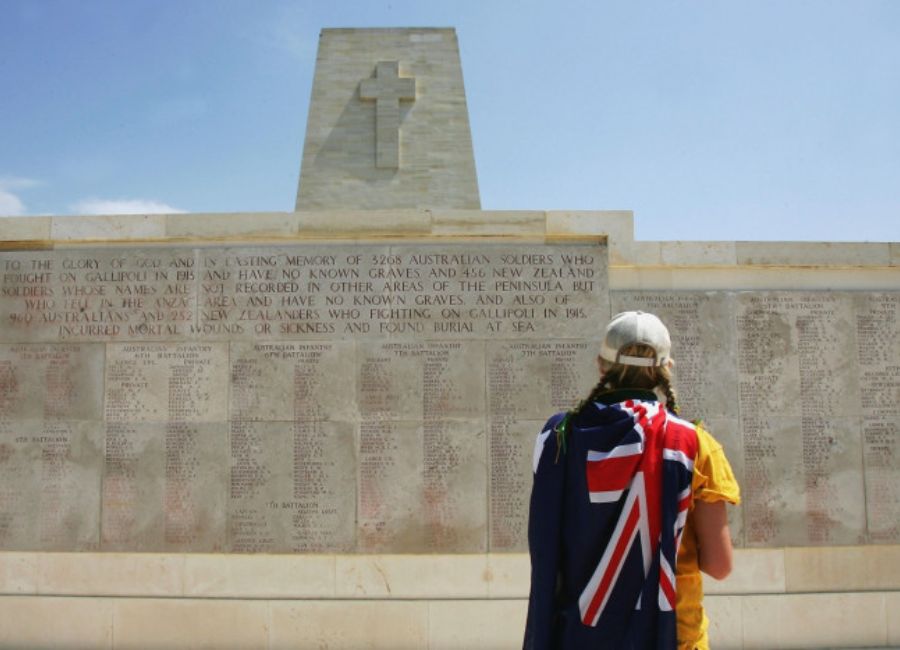
Remember that battlefield sites like Gallipoli are sacred places where thousands of soldiers lost their lives. Always show respect when visiting. Stay on marked paths to protect fragile archaeological areas and never climb on monuments or disturb preserved trenches. Do not touch artifacts unless museum displays explicitly say it is allowed.
In Turkish museums, photography is usually allowed without flash. Always check with staff if you are unsure. At outdoor sites, dawn and dusk offer the most beautiful lighting for photographs.
Support Preservation Efforts
Buying tickets and visiting museum gift shops directly supports the preservation of important Ottoman Empire historical sites and World War 1 landmarks. Many museums and battlefields rely on visitor income to conserve valuable Ottoman Empire artifacts, military equipment, and historic locations. By following site rules, staying on marked paths, and avoiding contact with exhibits, visitors help protect the Ottoman Empire’s rich heritage for future generations.
If you feel inspired by your visit, consider donating to organizations dedicated to preserving Ottoman Empire battlefields, museums, and historical collections. Your support helps ensure that the history, equipment, and legacy of the Ottoman Empire remain accessible and protected for years to come.
Cultural Awareness
Turkey is a Muslim country with its own customs and traditions. Understanding local Turkish traditions and customs can greatly improve your travel experience. Dress modestly when visiting religious sites nearby. Women are advised to carry a scarf when entering mosques. Learning a few basic Turkish phrases before your trip is a thoughtful gesture that locals genuinely appreciate. Simple greetings and thank-yous can go a long way in creating positive interactions with local people.
Conclusion
Exploring Ottoman Empire equipment from WW1 is a uniquely rewarding travel experience. These places connect visitors to one of the most pivotal moments in world history, and every weapon, uniform, and battlefield tells an important story that deserves to be heard.
From the impressive displays at the Istanbul Military Museum to the sacred and haunting ground of Gallipoli, Turkey has preserved this heritage with great care and pride. You will see authentic Ottoman military equipment, walk where history was made, and leave with a much deeper understanding of this complex period.
Plan your trip carefully, visit during comfortable weather, book your accommodations early, and take time to learn the history before you arrive. These sites deserve your respect and your support. By visiting them, you play a small but meaningful role in keeping this history alive for future generations.
FAQs
1. Where can I see Ottoman WW1 equipment?
The best places are the Istanbul Military Museum and the Gallipoli Battlefields in Turkey. The Canakkale Naval Museum is also excellent for naval history.
2. What weapons did Ottoman soldiers use in WW1?
Ottoman soldiers primarily used German-made Mauser rifles, Krupp artillery guns, and MG08 Maxim machine guns.
3. When is the best time to visit?
April to June and September to November are the best months. The weather is comfortable and ideal for outdoor exploration.
4. Can I take photos inside museums?
Yes, in most cases photography is allowed. However, flash photography is usually not permitted, and some special exhibits may have restrictions. Always check with museum staff first.
5. Why is Gallipoli historically important?
Gallipoli was the site of the Ottoman Empire’s greatest WW1 victory. It was here that Mustafa Kemal Ataturk rose to prominence and successfully defended the Dardanelles strait against an Allied invasion in 1915.
6. Do I need a guide to visit these sites?
A guide is not required but is highly recommended, especially at Gallipoli. Local guides provide context, stories, and historical detail that greatly enrich the experience. Many sites offer English-speaking guides.