

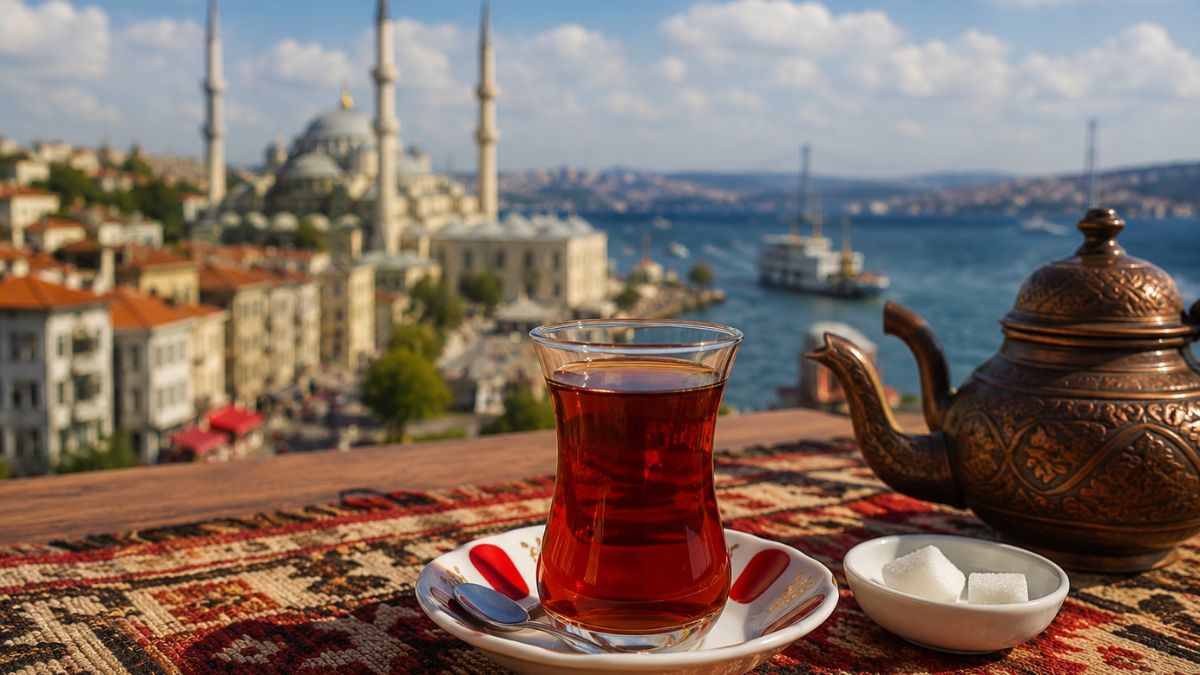
Few drinks carry as much meaning as Turkish tea. Known locally as çay, it is more than a simple beverage. It is a symbol of hospitality, friendship, and daily life across Turkey.
Visit a bazaar in Istanbul, a village in Anatolia, or an office in Ankara, and someone will offer you a glass within minutes. This drink is woven into daily routines everywhere in the country.
In this article, we cover the history of Turkish tea, how it is brewed, its health benefits, popular types, and simple tips to make it at home. By the end, you will understand why this drink holds such a special place in Turkish culture.
Even people who have never visited Turkey often recognize the small tulip-shaped glass on sight. That single image says a lot about how deeply this drink is tied to Turkish identity, design, and everyday life.
The History Behind This Tradition

Turkish tea has a fairly recent history. Coffee was once the main hot drink in the Ottoman era, but supply problems in the early twentieth century pushed the country to look for alternatives.
Researchers found that the Black Sea coast, especially Rize province, had the perfect climate for tea. Rain, humidity, and rich soil made it ideal for growing tea bushes.
Production grew quickly after that. What began as a small experiment in the 1920s became a full national industry within a few decades.
By the 1960s, tea had replaced coffee as Turkey’s everyday drink. Today, Turkey is one of the highest tea-consuming countries in the world per person. This drink now appears at breakfasts, meetings, weddings, and simple visits between neighbors.
The shift away from coffee was not only about price. Tea leaves were easier to grow at home, cheaper to produce in large amounts, and better suited to being poured again and again during long conversations.
Turkish tea also became a matter of national pride. Government support for tea farms in Rize helped turn a small coastal region into the backbone of the country’s tea industry.
Small tea gardens and family farms still dot the hillsides near the Black Sea today. Many of these farms have been passed down through generations, keeping old harvesting methods alive alongside newer techniques.
What Makes This Tea Unique
This tea is prepared using a special double-teapot method. This brewing style, along with a unique serving tradition, sets it apart from other tea cultures around the world.
The Çaydanlık: A Special Brewing Pot
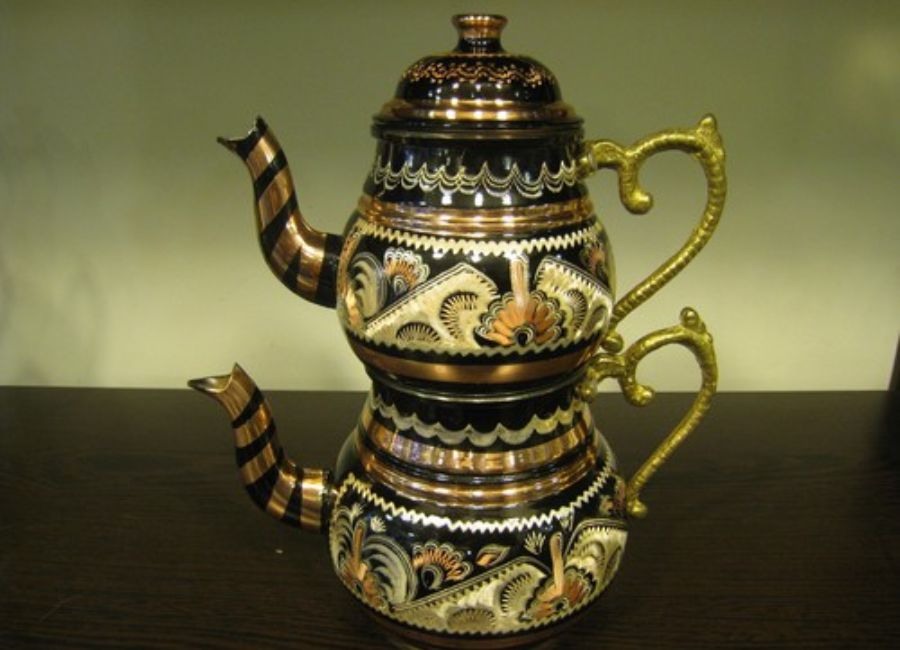
The heart of Turkish tea is the çaydanlık, a stacked double teapot. The bottom pot boils water, while the top pot holds loose black tea leaves that steep using steam and a little of that boiling water.
This method gives a strong, concentrated flavor without bitterness, since the leaves never touch a full boil directly.
After steeping for fifteen to twenty minutes, the tea is ready. The strong concentrate is poured into a glass, then diluted with hot water to taste. Some like it strong, called koyu. Others prefer it light, called açık.
The Iconic Tulip-Shaped Glass
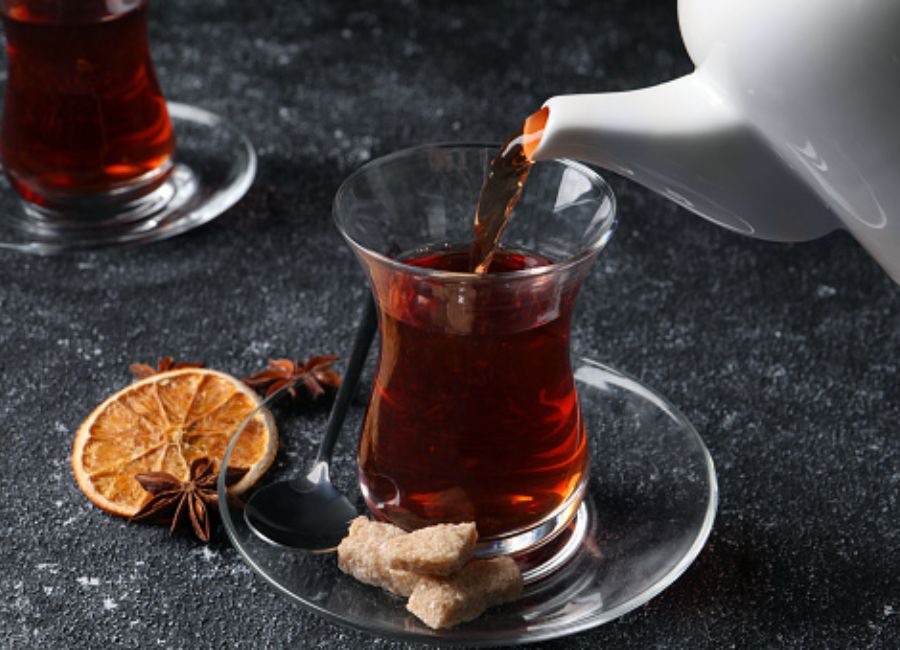
Turkish tea is almost always served in small, tulip-shaped glasses, never mugs. This shape is not just for looks. It keeps the tea’s aroma close to your nose and keeps it hot longer.
The thin glass also lets you see the tea’s color clearly. A good glass of Turkish tea should look bright, reddish-brown, and clear.
Sugar cubes sit on a small plate beside the glass. Milk is never added. Many people prefer to drink it plain, without any sugar at all.
The Cultural Role of This Drink

This drink is central to Turkish social life. Offering a guest tea is a basic form of hospitality, and turning it down can feel a little impolite.
Here are a few places you will always find it:
- Breakfast tables, alongside cheese, olives, bread, and eggs
- Business meetings, often before any real discussion starts
- Barbershops and small shops, offered freely to waiting customers
- Family visits, where several rounds are common
- Street vendors called çaycı, who deliver fresh glasses to nearby offices
Turkish tea has become a quiet symbol of connection and patience. A shared glass often means a slower, more relaxed conversation.
It also plays a role during major life events. At weddings, funerals, and religious holidays, tea is served constantly, marking both joyful and difficult moments with the same simple gesture.
Even arguments or disagreements are sometimes softened by tea. Sitting down over a glass together is often seen as a first step toward resolving a disagreement calmly.
The Economy Behind This Drink
Tea is a major agricultural product for Turkey, not just a cultural symbol. Thousands of families along the Black Sea coast depend on tea farming for their livelihood.
Rize alone produces the vast majority of the country’s tea. Harvest season brings a burst of activity, with workers picking leaves by hand across the steep green hillsides.
Turkish tea is also exported to many countries, though most of the harvest is consumed domestically. Local demand remains so high that exports make up a smaller share compared to other tea-producing nations.
Its Role in Tourism
For visitors traveling through Cappadocia, trying Turkish tea is often one of the first cultural experiences of a trip. Many tour guides make a point of stopping for tea early in a visit to break the ice.
Souvenir shops across Turkey sell tulip glasses, çaydanlık sets, and packaged tea leaves. These items are popular gifts for travelers who want to recreate the experience back home.
Tea gardens overlooking the sea or a city skyline have also become popular spots for both locals and tourists. Sitting for an hour with a few glasses of tea is considered a normal, relaxing way to spend an afternoon. If you are planning your journey, our Turkey itinerary for 7 days includes the best places where you can experience authentic Turkish tea along the way.
Health Benefits
Beyond its cultural value, Turkish tea offers some real health benefits. It is made from black tea leaves, which are rich in antioxidants.
- Antioxidants: Helps fight everyday oxidative stress in the body.
- Heart Health: Regular black tea may support cardiovascular health.
- Alertness: Offers a gentle caffeine boost without the intensity of coffee.
- Digestion: Many people drink a glass after meals to settle the stomach.
- Hydration: Still adds to your daily fluid intake in moderation.
- Mental Wellbeing: Its social, slow-paced ritual often brings comfort and stress relief.
As always, moderation matters. People sensitive to caffeine should watch how many glasses of Turkish tea they drink, especially later in the day.
Flavor Profile
Turkish tea has a bold, slightly bitter taste with a smooth finish once diluted properly. The flavor sits between the brightness of a light black tea and the deep richness of a strong breakfast blend.
Because the leaves are finely cut, they release flavor quickly during steeping. This is part of why the double-pot method works so well. It draws out strength without long steeping times that can lead to a harsh, overly tannic taste.
The color is just as important as the taste. A properly brewed glass should look deep red or amber, almost glowing when held up to light. Locals often judge quality by color alone before even taking a sip.
Fun Facts
A few small details help explain just how deep this tradition runs:
- Turkey consumes more tea per person than almost any other country, even ahead of well-known tea nations.
- The tulip-shaped glass is sometimes called an “ince belli” glass, meaning “thin-waisted,” describing its narrow middle.
- Many Turkish offices keep a çaydanlık running all day, refilling it as needed rather than brewing fresh pots each time.
- Tea gardens, known as çay bahçesi, are common public spaces where people gather for hours over multiple glasses.
- Turkish tea is rarely, if ever, served with milk, which surprises many first-time visitors from Western countries.
Seasonal Habits
Tea drinking habits shift a little with the seasons. In winter, hot glasses are often paired with heavier breakfasts and long indoor gatherings, since the drink helps guests stay warm during cold visits.
In summer, tea gardens near the coast or in parks become popular evening spots. People still drink it hot, but sit outside longer, often into the late evening when temperatures cool down.
Ramadan brings its own rhythm too. After the fast breaks each evening, tea is frequently one of the first things poured at the table, alongside dates and other traditional foods.
Common Mistakes to Avoid
A few small mistakes can affect the final taste. Over-steeping the leaves for too long can make the concentrate bitter and harsh, even before dilution.
Using low-quality or stale leaves is another common issue, since fresher leaves generally produce a brighter color and smoother flavor. Storing leaves properly in a cool, dry place helps avoid this problem.
Adding too much water too quickly can also water down the flavor completely. It helps to add hot water slowly, tasting as you go, until the balance feels right.
Gifting Culture
Tea sets make popular gifts in Turkey, especially for new homeowners, newlyweds, or visiting guests. A nicely boxed set of tulip glasses is considered a thoughtful, practical present.
Bags of good quality loose leaves are also common gifts between friends and coworkers, especially around holidays. Giving tea as a gift reflects the same spirit of warmth found in serving it at home.
Popular Varieties

Classic black tea is the most common choice, but a few variations of Turkish tea have grown popular too.
Rize Tea
Named after its home region, Rize tea is seen as the top-quality choice. Its bold, strong flavor is what most people picture when they think of an authentic glass.
Apple Tea (Elma Çayı)
Not a true tea, but closely tied to the culture. Apple tea is sweet and fruity, often served to tourists as a welcoming first taste.
Herbal Blends
Linden, sage, and rosehip teas are popular in colder months. They follow the same spirit of comfort and hospitality, even without real tea leaves.
How to Brew It at Home
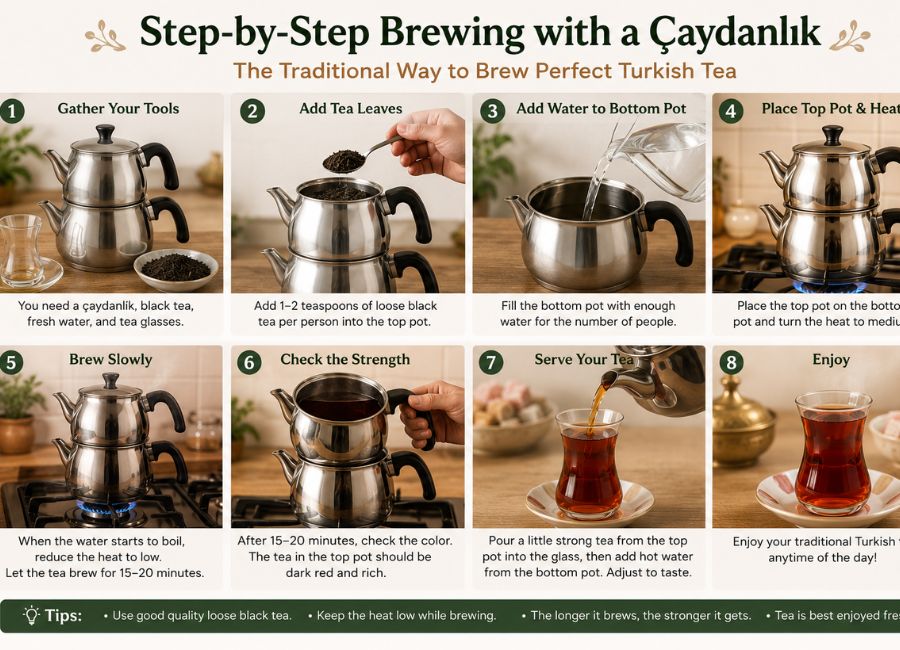
You don’t need fancy tools to try this at home, though a çaydanlık helps. Here’s a simple method for brewing Turkish tea:
- Boil water in the bottom pot.
- Add two to three tablespoons of loose black tea to the top pot.
- Pour a little boiling water over the leaves, then stack the pots together.
- Let it steep for fifteen to twenty minutes on low heat.
- Pour a small amount of the strong tea into a glass.
- Add hot water from the bottom pot until it suits your taste.
- Serve with sugar cubes on the side, and enjoy.
No çaydanlık? A small pot placed over a regular kettle works as a decent substitute.
Adjust the ratio of concentrate to hot water each time until you find your own preferred strength. Many people find their taste changes depending on the time of day, going lighter in the morning and stronger in the evening.
Comparing It to Other Tea Traditions
British tea is often made with milk and served in bigger cups. Turkish tea, by contrast, is stronger, milk-free, and poured in small refillable glasses.
Chinese and Japanese tea traditions favor subtlety and ritual. Turkish tea leans toward boldness and constant hospitality instead.
Indian chai adds spices, milk, and sugar directly while brewing. Turkish tea stays simple, letting the tea leaves speak for themselves.
This simplicity is part of why Turkish tea has such a loyal following, both at home and abroad.
Where to Buy Quality Tea
Look for brands sourced from the Rize region for the most authentic flavor. Specialty tea shops, Middle Eastern grocery stores, and online retailers now carry good options.
You can also find çaydanlık sets and tulip glasses online if you want the full experience at home. Choose finely cut black tea leaves labeled specifically for Turkish-style brewing.
Etiquette Around Drinking Tea in Turkey
A few simple customs go a long way. Accept at least a small glass when offered, even if you don’t finish it. Refusing can feel impolite.
Hold the glass by its rim, since it can get quite hot. When you’ve had enough, leave a little tea in the glass or place a spoon over it, or your host may refill it again.
Tipping the çaycı who delivers tea to shops is a nice gesture, though not required. In villages, the same pot can be refilled for hours as conversation continues.
Age and rank also matter a little. Younger guests or employees will often pour tea for elders or guests of honor first, as a small sign of respect before serving themselves.
Visitors who take a moment to learn these customs are usually rewarded with warmer, friendlier interactions. Small gestures like this go a long way in Turkish culture.
Conclusion
Turkish tea is more than a drink. It’s a daily ritual, a symbol of hospitality, and a link between generations of Turkish culture.
From its double-pot brewing method to its tulip-shaped glass, every detail reflects tradition. Whether in an Istanbul café or your own kitchen, Turkish tea offers a small but meaningful taste of Turkish life.
As more people around the world try it, this simple drink continues to earn its place as one of the most loved tea traditions on earth.
Next time you’re offered a glass, take a moment to slow down and enjoy it the way it was meant to be enjoyed: slowly, socially, and with good company.
It costs little, takes only a few minutes to prepare, and rewards you with a moment of calm in an otherwise busy day. That simple balance is exactly why it has lasted so long.
Frequently Asked Questions
Is Turkish tea strong?
Yes. It’s brewed as a strong concentrate, then diluted with hot water to taste.
Does it have more caffeine than coffee?
No, a single glass usually has less caffeine than coffee, though people often drink several glasses a day.
Can I make it without a çaydanlık?
Yes. A small pot stacked over a kettle or saucepan works as a simple substitute.
Why small glasses instead of mugs?
They keep portions small for frequent refills and let you see the tea’s color clearly.
Is sugar always added?
No. Sugar cubes are offered on the side, and many people drink it plain.
Where does the best Turkish tea come from?
Most quality tea comes from Rize, a province on Turkey’s Black Sea coast.
Is it always served hot?
Yes, it is almost always served hot, even in summer, since it is meant to be sipped slowly over conversation.
Can I store leftover leaves for later? Yes, keep dry tea leaves in a sealed container away from light and moisture to preserve flavor for future brewing.