

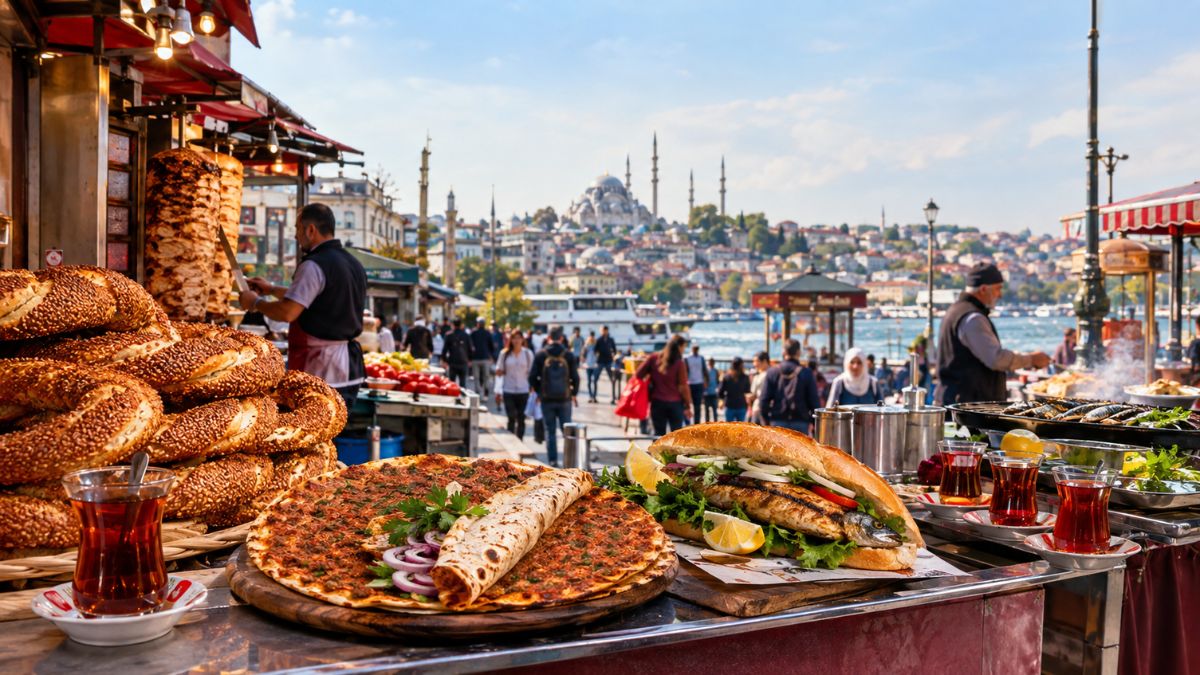
Turkish street food is one of the richest culinary experiences in the world. Walking through the busy lanes of Istanbul, Izmir, or Ankara, you will find vendors selling fresh, hot, and flavorful snacks at every corner.
It is not just about eating. It is about experiencing culture, history, and tradition on a single plate.
Turkey sits at the crossroads of Europe and Asia, and its food reflects centuries of trade, migration, and empire. Ottoman palace kitchens, Central Asian nomadic traditions, and Mediterranean coastal habits all blended together over hundreds of years.
The result is a street food scene that feels both ancient and alive. It keeps evolving today with every new vendor and every new neighborhood.
If you are planning a trip to Turkey, or simply want to explore new flavors at home, learning about Turkish street food is a great place to start. This guide covers the most popular dishes, where to find them, and how they are made.
By the end, you will understand not just what to order, but why each dish matters to the people who have been making it for generations.
A Short History Behind the Food Carts
Long before modern food trucks became trendy in Western cities, Istanbul already had a thriving culture of mobile vendors. Ottoman-era markets were filled with sellers carrying trays on their heads, pushing wooden carts, or setting up small stalls near mosques and bazaars.
Simit sellers, for example, have been part of the city’s daily rhythm since at least the sixteenth century. The bread ring was first documented in Ottoman court records.
This history matters because it explains why street food in Turkey feels so deeply rooted rather than trendy. Recipes have been passed down through families for generations.
Many vendors still use techniques their grandparents used decades earlier. Understanding this background makes every bite feel more meaningful.
Why Turkish Street Food Is So Popular
Turkish street food has a unique place in the hearts of both locals and travelers. It is affordable, fast, and packed with bold flavors.
Unlike restaurant meals, it gives you a real taste of everyday life in Turkey. There is no fancy plating or inflated prices.
Every region of Turkey has its own version of street food. Coastal cities focus on seafood, while inland cities are known for meat-based snacks.
Southeastern regions bring intense spice and smoky grilling techniques. The Aegean coast leans toward olive oil, herbs, and lighter preparations.
This variety is what makes it so exciting to explore, since no two cities offer quite the same experience.
Another reason for its popularity is accessibility. You do not need a reservation, formal dress, or even much time.
A vendor can hand you a warm sandwich within minutes, letting you keep exploring the city without interrupting your day. This convenience, combined with genuinely delicious food, is why busy commuters and curious tourists rely on these stalls daily.
Top Turkish Street Food Dishes You Must Try
1. Simit
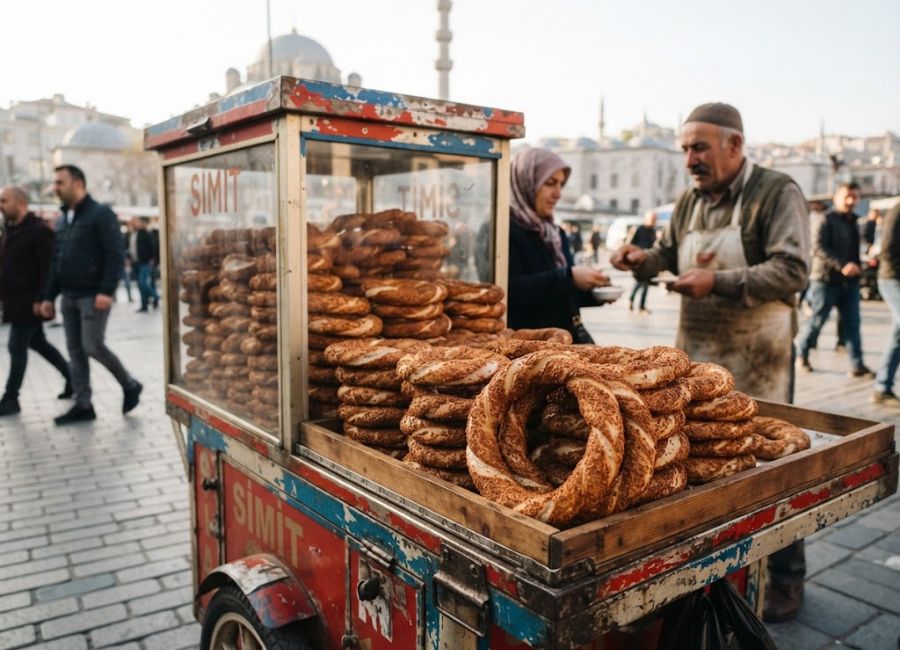
Simit is often called the Turkish version of a bagel, but it has its own identity. Covered in sesame seeds and slightly crispy on the outside, simit is a classic snack enjoyed with tea in the morning.
Vendors sell it from red carts with glass compartments, often stacking dozens of rings in neat pyramids. Some people eat it plain, while others pair it with cheese, jam, or olives for a more filling Turkish breakfast.
The dough is boiled briefly in a mixture of water and grape molasses before baking. This step gives simit its shiny, slightly sweet crust.
It separates simit from a regular bagel, giving it a distinct chewiness inside and a satisfying crunch outside.
2. Döner Kebab
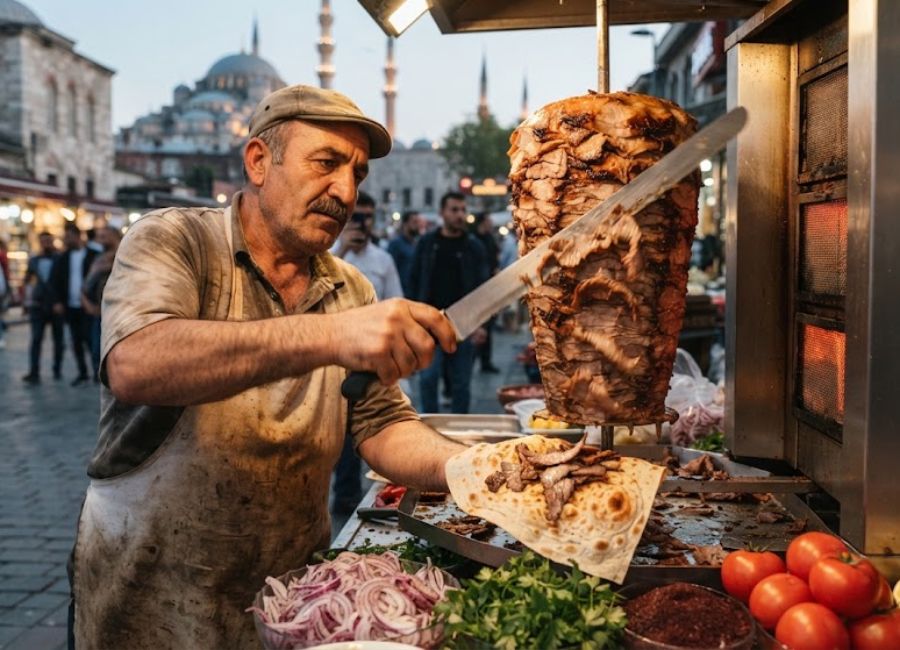
No discussion of Turkish street food is complete without döner kebab. If you want to explore more traditional foods, check out our guide to famous Turkish dishes. Thin slices of marinated meat are cooked on a rotating spit and served in bread with vegetables and sauces.
It is one of the most exported dishes around the globe, having inspired countless variations in Europe, the Middle East, and beyond.
Traditionally made with lamb or beef, döner has also become popular with chicken for a lighter option. The meat is stacked in layers and seasoned with a blend of spices.
It is slow-roasted vertically so the outer layer crisps while staying juicy inside. Vendors shave off thin slices with a long knife as customers wait, ensuring every order is freshly cut.
3. Balık Ekmek
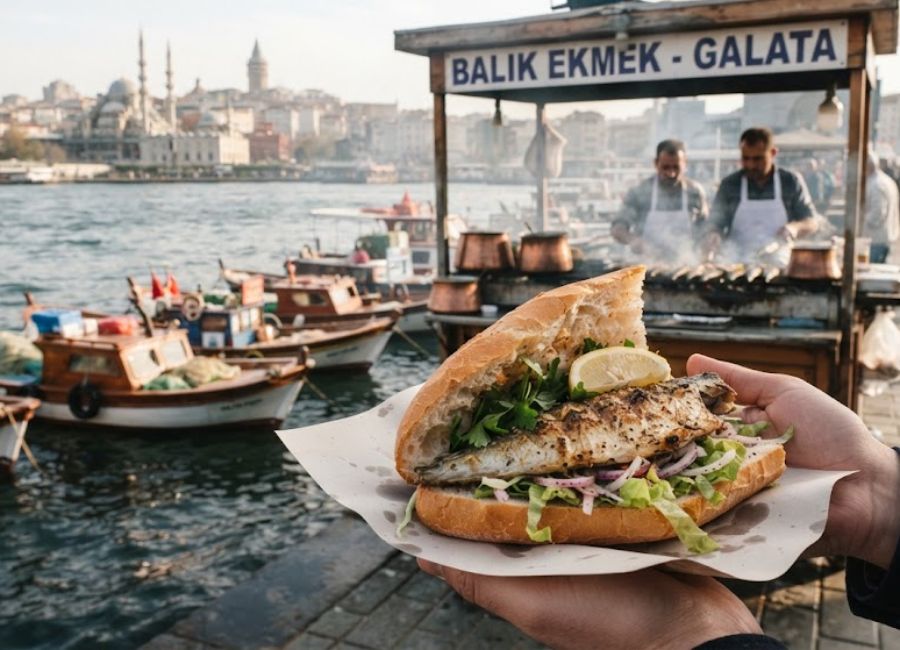
This fish sandwich is a coastal favorite and a must-try dish, especially in Istanbul near the Galata Bridge. Grilled fish, fresh onions, and lettuce are stuffed into crusty bread.
Fishermen often grill the fish directly on small boats bobbing near the shore, adding a theatrical element to the whole experience.
A squeeze of lemon and a sprinkle of salt are usually all that is added. This lets the smoky, grilled flavor of the fish shine through.
It pairs perfectly with a glass of pickled turnip juice or a simple cup of Turkish tea while you watch the ferries cross the Bosphorus.
4. Midye Dolma
Stuffed mussels filled with spiced rice are a popular snack sold from carts in coastal towns. Vendors squeeze fresh lemon over them before serving.
The combination of briny shellfish and fragrant rice makes for an addictive bite-sized treat. The rice filling typically includes pine nuts, currants, cinnamon, and allspice.
Eating midye dolma properly involves using the open mussel shell itself as a small scoop, sliding the rice out in one smooth motion. It is a skill locals pick up early, and tourists often enjoy learning it from friendly vendors.
5. Kokoreç
Kokoreç is a bold and spicy dish made from seasoned and grilled intestines, often served in a sandwich. It is not for everyone, but adventurous food lovers consider it a true taste of this street food culture.
The intestines are cleaned thoroughly, wrapped around a skewer, and grilled slowly over charcoal until crisp on the outside.
It is typically chopped finely, mixed with tomatoes, peppers, and oregano, then stuffed into fresh bread. Vendors specializing in kokoreç often become local legends, with customers traveling across town just to visit their favorite stall.
6. Lahmacun
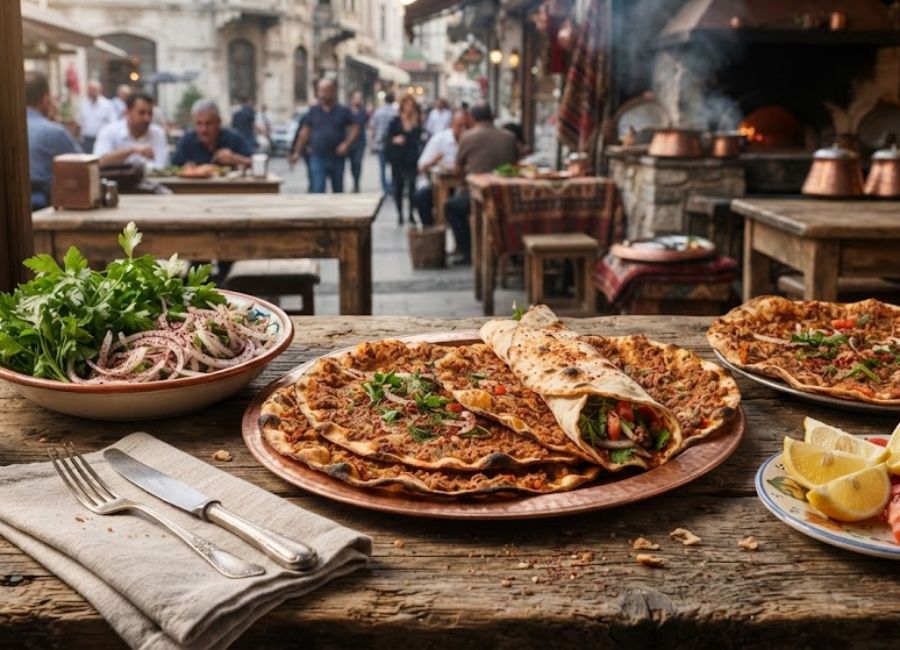
Sometimes called Turkish pizza, lahmacun is thin dough topped with minced meat, herbs, and spices. It is a light and satisfying option, usually rolled up with fresh parsley and lemon.
The dough is stretched paper-thin before baking in a hot oven. This gives it a crisp base that contrasts nicely with the juicy topping.
Many people add a drizzle of pomegranate molasses or a handful of chopped tomatoes and onions before rolling it up. It is common to eat two or three in one sitting, since each piece is light enough not to feel heavy.
7. Gözleme
Gözleme is a stuffed flatbread cooked on a griddle, filled with cheese, spinach, or potatoes. It is a comforting favorite, often prepared by women vendors in traditional dress.
They roll and fold the dough by hand right in front of customers. Watching the process is part of the appeal, as the dough is stretched thin with a long rolling pin before being filled and folded.
Popular fillings include a mix of feta cheese and fresh parsley, sautéed spinach with onions, or seasoned ground beef. Each folded gözleme is cooked directly on a convex griddle called a saç, brushed lightly with butter for extra flavor.
8. Çiğ Köfte
Originally made with raw meat, modern çiğ köfte is usually meat-free and made with bulgur and spices. This vegetarian-friendly snack is wrapped in lettuce leaves and served with lemon.
The mixture is kneaded for a long time with tomato paste, pepper paste, and a blend of spices until it becomes smooth and slightly sticky.
Vendors often hand out small samples for customers to try before ordering a full wrap. It has a spicy, tangy flavor that pairs beautifully with fresh lemon juice and crunchy lettuce.
9. Boza
Boza is a thick, fermented drink made from grains, often paired with roasted chickpeas. It is a traditional street beverage, especially popular in the winter months.
The drink has a mildly sour, slightly fizzy taste from natural fermentation. Its thick texture is quite different from typical beverages.
Boza sellers historically walked through neighborhoods at night calling out their arrival, a tradition that still continues in some parts of Istanbul today. A sprinkle of cinnamon and a handful of roasted chickpeas on the side complete the experience.
10. Turkish Tea and Coffee
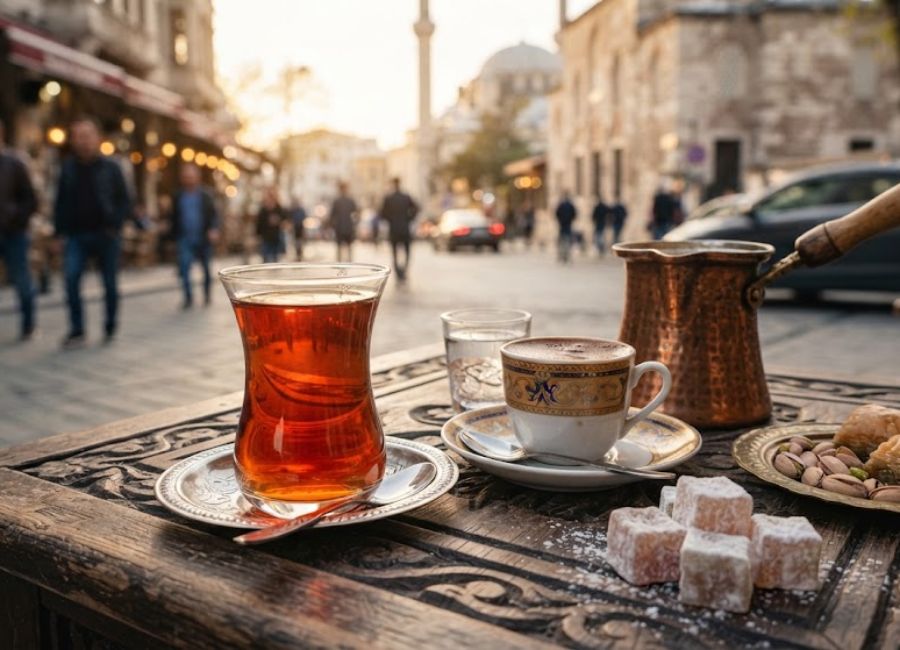
No street food experience in Turkey is complete without a glass of Turkish tea or a small cup of Turkish coffee. These drinks are served everywhere, from tea gardens to street corners.
Tea is brewed strong in a double teapot system called a çaydanlık. For a deeper look at this traditional drink, read our guide to Turkish tea. It is served in small tulip-shaped glasses, often with a cube or two of sugar on the side.
Turkish coffee, on the other hand, is brewed slowly in a small pot called a cezve. This results in a thick, unfiltered cup with grounds settling at the bottom, traditionally served with a small glass of water.
Where to Find the Best Turkish Street Food
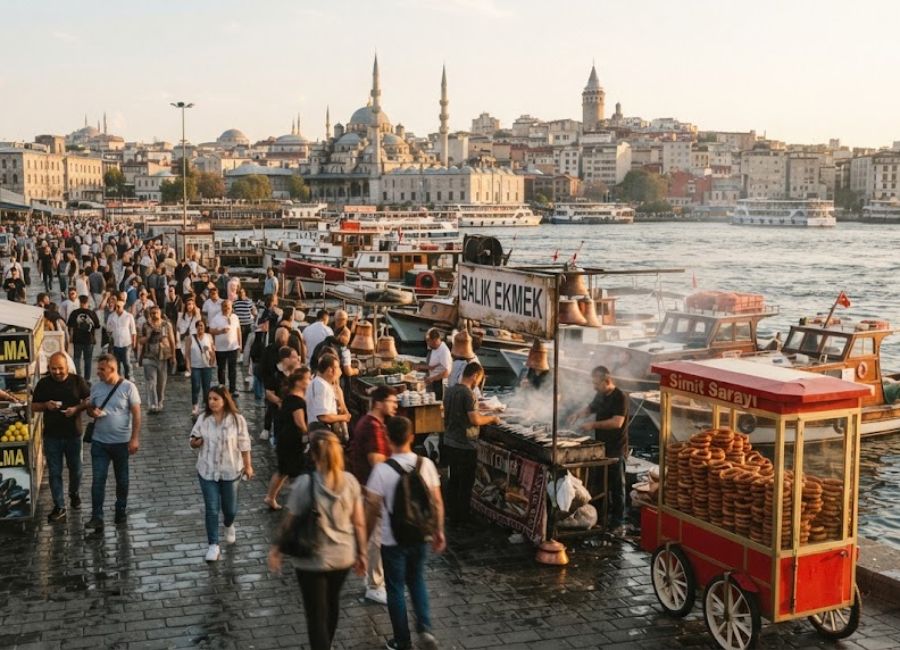
Istanbul is widely considered the capital of Turkish street food. The Eminönü district, the streets near the Grand Bazaar, and the waterfront areas along the Bosphorus are packed with vendors offering fresh snacks all day long.
Karaköy, with its mix of old warehouses and modern cafes, has also become a hotspot for younger vendors experimenting with traditional recipes.
Beyond Istanbul, cities like Gaziantep, Izmir, and Antalya each bring their own twist to Turkish street food. Gaziantep is especially known for its baklava and spicy kebabs.
Izmir offers a lighter, seafood-focused version centered around its long waterfront promenade called Kordon.
Ankara, the capital city, has its own local specialties as well, including a simplified version of döner served with tomato sauce and yogurt. Smaller towns along the Aegean and Mediterranean coasts often have seasonal offerings tied to the local fishing or harvest calendar.
How Street Food Culture Shapes Daily Life
For many Turkish people, grabbing a quick bite from a street vendor is not a special occasion. It is simply part of daily routine.
Office workers stop for simit and tea on their way to work. Students grab lahmacun between classes. Late-night crowds gather around kokoreç stalls after a night out.
This constant presence in daily life is what makes the food feel so authentic and unpretentious.
Vendors themselves often become familiar faces in their neighborhoods, recognizing regular customers and remembering their usual orders. This personal connection between seller and buyer adds warmth to the experience.
Seasonal Street Food Across Turkey
Just like agriculture and fishing follow the calendar, so does the street food scene. In summer, vendors along the coast lean heavily into fresh grilled corn.
Midye dolma stalls multiply near ferry terminals where crowds gather in the evening breeze. Watermelon and melon slices, sold from carts with hand-painted signs, become a common sight on hot afternoons.
Winter brings a completely different rhythm. Boza sellers become more visible, and roasted chestnut carts appear on nearly every major street corner.
Hot soups such as tripe soup or lentil soup are sold from small stands aimed at commuters looking for something warming before work. Kokoreç also tends to be more popular in colder months, when the rich, smoky flavor feels especially satisfying.
Ramadan adds another layer to this seasonal pattern. During the holy month, street vendors near mosques sell pide, a soft flatbread baked specifically for the occasion.
Dates and traditional sherbet drinks are also sold to break the fast. Visiting during this period offers a completely different, deeply communal side of Turkish food culture.
The Role of Spices and Sauces
Much of what makes these dishes memorable comes down to the sauces and spice blends vendors use. Sumac, a tangy reddish spice made from dried berries, appears frequently sprinkled over kebabs and salads.
Isot pepper, a smoky, slightly sweet chili flake from the Şanlıurfa region, is another common addition that gives many dishes their distinctive kick.
Garlic yogurt sauce is a frequent companion to grilled meats, offering a cooling contrast to spicier preparations. Pomegranate molasses, tangy and slightly sweet, is drizzled over everything from lahmacun to salads.
Understanding these building blocks helps explain why so many different snacks share a familiar underlying taste profile.
Street Food Etiquette and Local Customs
Visitors are often surprised by how social the experience can be. It is common to strike up a short conversation with a vendor while waiting.
Many sellers take genuine pride in explaining how their dish is made if asked politely. Tipping is not always expected the same way it is at restaurants, but rounding up the bill is generally appreciated.
Sharing food is another important cultural element. Groups of friends or coworkers often order several different snacks and pass them around rather than each person sticking to their own order.
This communal style of eating reflects a broader hospitality culture found throughout Turkey, where offering food to others is seen as a genuine gesture of warmth.
Tips for Enjoying Turkish Street Food Like a Local
- Eat where the locals eat. Long lines usually mean fresh and delicious Turkish street food.
- Try small portions from multiple vendors instead of filling up on one dish.
- Always ask for extra lemon or spice if you enjoy bold flavors.
- Carry small cash, as many vendors do not accept cards, especially in older markets.
- Be open to trying new textures and ingredients, since these snacks often surprise first-time visitors.
- Pay attention to how food is stored, choosing stalls that keep ingredients fresh and covered.
- Learn a few basic Turkish phrases, since a simple greeting often earns a warmer welcome.
Final Thoughts on Turkish Street Food
Turkish street food is more than just food. It is a window into Turkish culture, history, and daily life.
From the sesame-covered simit in the morning to a warm cup of boza at night, every bite tells a story shaped by centuries of tradition. Whether you are a tourist or a local, exploring Turkish street food is one of the best ways to understand Turkey’s rich culinary heritage.
Travelers who wander beyond the main tourist areas and follow the smell of grilling meat or fresh bread often discover the most memorable meals of their entire trip. It is this spirit of exploration and genuine connection with vendors that makes the experience unforgettable.
FAQs
1. What is the most popular Turkish street food?
Döner kebab is widely regarded as the most popular Turkish street food, both in Turkey and internationally, thanks to its convenience and universally appealing flavor.
2. Is Turkish street food safe to eat?
Yes, most Turkish street food is prepared fresh in front of customers, making it generally safe as long as you choose busy, popular vendors with high turnover.
3. What is the best city in Turkey for street food?
Istanbul is considered the top destination for Turkish street food due to its variety and long culinary history, though Gaziantep and Izmir also shine.
4. Is there vegetarian Turkish street food?
Yes, dishes like gözleme with spinach or cheese, and çiğ köfte without meat, are common vegetarian options within Turkish street food culture.
5. How much does Turkish street food usually cost? Turkish street food is very affordable, with most snacks and sandwiches costing only a few dollars, making it budget-friendly for travelers.