

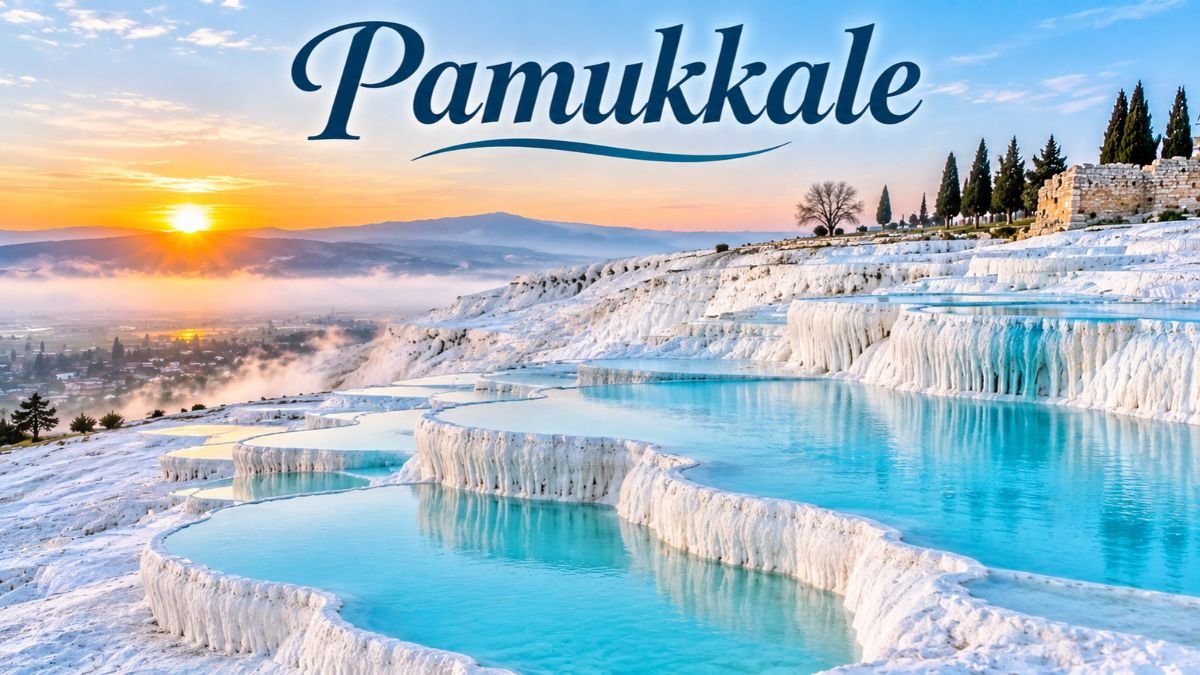
Pamukkale in winter is very different from the summer photos you see online. The site is famous for its white terraces and warm turquoise water, but most photos are taken in summer, so many people wonder if a winter visit is worth it.
This guide to Pamukkale in winter answers the questions travelers ask most. Is it open? Is there water in the pools? Can you swim? How cold is it? It also gives you a simple one-day plan.
Quick answer: Yes, Pamukkale in winter is open and worth visiting. It is quieter, cooler and often calm. Some terraces may be dry, so don’t expect every pool to look like the postcard. Cleopatra’s Pool reopened in spring 2026 after upgrades, and the official listing says the pool area is temporarily open to visitors, so check that it is open on your day. Dress warmly and start early.
Prices and hours below were checked against several 2026 travel guides and news reports in November 2026. They change often, so confirm them at the ticket office or on the official ticket page before you travel.
Quick Facts
- Where: Denizli Province, western Turkey
- Famous for: White travertine terraces and the ancient city of Hierapolis
- Status: UNESCO World Heritage Site
- Main ticket: €30. The price is set in euros, but you pay in Turkish lira at the gate (roughly 1,100–1,400 TL, depending on the exchange rate). It covers the terraces, the ruins and the museum.
- Cleopatra’s Pool: Extra fee. Many guides report about €6, but some list higher amounts in lira, so ask at the gate.
- Hours: 08:00 to 18:00, open every day. The ticket office closes at 17:00, so arrive well before that.
- Time needed: Half a day, or a full day with the pool and the museum
How Pamukkale Was Formed
Pamukkale means “cotton castle” in Turkish, and the name fits. The white rock looks soft, like piled cotton.
It is not snow or salt. Hot spring water here carries a lot of calcium carbonate. When the water meets the open air, the mineral slowly settles and hardens into white travertine.
This happens very slowly, over a very long time. It is also why the site is protected, and why visitors walk barefoot on the terraces.
The terraces and the ruins of Hierapolis together make up a UNESCO World Heritage Site.
Is Pamukkale Worth Visiting in Winter?
For most travelers, yes. Pamukkale in winter brings fewer crowds, softer light and cooler air that makes a hot spring feel great.
Summer brings long lines and strong sun. In winter, you can walk the ruins at a slow pace and take photos without people in every frame.
There are a few things to accept. Days are short, the air is cold, and rain can arrive at any time. You may also see more dry terraces than in summer.
Pamukkale in winter suits you if you like quiet places, photography and warm water on a cold day. It may not suit you if you only want the classic summer photo with a full pool
If you are building a winter route, see our Turkey in winter travel guide and our guide to Turkey in December.
Pamukkale Weather in Winter
Winter in this part of western Turkey is cool, not extreme. Daytime temperatures are usually somewhere between 3°C and 14°C, and January is the coldest. Nights can fall close to freezing, and a light frost is possible.
Rain is more likely than in summer. Snow is not common here, but cold, clear mornings do happen
| Month | What to expect |
| December | Cool and often damp, with short days |
| January | The coldest month, with frosty mornings |
| February | Still cold, but the light starts to improve |
Check the forecast for your dates before you travel, and again the evening before your visit.
The sun sets early in winter, at around 17:00 in December. Plan your main walking for the middle of the day.
Are the Travertine Pools Full in Winter?
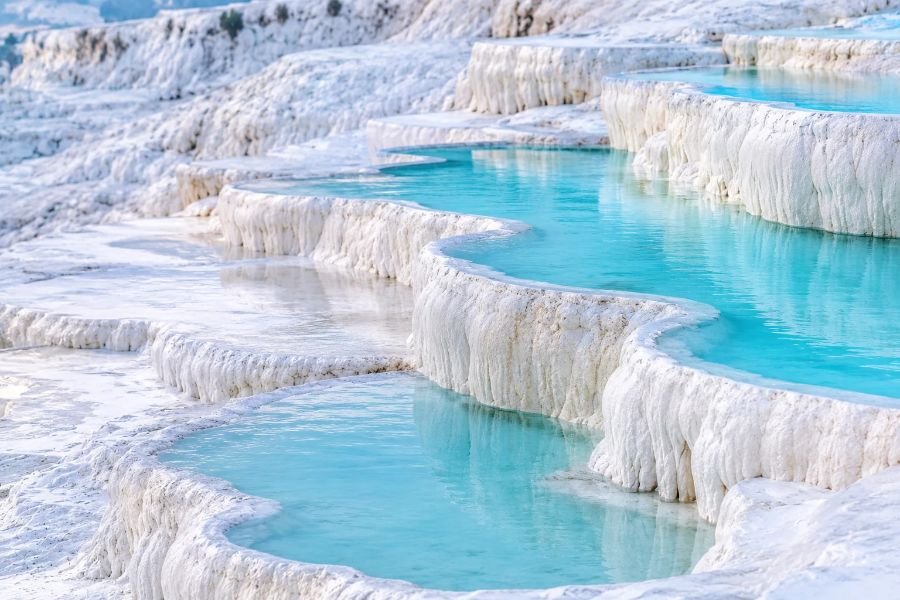
Not always. This is the part that surprises many visitors.
The terraces are filled by natural hot spring water. The amount of water changes, and the site is managed to protect the rock. Water may be directed to different terraces at different times.
So, some terraces hold water and others are dry and white. This is normal at any time of year. Only short sections hold the turquoise water seen in photos, and the pools are usually shallow.
A better way to think about it is this: you will see the white rock, and you will see some pools with water.
Visitors walk up a marked path in bare feet, with shoes in hand. This protects the travertine. In winter, the path is cold and wet, so be ready for that. Warm socks and a towel for afterward make a big difference..
Is Cleopatra’s Pool Open in Winter?
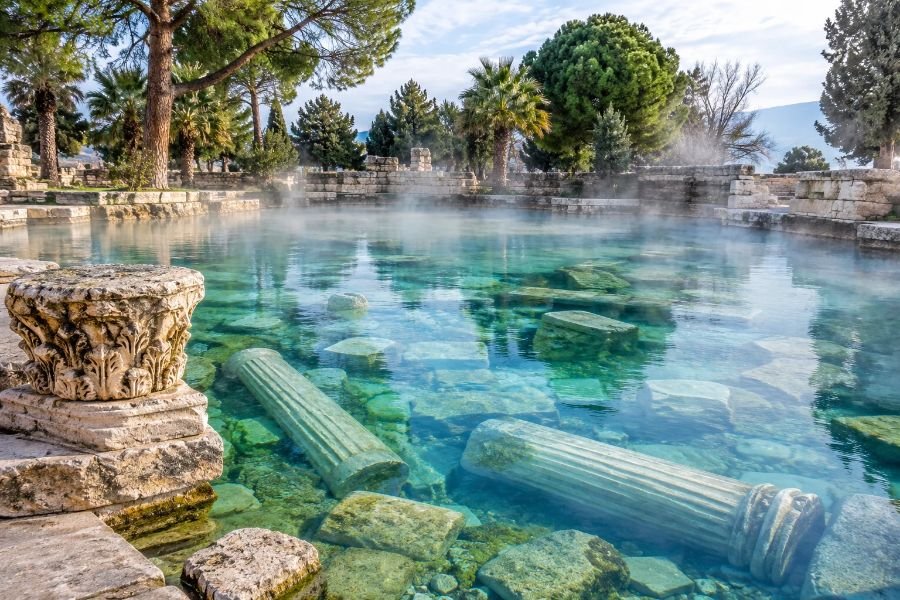
Cleopatra’s Pool, also called the Antique Pool, is a warm thermal pool with ancient columns under the water. The water stays at about 36°C all year, which is one reason it is popular in winter.
The pool was closed for restoration and upgrades for a period. News reports in May 2026 said it had reopened to visitors, and the official site listing describes the pool area as “temporarily opened to visitors.” That wording means access can change, so ask at the ticket office or your hotel before you plan your day around it.
It needs a separate ticket. Many guides report about €6, though some list other amounts in lira, so confirm the price at the gate. Sessions can be time-limited when it is busy.
If it is open, a swim in warm water on a cold day is a highlight. If it is closed, you can still enjoy the terraces and the ruins.
Bring a swimsuit, a towel and flip-flops. There are changing rooms and lockers near the pool. Wear your swimsuit under warm clothes if you can, so you can change quickly.
Pamukkale in Winter: Opening Hours and Tickets
These are the reported details. They can change, so please confirm them locally.
| Item | Reported detail |
| Hours | 08:00 to 18:00, open every day |
| Ticket office closes | 17:00 |
| Audio guide | Available |
| Main ticket | €30, paid in Turkish lira |
| What it covers | Terraces, Hierapolis ruins and the museum |
| Cleopatra’s Pool | Extra fee, about €6 reported (confirm at the gate) |
| Re-entry | Not allowed. One entry per ticket. |
| Entrances | Three: town center, north and south, each with a ticket office |
Because there is no re-entry, finish your lunch and your rest before you enter, or plan to eat inside the site.
The Turkish Museum Pass may cover your entry, but not the pool. Check the details if you plan to buy it. Our 7-day Turkey itinerary shows how a trip can fit around a pass.
A Short History of Hierapolis
Hierapolis sits about 18 km from Denizli. It began as a city of the Pergamon kingdom in the 2nd century BC, and its name points back to a figure from Pergamon’s founding legend.
This is a land of earthquakes, and the city fell and was rebuilt several times. A strong quake in AD 60 led to a major rebuild with straight, crossing streets in the Roman style. Most of the stone you walk past today comes from that period.
Later, the city became a Christian pilgrimage place because of St. Philip, who is said to have died here in AD 80. An eight-sided church was built to honor him, and Hierapolis rose to high church rank. Quakes in the 7th and 14th centuries ended its life, and by then it had already shrunk to a small Seljuk town.
Today the ruins and the travertines are protected together by UNESCO for their cultural and natural value.
What to See at Hierapolis in Winter
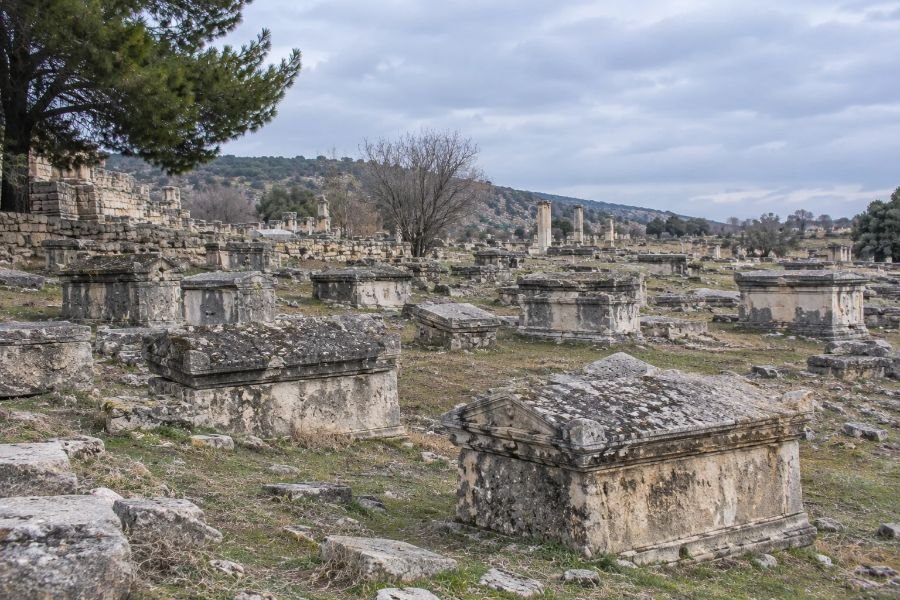
Hierapolis is the ancient city above the terraces. It was a spa town in ancient times, and its ruins cover a large area. The same ticket covers it.
In winter, the ruins are one of the best parts of the visit, because you share them with few people.
- The Great Theater. It sits on a hillside and gives wide views over the plain. It is a good place for photos in clear weather.
- The Necropolis. This is the largest ancient cemetery in southwest Anatolia, with many tombs outside the city walls. It is quiet and atmospheric in cool weather.
- The Plutonium. A shrine to the god Pluto, linked in ancient belief to the entrance to the underworld.
- The Martyrium of St. Philip. The octagonal church built in memory of the apostle, on a hill with good views.
- Hierapolis Archaeology Museum. It is inside a restored Roman bath. Plan at least an hour. It is indoors, so it is a good choice if it rains.
- The main street and the baths. The main street is about 1 km long and was lined with arcades, shops and workshops. Walk slowly and look at the stone work.
The ground is uneven, with marble steps and steep parts. Wear shoes with good grip, and take care when it is wet.
Nearby, the Red Springs at Karahayıt are another hot spring area, if you have extra time.
7 Tips for Pamukkale in Winter
These simple tips will help you get the most from Pamukkale in winter.
- Go early. Days are short, so start in the morning. You will also have the terraces almost to yourself.
- Dress in layers. Wear a warm base layer, a sweater and a waterproof jacket. A hat and gloves help on cold mornings.
- Carry your shoes. On the travertine path, you walk barefoot. Bring a plastic bag for wet feet and warm socks for afterward.
- Pack a swimsuit and a towel. Do this even if you are not sure the pool will be open.
- Check the pool status. Ask the ticket office or your hotel before you pay for the pool.
- Watch every step. Wet travertine is slippery. Walk slowly and hold on to the edges if needed.
- Keep your plan flexible. Rain or fog can change your day, so have the museum or a thermal hotel as a backup.
Safety Notes
- Wet travertine and marble are very slippery. Walk slowly and use handrails where there are any.
- Wear grip shoes for the ruins, and carry them on the terraces.
- Watch children closely near the pools.
- Leave the site before dark. Paths are harder to see in dim light.
What to Pack for Pamukkale in Winter
For Pamukkale in winter, you will be outside for most of the day, so pack for cold and wet weather.
- A warm layer and a waterproof jacket
- A hat and gloves for early mornings
- Shoes with good grip for the ruins
- Warm socks and a plastic bag for wet feet
- A swimsuit, a quick-dry towel and flip-flops
- A water bottle and a snack
- A power bank, since cold drains phone batteries
Keep the swimsuit and towel in a small bag you can carry easily. You will also carry your shoes on the terraces.
Photography Tips
Pamukkale in winter has soft light, which is good for photos of white rock.
- Go early. The first hours of the day usually give the best light and the fewest people.
- Try after rain. The wet white stone can look bright against a blue sky.
- Use the theater. From the top rows, you can capture the plain and the ruins together.
- Stay on the path. Do not step on the terraces outside the marked area.
- Protect your phone. Cold weather drains batteries quickly, so keep it in an inside pocket between photos.
A wide view works well for the terraces. For details, focus on the edges of the pools and the patterns in the rock.
A One-Day Plan for Pamukkale in Winter
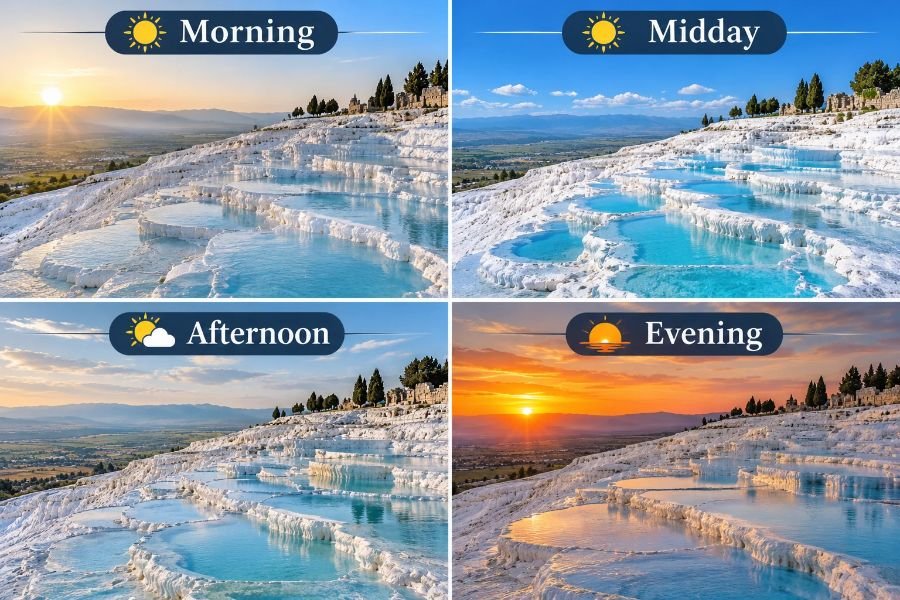
This plan for Pamukkale in winter is simple and works well in short days. The site closes at 18:00 and the ticket office at 17:00, but the sun sets around 17:00 in December, so aim to finish by about 16:30.
Morning (about 08:30 to 11:30)
- Arrive when the gates open and buy your ticket.
- Walk the white terraces first, before tour groups arrive.
- Continue up to the ruins and stop at the Great Theater.
Midday (about 11:30 to 13:30)
- Walk through the Necropolis and the main street of Hierapolis.
- Have lunch at a cafe inside the site.
Afternoon (about 13:30 to 16:30)
- Visit the Hierapolis Archaeology Museum.
- Swim in Cleopatra’s Pool if it is open.
- Leave before dark.
Evening
- Warm up at a thermal hotel with a hot pool.
- Have a hot dinner. For ideas, read our guide to Turkish hammams and thermal springs.
If you have only half a day, do the terraces, the theater and the pool, and skip the museum.
Common Mistakes at Pamukkale in Winter
- Arriving late. Winter days are short, and the ticket office closes at 17:00, around sunset in December.
- Expecting every pool to be full. Some terraces are always dry.
- Paying for the pool before checking it is open. Ask first.
- Wearing only sandals. You need grip shoes for the ruins, and warm socks for after the terraces.
- Leaving the site for lunch. Your ticket has no re-entry.
- Bringing euros. The price is listed in euros, but you pay in lira. Some visitors report that euros were not accepted at the ticket office.
- Booking a tight transfer. Fog and rain can delay roads and flights.
How to Get to Pamukkale in Winter
Getting to Pamukkale in winter is easy. The town is about 18 kilometers from the city of Denizli, and a minibus takes around 20 minutes.
From Istanbul
- By air: Fly to Denizli Çardak Airport. The flight takes around 1.5 hours.
- By bus: The ride is long, roughly 10 hours.
From Izmir or Selçuk (Ephesus) Take the train to Denizli, then a short minibus ride. It is a relaxed route. Train schedules change, so check the current timetable.
From Antalya The drive is about 3 hours. Some tours do it as a long day trip. Our Antalya in winter guide has more on the coast.
In winter, fog and rain can slow roads and flights. Leave extra time, and avoid a tight schedule on the same day as an international flight.
Where to Stay
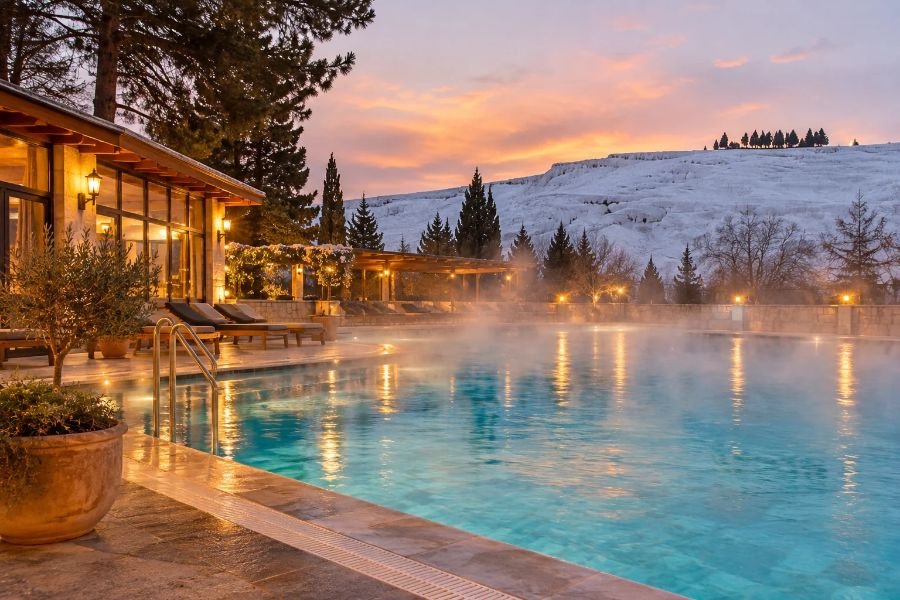
Many hotels in Pamukkale have thermal pools, and winter is the best time to enjoy them.
- In the village: Good if you want to walk to the south entrance and have dinner nearby.
- At a thermal hotel: A warm pool at the end of a cold day is a real pleasure.
Before you book, check that the hotel’s pool is open in winter and that the rooms are heated. Read recent guest reviews.
Rough Budget for One Day
| Item | Approximate cost |
| Main ticket (terraces, ruins, museum) | €30 (paid in lira) |
| Cleopatra’s Pool | About €6 reported, confirm at the gate |
| Minibus from Denizli | Low, varies |
| Lunch | Cheaper in the village than inside the site |
| Thermal hotel | Varies by season. Winter is often lower. |
Who Should Visit in Winter?
Winter is a good match if you:
- like quiet places and slow walks
- enjoy photography and soft light
- want to relax in warm water after a cold day
- prefer lower prices and shorter lines
You may want to choose another season if you:
- need a full pool for photos
- cannot walk on wet, uneven ground
- have a very short trip and cannot allow for bad weather
If you are not sure, compare the seasons in our guide to the best time to visit Turkey.
Pamukkale in Winter vs Summer
| Winter | Summer | |
| Crowds | Fewer | Many |
| Weather | Cool, damp | Hot, sunny |
| Terrace water | Varies | Varies |
| Daylight | Short | Long |
| Hot pools | Very pleasant | Often too warm |
| Prices | Often lower | Often higher |
Both seasons can be good. Winter is better for quiet, and summer is better for long days.
Is Pamukkale Easy for Families and Older Travelers?
It can be, with some planning.
Accessibility is very limited. The terraces are walked barefoot on wet rock, and the site is not fully wheelchair accessible because of uneven terrain. The ruins have uneven stone and steep parts.
Children need close supervision near the pools. Take breaks, wear shoes with good grip, and choose the parts of the site that suit your group.
Budget Tips
- Buy one ticket and use it fully. It covers the terraces, the ruins and the museum, so plan to see all three.
- Check the Museum Pass. If you plan to visit several sites in Turkey, the pass may cover your entry, but the pool is extra.
- Choose a thermal hotel. A hot pool at your hotel can replace a paid pool visit.
- Take a minibus from Denizli. It is cheaper than a taxi.
- Eat outside the entrance area. Meals in the village are often cheaper than at the site.
Conclusion
A winter day at Pamukkale is calmer, cooler and often more peaceful than in summer. You may see a few dry terraces, but you also get quiet ruins, warm water and softer light.
Go early, dress in layers, carry your shoes on the terraces and check the pool status. With a simple plan, it can be one of the best parts of a trip to western Turkey.
FAQs
Is Pamukkale open in winter?
Yes. It is open every day, with shorter hours than in summer. Check the current times at the ticket office.
Can you swim at Pamukkale in winter?
You can swim in Cleopatra’s Pool, which is warm all year, if it is open. The travertine terraces are not for swimming. Check the pool status before you go.
Is there water in the travertine pools in winter?
Some terraces have water and others are dry. The water is managed through the year, so it varies. Expect to see white rock and a few pools.
How cold is Pamukkale in winter?
Daytime temperatures are usually between 3°C and 14°C. Nights can be near freezing. Rain is possible.
How long do you need in Pamukkale in winter?
Half a day is enough for the terraces and the theater. A full day lets you add the museum, the pool and a slow lunch.