

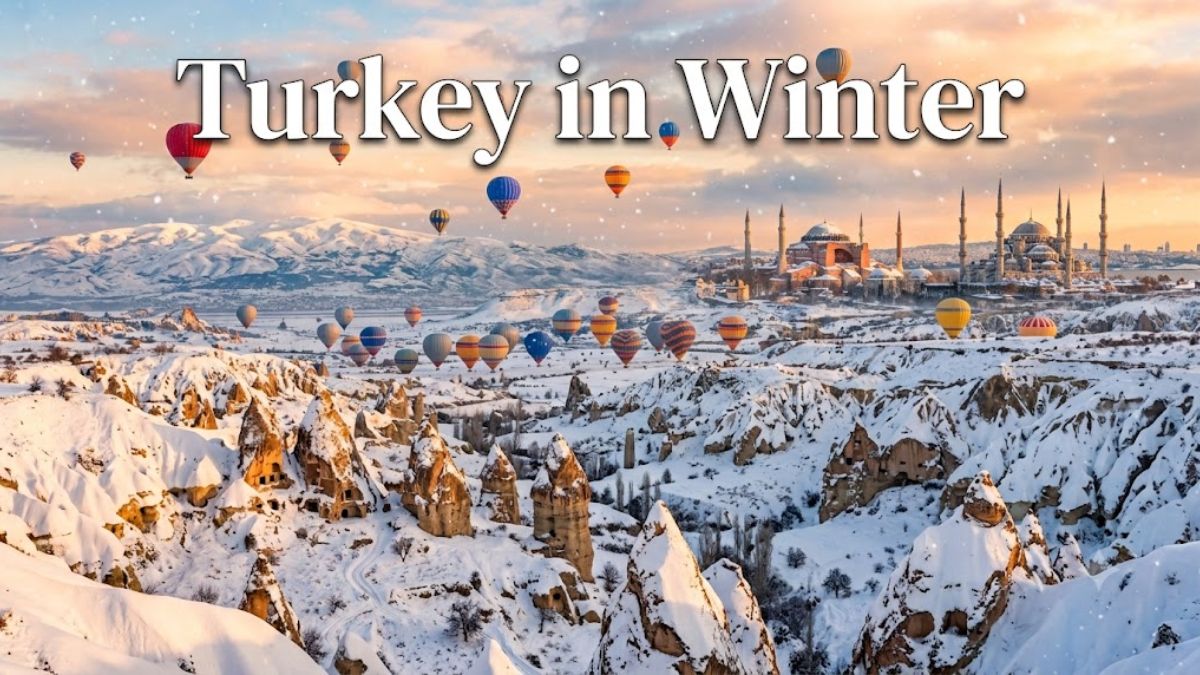
Most travelers picture Turkey in summer, with beach towels on the Aegean coast and long queues at Cappadocia’s balloon launch fields. But Turkey in Winter tells a completely different story, and it’s one that fewer tourists get to experience.
Between December and February, Istanbul’s mosques sit quietly under grey skies, Cappadocia’s fairy chimneys wear a soft blanket of snow, and mountain resorts near Uludağ and Erciyes fill up with skiers instead of sunbathers. Turkey in Winter is quieter, cheaper, and in many ways more atmospheric than the peak summer season.
This guide walks you through everything you need before booking a winter trip: weather by region, the best cities and ski resorts, a full packing list, a 7-day itinerary, realistic budget numbers, and answers to the questions travelers ask most often. If you’ve been wondering whether Turkey in Winter is worth it, by the end of this article you’ll have a clear answer.
Why Visit Turkey in Winter?
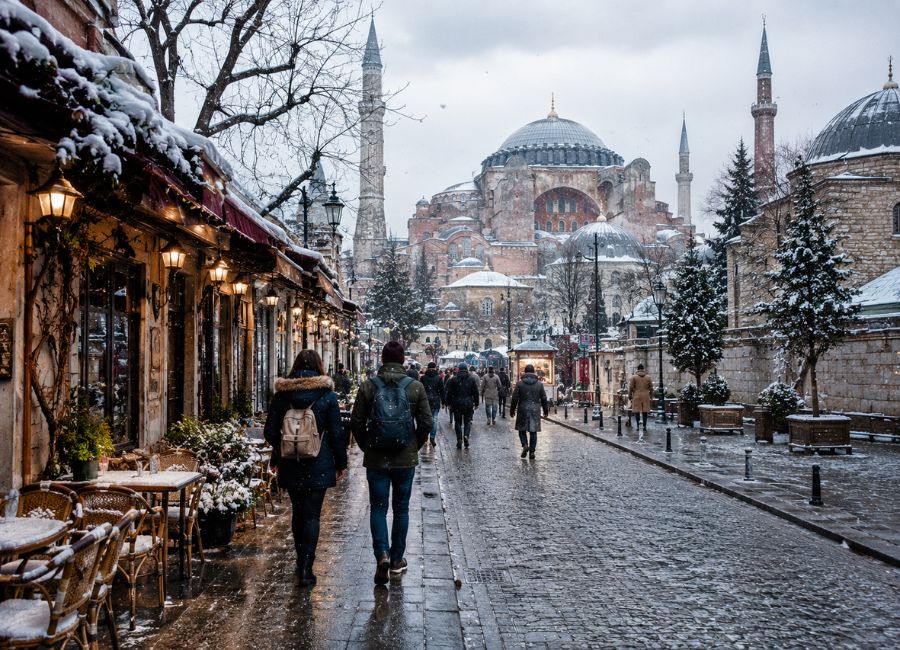
Turkey in Winter rewards travelers who don’t mind cooler weather in exchange for smaller crowds and lower prices. If you’re still deciding which season is right for your trip, read our guide on the Best Time to Go to Turkey for a season-by-season comparison. Flights and hotels often drop by 30-50% compared to summer rates, and popular sites like the Hagia Sophia or the Cappadocia valleys feel far less crowded.
Winter in Turkey also opens up experiences that simply don’t exist in summer. You can ski in the mountains near Bursa in the morning and still fly to a warm coastal town like Antalya by evening. Turkish baths, or hamams, feel especially cozy on a cold day, and the country’s rich winter cuisine, including hot soups, mulled drinks, and roasted chestnuts sold on street corners, adds a whole new layer to the trip.
For photographers, Turkey in Winter offers a rare visual bonus: snow-dusted fairy chimneys in Cappadocia, misty views over the Bosphorus, and quiet cobblestone streets without the usual tourist crowds.
Turkey Winter Weather by Region
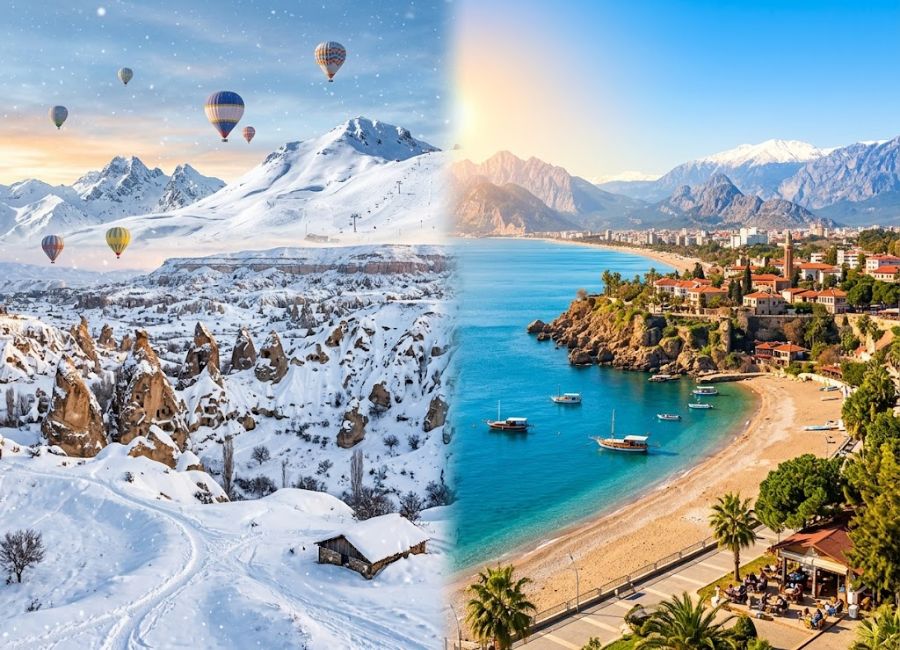
Turkey’s winter weather varies a lot depending on where you go, since the country stretches across several climate zones. Here is a quick regional breakdown.
Istanbul: Cold, damp, and occasionally windy, with temperatures between 3°C and 9°C. Light snow is possible but rarely heavy.
Cappadocia: Cappadocia in winter is cold and dry, often dropping below freezing at night. Snow is common and adds a magical look to the region’s rock formations.
Antalya: The Mediterranean coast stays relatively mild, with daytime temperatures around 12°C to 16°C, making it a good winter escape from colder cities.
Pamukkale: Cool and breezy, usually between 5°C and 13°C, with the famous white travertine terraces looking striking against grey winter skies.
Uludağ: One of Turkey’s main ski regions, with heavy snowfall and temperatures often well below freezing at higher elevations.
Erzurum: Located in Eastern Anatolia, this is one of the coldest cities in the country, with temperatures frequently dropping to -15°C or lower.
Eastern Turkey: Expect harsh winters with significant snow across much of this region, especially in mountainous areas.
Monthly Weather Table (Average Temperatures)
| Month | Istanbul | Cappadocia | Antalya | Erzurum |
| December | 5°C to 12°C | -2°C to 7°C | 9°C to 15°C | -8°C to 0°C |
| January | 3°C to 9°C | -4°C to 5°C | 8°C to 14°C | -14°C to -3°C |
| February | 4°C to 10°C | -3°C to 6°C | 9°C to 15°C | -13°C to -2°C |
Overall, Turkey winter weather is mild near the coasts and genuinely cold inland and in the east, so your packing list and itinerary should be planned around your specific route.
Best Places to Visit in Turkey in Winter
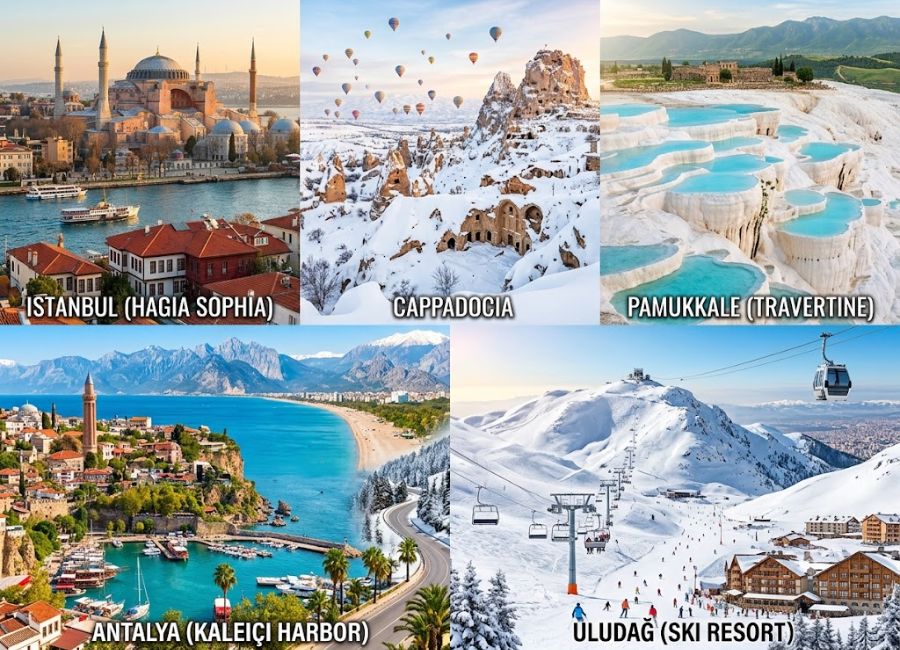
If you’re building a list of the best places to visit in Turkey in winter, these destinations stand out for very different reasons.
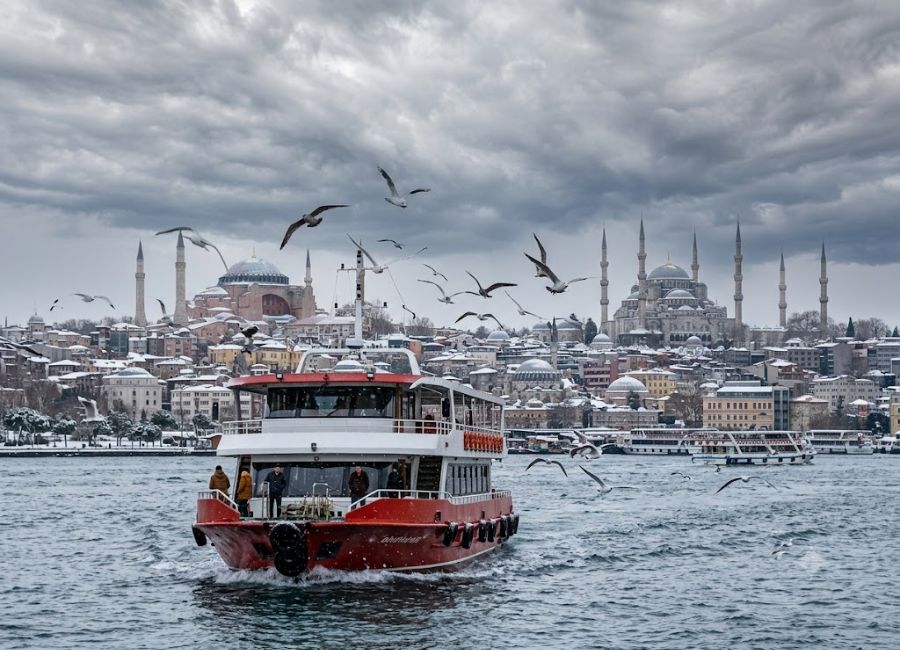
Istanbul in winter is atmospheric and moody. Fewer tourists means shorter lines at the Blue Mosque, Topkapi Palace, and the Grand Bazaar, and a Bosphorus Cruise on a crisp day feels almost private.
Cappadocia in winter turns into a fairy-tale landscape. Snow settles on the valleys and cave hotels, and hot air balloon rides still operate on clear mornings, offering a completely different view from the summer version.
Pamukkale stays open year-round, and the terraces look particularly beautiful with a light dusting of snow around the pools.
Antalya is ideal if you want warmth without leaving the country. It’s one of the few places where you can wear a light jacket instead of a heavy coat.
Bursa is a historic city with Ottoman architecture and is also the gateway to Uludağ Ski Resort, making it a great two-in-one stop.
Uludağ Ski Resort, near Bursa, is one of Turkey’s most popular ski destinations, with well-developed slopes and cable car access.
Erciyes Ski Resort, near Kayseri and close to Cappadocia, offers some of the longest ski runs in the country and stunning views of Mount Erciyes.
Kartepe, close to Istanbul, is a convenient day-trip ski spot for travelers based in the city.
Mount Erciyes itself is a dormant volcano and forms the backdrop for one of the most scenic ski areas in the country.
Eastern Anatolia, including cities like Erzurum and Kars, offers deep snow, dramatic scenery, and a much more traditional, less touristy side of the country.
Best Things to Do in Turkey in Winter
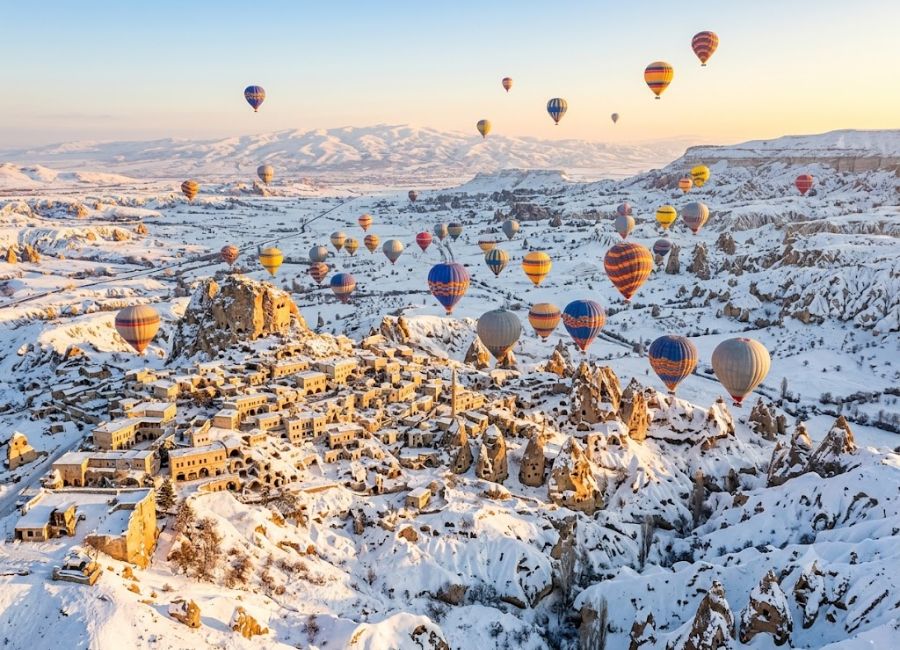
There’s a long list of things to do in Turkey in winter beyond simply sightseeing.
- Take a hot air balloon ride over snow-covered Cappadocia at sunrise
- Go skiing or snowboarding at Uludağ, Erciyes, or Kartepe
- Relax in a traditional Turkish bath (hamam) after a cold day outside
- Try seasonal Turkish food, such as lentil soup, kestane kebabı (roasted chestnuts), and salep, a warm winter drink
- Capture winter photography of snowy landscapes and quiet historic streets
- Experience Christmas and New Year celebrations, especially in Istanbul, which lights up with decorations and events
- Visit indoor museums like the Istanbul Archaeology Museums or Topkapi Palace, which are more enjoyable without summer crowds
- Shop at the Grand Bazaar or modern malls for souvenirs and Turkish textiles
- Take a Bosphorus Cruise to see Istanbul’s skyline from the water, ideally with a hot drink in hand
Turkey Winter Packing List
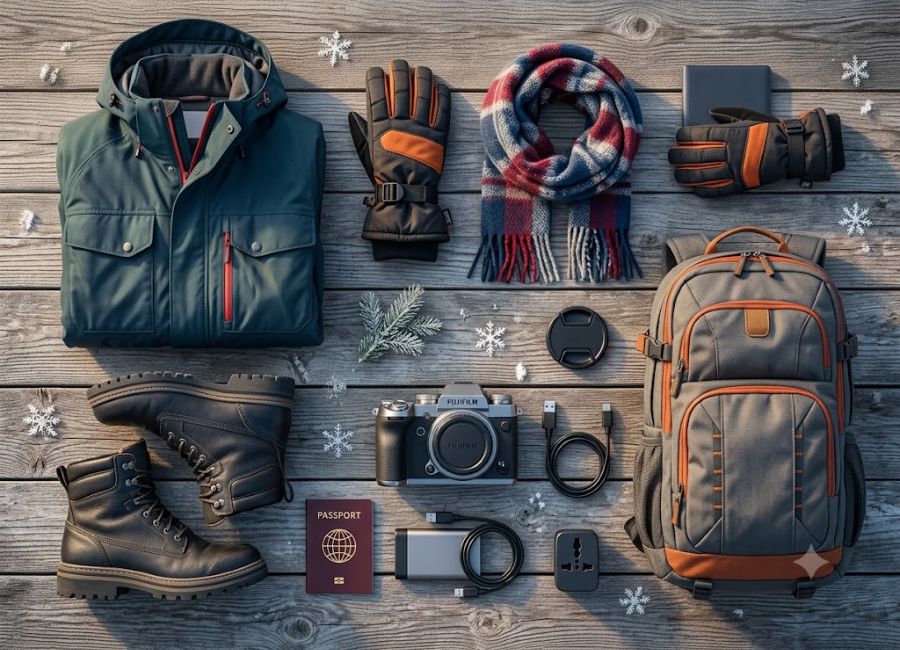
Packing correctly makes a huge difference in how much you enjoy Turkey in Winter, especially if your trip covers both coastal and inland cities.
Clothing:
- Waterproof winter coat
- Thermal base layers
- Sweaters and fleece layers
- Scarf, gloves, and a warm hat
- Waterproof, insulated boots
Shoes:
- Sturdy walking shoes for cobblestone streets
- Waterproof snow boots if visiting Cappadocia, Uludağ, or Eastern Turkey
Electronics:
- Universal travel adapter (Turkey uses Type C and F plugs)
- Portable power bank
- Camera with extra batteries, since cold weather drains battery life faster
Medicines and Essentials:
- Basic cold and flu medicine
- Hand warmers
- Lip balm and moisturizer, since indoor heating can dry out your skin
- Reusable water bottle
Turkey Winter Travel Tips
A few practical Turkey travel tips can save you time and money during a winter visit.
Transportation: Domestic flights are affordable and connect major cities quickly. Buses are comfortable and budget-friendly for medium-distance travel, while trams and metros are efficient inside Istanbul.
Budget: Winter is generally the cheapest season to visit, with hotel prices often 30-40% lower than summer.
Currency: The Turkish Lira (TRY) is the local currency. Card payments are widely accepted in cities, though it helps to carry some cash for small vendors.
Safety: Turkey is generally safe for tourists, though normal city precautions apply, especially around crowded areas like the Grand Bazaar.
Internet: Wi-Fi is common in hotels and cafes, and a local SIM card is inexpensive and easy to buy at the airport for reliable mobile data.
SIM Cards: Major providers like Turkcell and Vodafone offer tourist SIM packages at the airport or in city stores, usually valid for a set number of days.
Local Customs: Dress modestly when visiting mosques, remove shoes before entering, and greet locals with a polite “Merhaba” (hello), which is always appreciated.
Is Turkey Safe to Visit in Winter?
Turkey in Winter is generally considered safe for tourists, including solo travelers and families. Major cities like Istanbul, Cappadocia, and Antalya have a strong tourism infrastructure and are used to hosting international visitors year-round.
As with any destination, it’s wise to check current government travel advisories before booking, stay aware of your surroundings in crowded areas, and keep copies of important documents. Road conditions in mountainous or eastern regions can be affected by snow, so travelers heading to Erzurum or other high-altitude areas should check weather forecasts and road closures in advance.
Turkey in Winter vs Summer
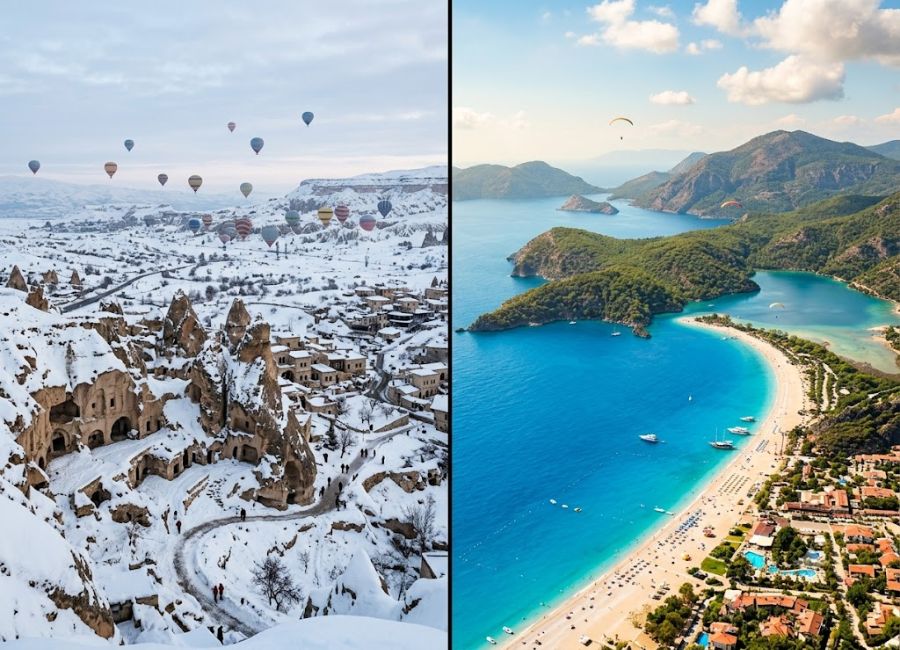
Choosing between Turkey in Winter and Turkey in summer depends on what kind of trip you want.
| Factor | Turkey in Winter | Turkey in Summer |
| Weather | Cold inland, mild on the coast | Hot and dry, especially inland |
| Crowds | Low to moderate | Very high, especially in July/August |
| Prices | 30-50% lower on average | Peak season pricing |
| Best For | Skiing, culture, photography, budget travel | Beaches, boat trips, nightlife |
| Cappadocia Balloons | Weather-dependent, magical with snow | Consistent but crowded |
| Coastal Swimming | Not recommended | Ideal |
Sample 7-Day Turkey Winter Itinerary
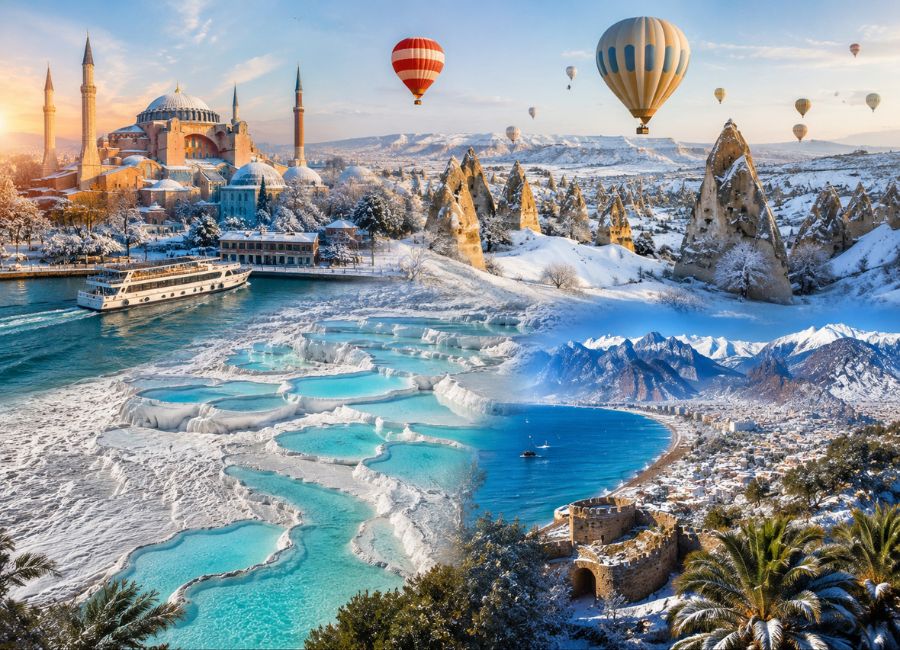
Day 1-3: Istanbul – Explore Hagia Sophia, the Blue Mosque, Topkapi Palace, and the Grand Bazaar. If you’re flying from the United States, check out our New York to Istanbul Travel Guide to plan your journey before arriving in Turkey. Take a Bosphorus Cruise and relax in a traditional hamam.
Day 4-5: Cappadocia – Fly to Cappadocia in winter to see snow-covered valleys, take a hot air balloon ride if weather allows, and explore underground cities like Derinkuyu.
Day 6: Pamukkale – Visit the white travertine terraces and the ancient ruins of Hierapolis.
Day 7: Antalya – End the trip with milder coastal weather, historic Kaleiçi old town, and relaxed beachside dining.
This route can easily be adjusted to include Uludağ or Erciyes if skiing is a priority. For a complete day-by-day travel plan, explore our Turkey Itinerary 7 Days guide.
Turkey Winter Budget
A Turkey winter vacation is noticeably cheaper than a summer one, largely due to lower hotel rates and fewer crowds at attractions.
Hotels: Budget hotels start around $20-35 per night, mid-range hotels average $45-80, and luxury stays range from $100-250 per night, depending on the city.
Food: Street food and casual meals cost $3-8 per meal, while sit-down restaurant meals average $10-20 per person.
Transport: Local transit costs $1-2 per ride, domestic flights range from $30-80, and intercity buses cost $10-25 depending on distance.
Attractions: Museum and site entry fees typically range from $5-20, with some historic sites bundled into the Museum Pass Turkey for better value.
Average Daily Costs: Budget travelers can expect to spend $40-60 per day, mid-range travelers $80-150 per day, and luxury travelers $200 or more per day.
Pros and Cons of Visiting Turkey in Winter
| Pros | Cons |
| Lower prices on hotels and flights | Some coastal activities are unavailable |
| Fewer crowds at major attractions | Balloon rides can be weather-dependent |
| Skiing and snow activities available | Eastern regions can be very cold |
| Cozy cultural experiences like hamams | Shorter daylight hours |
| Great for photography with snow scenery | Some rural roads may be affected by snow |
Conclusion
Turkey in Winter is far from a consolation prize compared to its summer counterpart. It’s a season with its own identity: quieter cities, snow-covered landscapes, ski slopes, cozy hamams, and noticeably lower prices across hotels and flights.
Whether you’re drawn to a snowy Cappadocia sunrise, a quiet walk through Istanbul’s historic quarter, or a day on the slopes at Uludağ, this season has something for almost every kind of traveler. If you’ve been debating whether Turkey in Winter fits your travel plans, this is your sign to start booking, since the season offers real value without compromising on the country’s most iconic experiences.
FAQs
Is Turkey cold in winter?
Yes, especially inland and in the east. Coastal cities like Antalya stay milder, while Istanbul, Cappadocia, and Eastern Turkey can get quite cold.
Does it snow in Turkey?
Yes. Snow in Turkey is common in Cappadocia, Istanbul, and especially mountainous regions like Uludağ, Erciyes, and Eastern Anatolia.
Is Turkey worth visiting in winter?
Yes, Turkey in Winter offers lower prices, fewer crowds, and unique experiences like skiing and snow-covered historic sites that aren’t available in summer.
Can you ski in Turkey?
Yes, popular ski resorts in Turkey include Uludağ, Erciyes, Kartepe, and Palandöken near Erzurum.
Is Turkey expensive in winter?
No, Turkey winter vacation costs are generally lower than summer, with hotel and flight prices dropping significantly.