
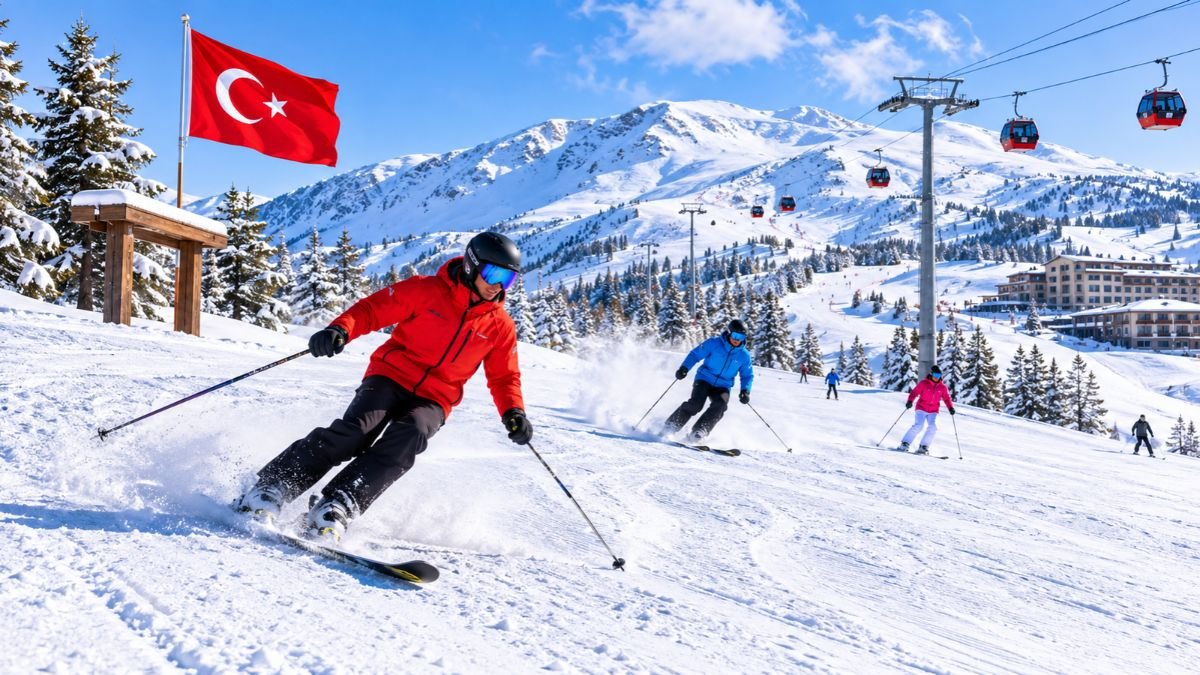
Ask someone to picture Turkey and you’ll hear about beaches, kebabs and hot air balloons. Almost nobody says snow. That’s a little odd, because the country has real mountains, cold winters and a ski scene that has been growing quietly for years.
Skiing in Turkey is attracting more visitors from abroad, and once you see the prices, it’s easy to understand why.
This guide covers the resorts, the best months, the costs, the travel routes and the safety side of things. Nothing fancy. Just what you need to plan a trip without surprises.
Is Skiing in Turkey Worth the Trip?
Mostly, yes.
Money is the first reason. A day pass at many Turkish resorts runs between 6 and 25 euros, so roughly 7 to 30 US dollars. Day passes at big resorts in the Alps and North America usually cost much more. Take a family of four for a week and that gap can add up to thousands.
Hotels and food follow the same pattern. Plenty of hotels include breakfast and dinner in the price, and lunch on the mountain won’t empty your wallet.
Crowds are the second reason. Weekends and school holidays do get packed. Midweek days are usually much quieter, and that’s one of the perks of skiing in Turkey.
Then there’s everything around skiing. Cappadocia’s rock chimneys, the old mosques of Bursa, a plate of fresh kebab after a cold day. Not many ski trips come with that.
Now the catch. Some lifts are old, and a few resorts feel rougher than the famous names in France or Colorado. If you want polished luxury at every turn, Turkey may let you down. If you want good value and something different, it’ll probably win you over.
Where Is Skiing in Turkey?
Turkey is huge, so the ski areas are spread out. It helps to think of four zones.
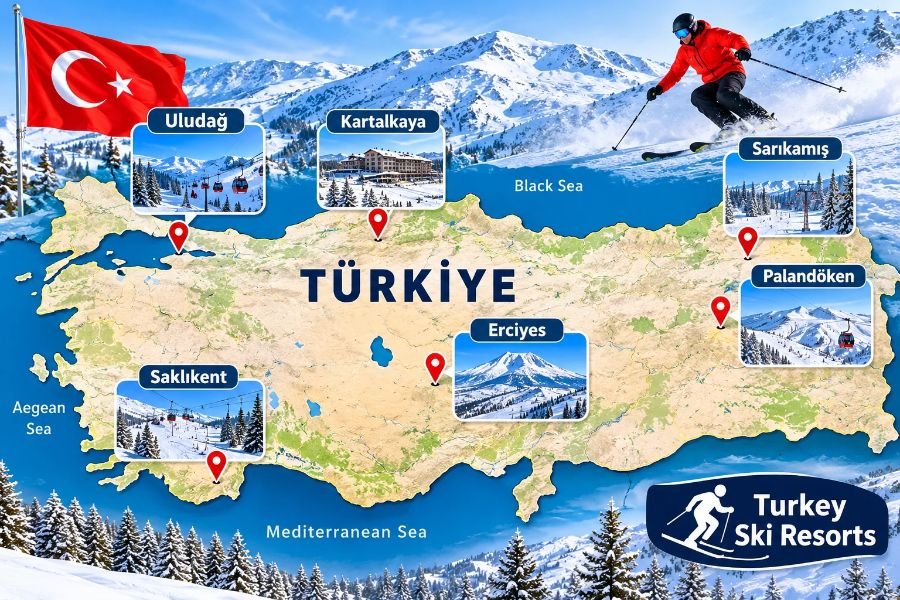
The northwest has Uludağ near Bursa and Kartalkaya near Bolu, both within reach of Istanbul. In the center, Erciyes sits on a sleeping volcano close to Cappadocia. The east holds Palandöken near Erzurum and Sarıkamış near Kars, both high and very cold. Down south, Saklıkent near Antalya lets you glimpse snow and sea in the same trip.
Each zone has its own personality, so the right pick depends on what you want.
The Best Ski Resorts in Turkey
One warning before we start. The numbers you’ll find online don’t always agree, because resorts keep adding lifts and joining neighboring areas. Treat the figures below as a good guide, and check the resort’s own website before you book.
Uludağ (Bursa)
Uludağ is the name most Turks think of first when they say “ski trip.” It’s also the easiest big resort to reach from Istanbul.
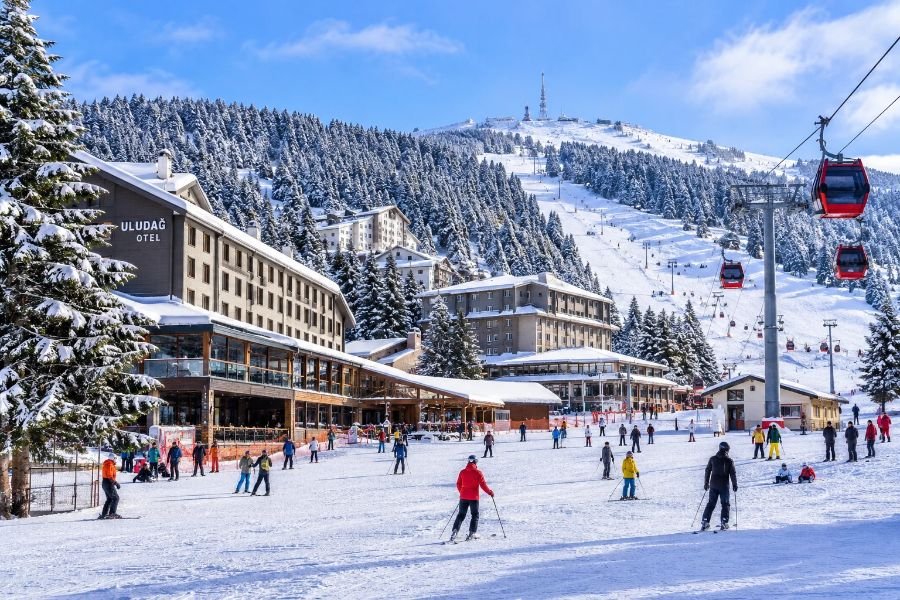
The slopes begin at about 1,750 meters (5,740 feet) and climb to roughly 2,400 meters (7,870 feet). Sources list somewhere between 25 and 28 kilometers (16 to 17 miles) of runs. And here’s a fun detail: you can ride a cable car all the way up from the city of Bursa.
The hotels sit close to the slopes, and the evenings are livelier than at most Turkish resorts. Groups of friends and families tend to like that.
The trouble is the crowd. On a holiday weekend, lift lines can get long, and in a mild winter the lower slopes turn icy.
Erciyes (Kayseri)
Erciyes is often named as one of the best all-round resorts in Turkey.
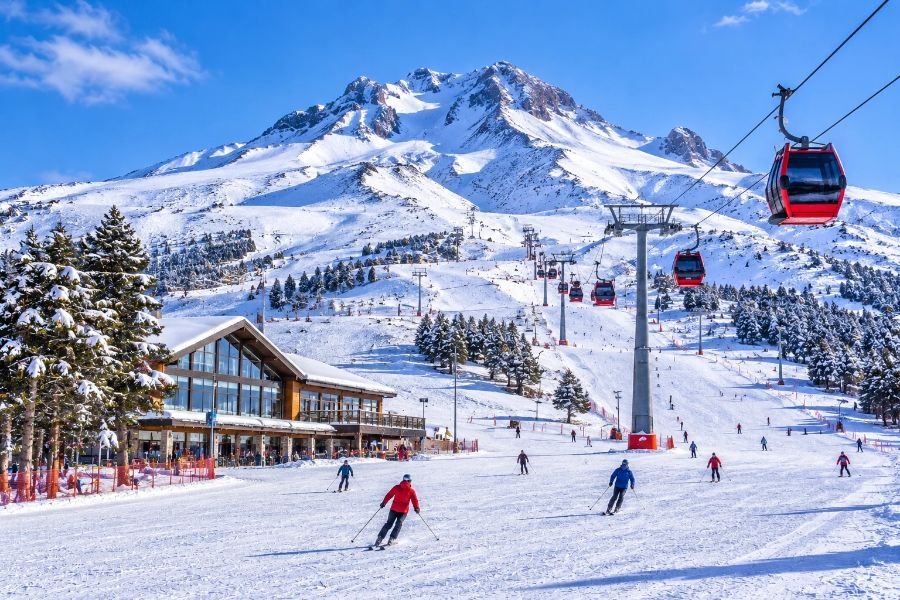
The mountain is a dormant volcano with a peak near 3,900 meters (12,800 feet). The ski area tops out around 3,300 meters (10,800 feet). That height keeps the snow around, so the season usually runs from December to April and sometimes a bit past it.
You get over 50 kilometers (31 miles) of runs, a gondola and plenty of chairlifts. Most runs are easy or medium. If you’re new to skiing, you won’t feel out of your depth, and stronger skiers can head for the off-trail terrain with a local guide.
The airport is close. Kayseri sits only 25 to 30 kilometers (15 to 19 miles) away, about half an hour in a car. Erciyes is also a short trip from Cappadocia, which is covered in our guide to Cappadocia in winter.
One more thing worth knowing: Erciyes often sells tickets by the ride instead of by the day. If you only plan a few hours on the snow, that can save real money. Just keep an eye on the wind. A volcano’s weather turns fast, and the upper lifts sometimes close.
Palandöken (Erzurum)
Want steep slopes and cold, dry snow? Palandöken is your place.
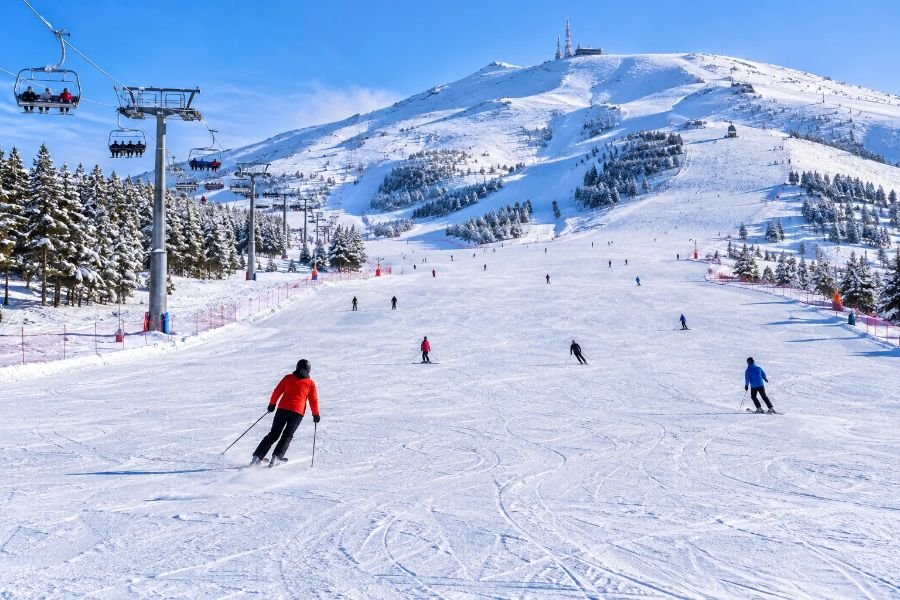
It sits just south of Erzurum in eastern Turkey. The mountain is about 3,185 meters (10,450 feet) tall, and the ski area runs from roughly 2,200 to 3,176 meters (7,220 to 10,420 feet). That’s a vertical drop of close to 1,000 meters (3,300 feet). The resort village, Başköy, sits at about 2,100 meters (6,900 feet) on the road up from Erzurum.
Erzurum is one of the highest and coldest cities in the country, and snow stays on the ground for around 150 days a year. So the season is long. It can start as early as November, and the higher slopes usually stay open until the first weeks of May.
The slopes are among the longest and steepest in Turkey. The main area has about 28 kilometers (17 miles) of runs spread over 22 pistes, and the longest single run stretches about 12 kilometers (7.5 miles). Palandöken is also part of the Ejder 3200 World Ski Center. Count the connected areas and some sources list up to 43 kilometers (27 miles).
The two best-known runs, Ejder and Kapıkaya, are race-standard tracks used for slalom and giant slalom. Ejder, named after the Turkish word for “dragon,” is the toughest run and sits on the back of the mountain. Fog or avalanche risk sometimes closes the Ejder lifts and trails, so keep a backup plan.
The resort hosted the freestyle and snowboarding events of the 2011 Winter Universiade, while the alpine races took place at Konaklı. The runs are lit, so you can keep skiing after dark, which falls at around 4 pm in midwinter.
Lifts include one gondola and eight chairlifts, which together can carry about 8,100 skiers an hour.
Getting here is simple. Daily flights link Istanbul and Ankara with Erzurum, and the airport is only 10 to 15 minutes from the resort. The city center is only about 4 to 7 kilometers (2.5 to 4 miles) away, depending on where you measure from, and winter buses run between the two. Hotels range up to 4 and 5 stars, and ski lessons and rentals are easy to find.
Day passes here are on the higher side for Turkey, and the lira price shifts often, so check the current price list before you go. January and February get brutally cold, so pack real layers.
Kartalkaya (Bolu)
Kartalkaya lies in the Köroğlu Mountains, roughly 300 kilometers (185 miles) from Istanbul. Expect about three and a half hours on the road.
The ski area sits between about 1,850 and 2,200 meters (6,070 to 7,220 feet). The season is shorter, normally December to March. Many hotels crowd the base, and weekends fill up with people from Istanbul and Ankara.
Please read the safety section below before booking here. A deadly hotel fire in January 2025 raised serious questions about fire safety at the resort.
Sarıkamış (Kars)
Sarıkamış sits in the far east, near Kars, and it’s known for light, dry powder and a calm mood.
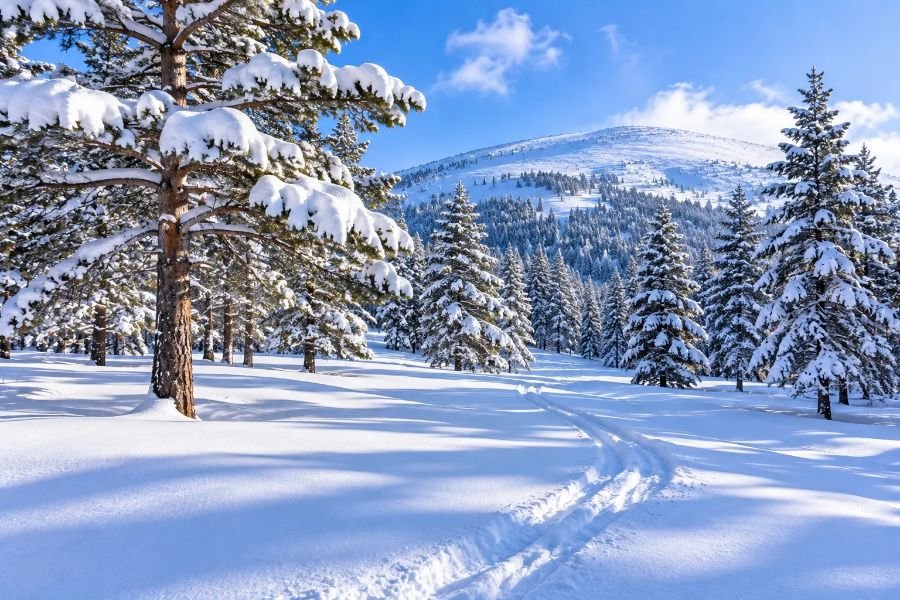
You’ll find about 21 kilometers (13 miles) of slopes between roughly 2,130 and 2,630 meters (6,990 to 8,630 feet). Day passes are among the cheapest in the country, often around 12 euros or less.
Compared with Uludağ, it’s peaceful. If you hate lift lines, that’s a big win. The price you pay is distance. The nearest airport is in Kars, about 50 kilometers (31 miles) away, and the facilities are simpler than at the bigger resorts.
If you plan to travel in the east, read the latest government advice for your country first. Our guide on whether Turkey is safe for tourists explains which regions are flagged and where to check.
Saklıkent (Antalya)
Saklıkent is a small resort in the mountains above Antalya. The main charm is the setting. In a good winter, you can ski in the morning and see the coast by evening.
The season is short, usually January to March, and it depends on natural snowfall. There are only a few runs, so it suits beginners and casual skiers.
Other Small Resorts
Ilgaz, Davraz, Kartepe, Konaklı and Zigana are smaller, cheaper and quieter. They’re handy for a day trip or a first lesson.
Best Time for Skiing in Turkey
The main season for skiing in Turkey runs from December to March, though high resorts can open earlier or close later depending on snowfall.
December is the opening month. Lower resorts may have thin snow, but high ones like Erciyes and Palandöken are usually fine. See our Turkey in December guide for what the weather is like across the country. January is cold, snowy and busy. February is often the sweet spot, with a deep base and steady weather. March brings sunnier days and softer snow, which is lovely if you like a relaxed pace. By April and early May, only the highest areas stay open, and Palandöken and Erciyes are your best bets.
Weekends and school holiday weeks are the busiest, so skip them if you can. Also check your own calendar. Winter break or spring break back home may land right in the busy season, so book early.
For a wider look at the cold months, read our Turkey in winter travel guide.
How Much Does Skiing in Turkey Cost?
Cost is a big reason people try skiing in Turkey. Still, prices aren’t fixed, and the Turkish lira moves a lot. Use these as rough ranges and check the current exchange rate.
Lift passes at small resorts cost about 6 to 10 euros (roughly 7 to 11 US dollars) a day. Mid-size resorts like Uludağ or Erciyes run about 8 to 20 euros (roughly 9 to 22 US dollars). Larger areas like Palandöken cost around 18 to 25 euros (roughly 20 to 28 US dollars).
A full rental set (skis, boots and poles) usually costs 10 to 25 euros (roughly 11 to 28 US dollars) a day. Group lessons are cheap, and even private lessons cost less than in the Alps or Canada.
Hotels vary widely, from simple rooms under 50 euros a night to luxury places right on the slopes. Look for “half board,” which means breakfast and dinner come with the room. It’s often the best deal.
Add it up and a mid-range week in Turkey can cost far less than the same week in France, Austria or Colorado. Your flight will probably be the biggest bill.
How to Get There
Most trips for skiing in Turkey start with a flight to Istanbul. It’s a major hub, and Turkish Airlines and many others fly there from cities around the world. London is about 4 hours away, and New York or Toronto is roughly 9 to 10 hours. If you want a night or two in the city first, see our Istanbul in December guide.
From Istanbul, your route depends on the resort. For Uludağ or Kartalkaya, you can drive or book a transfer, which takes about 3 to 4 hours. For Erciyes, take a short domestic flight to Kayseri and then a half-hour transfer. For Palandöken, fly to Erzurum. For Sarıkamış, fly to Kars and take a transfer. For Saklıkent, fly to Antalya and drive up the mountain road.
Airlines usually accept ski bags as sports luggage, but fees differ, so check before you fly, especially for the domestic leg. In winter, mountain roads may require snow chains. Ask your car rental company.
Visa.Entry rules depend on your passport. Some nationalities can visit Turkey for tourism without a visa, while others need an online e-Visa, and the rules can change. Check your own situation on the official Turkish e-Visa website and your government’s travel advice before you book. Also check your passport’s validity, because many countries require it to last well beyond your stay.
What to Expect on the Mountain
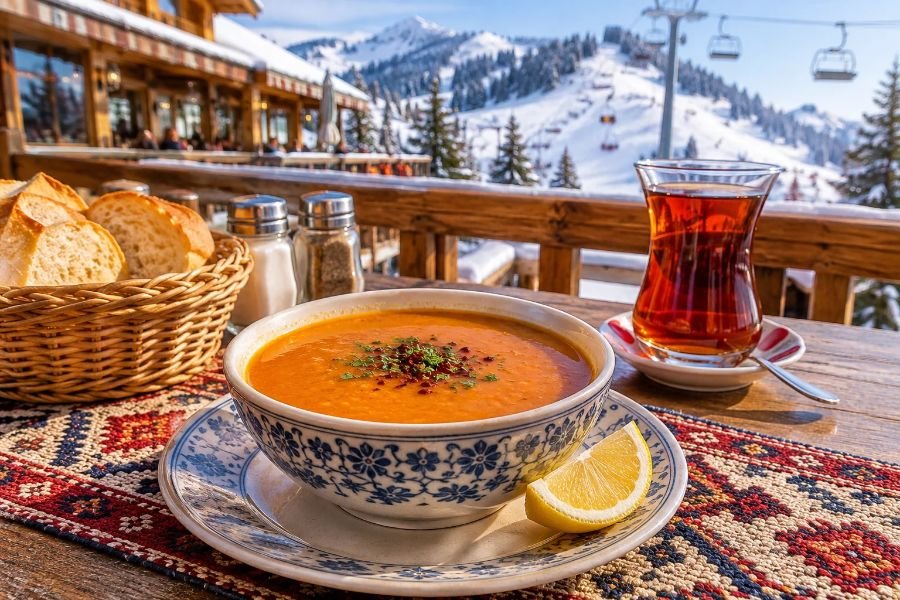
On a typical day of skiing in Turkey, you’ll find modern chairlifts and gondolas at many resorts, while smaller areas still use older lifts. Slopes are color coded like in Europe: blue is easy, red is medium and black is hard.
Snow quality depends on height. High resorts like Erciyes, Palandöken and Sarıkamış usually have good, dry snow, while Uludağ can be patchy in a warm year. Many areas also make artificial snow.
Food on the mountain is simple and good. Think soup, kebabs, pide (Turkish flatbread) and endless glasses of hot tea. A bowl of lentil soup on a freezing morning is hard to beat. English is common in hotels and ski schools, but less so in small places.
Skiing in Turkey for Beginners
If you’ve never touched snow, Turkey is a friendly place to start.
Most big resorts have ski schools with English-speaking teachers, and lessons cost much less than in Europe or Canada. Erciyes and Uludağ have wide, gentle slopes.
Book two or three lessons before you head out alone. Rent a helmet too, because it costs little and protects a lot. And stay on blue runs until you can turn and stop with control.
Skiing in Turkey for Advanced Skiers
Strong skiers won’t be bored here.
Palandöken has some of the steepest marked runs in the country, and its light, dry powder is a big part of the appeal. The Ejder run on the back of the mountain is the toughest, though its lifts can close in fog or when there is avalanche risk. Erciyes offers off-trail terrain, and Sarıkamış is a good choice if you like quiet powder days.
If you leave the marked runs, hire a local guide. Avalanche risk is real, and the weather can turn fast. Carry a beacon, a probe and a shovel, and know how to use them.
Skiing in Turkey for Families
Families often pick Uludağ or Erciyes. Many resorts offer cheaper child passes, and some hotels have play areas, pools and spas. For general advice on traveling with children, read our Turkey family travel guide.
Beyond the Slopes
Part of the fun of skiing in Turkey is what you can do after the lifts close.
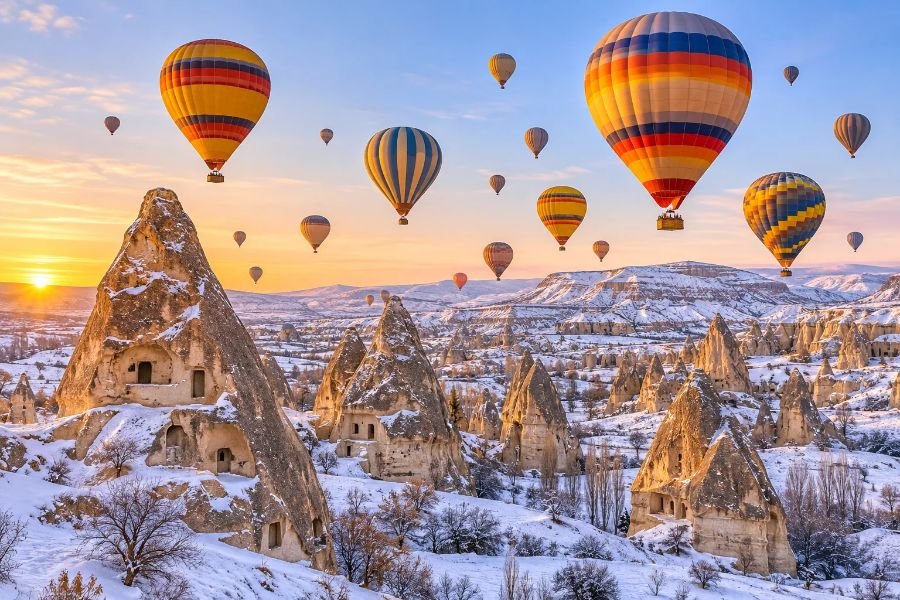
From Erciyes, Cappadocia is close. Its tall rock chimneys, cave hotels and hot air balloons look even more magical in snow. From Uludağ, Bursa has old mosques, busy markets and famous local sweets. Plenty of travelers also tack on a few days in Istanbul. And most big hotels have a hammam (Turkish bath), which feels wonderful on sore legs. If you have never been to one, our Turkish hammam guide explains what to expect.
For more ideas, see our list of the 15 best things to do in Turkey in winter.
Safety Tips for Skiing in Turkey
Safety matters on any ski trip, and skiing in Turkey is no different.
In January 2025, a fire at the Grand Kartal Hotel in Kartalkaya killed 78 people, according to Turkey’s justice ministry. An architects’ chamber official told AFP the hotel had only one fire escape and no sprinkler system, and survivors said the alarm did not work. Eleven people were arrested, including the hotel’s owner and general manager.
That doesn’t mean every hotel is unsafe. But a few habits are smart. Pick well-reviewed hotels from trusted booking sites. When you check in, find the nearest exits and fire stairs. Look for smoke detectors, sprinklers and clear exit signs. At night, keep your phone and shoes close to the bed. If you choose Kartalkaya, check the hotel’s fire safety carefully before you book.
On the slopes, wear a helmet, follow the signs and respect closed areas. Never ski alone off the marked runs. High resorts can also be bitterly cold and windy, so dress in layers and cover your face. Finally, buy travel insurance that covers winter sports, medical care and mountain rescue. Without it, a bad fall can get expensive fast.
For wider travel safety, including government advice for each region, read Is Turkey safe for tourists?
FAQs
Is skiing in Turkey good for beginners?
Yes. Uludağ and Erciyes have easy slopes and ski schools with English-speaking teachers.
Which ski resort in Turkey is the best?
Erciyes is often named as the best all-round choice. Palandöken is better for steep slopes, and Uludağ suits a lively stay near Istanbul.
Is skiing in Turkey cheap?
Compared with the Alps and North America, usually yes. Lift passes, rentals, food and hotels tend to cost less, but prices change with the lira, so check before you book.
Is skiing in Turkey safe?
Most trips go smoothly. Choose your hotel carefully, check its fire exits, follow the slope rules and buy insurance that covers winter sports.
When is the best time for skiing in Turkey?
December to March is the main season. February is often the best month, and high resorts like Erciyes and Palandöken can stay open into April.
Final Thoughts
Skiing in Turkey offers real mountains, warm hosts and prices that make a ski holiday possible for far more people.
Pick Erciyes for the best mix of terrain and season length. Choose Palandöken for steep runs and cold snow. Go to Uludağ for an easy trip from Istanbul, and try Sarıkamış if you want quiet powder.
Plan early, choose a safe hotel and check current prices before you pay. Do that, and skiing in Turkey could easily become your favorite winter trip.
Note: Slope lengths, lift counts and prices differ between sources and change each season. Always confirm current details with the official resort website before booking. Last updated: 11 November 2026.
Sources
- Khaleej Times: Turkish ski resort fire killed 78, final toll (death toll, missing sprinklers and single fire escape, arrests)
- Official Turkish e-Visa website
- Go Türkiye, official Turkey tourism portal: skiing (Palandöken facts: pistes, lifts, runs, season)