

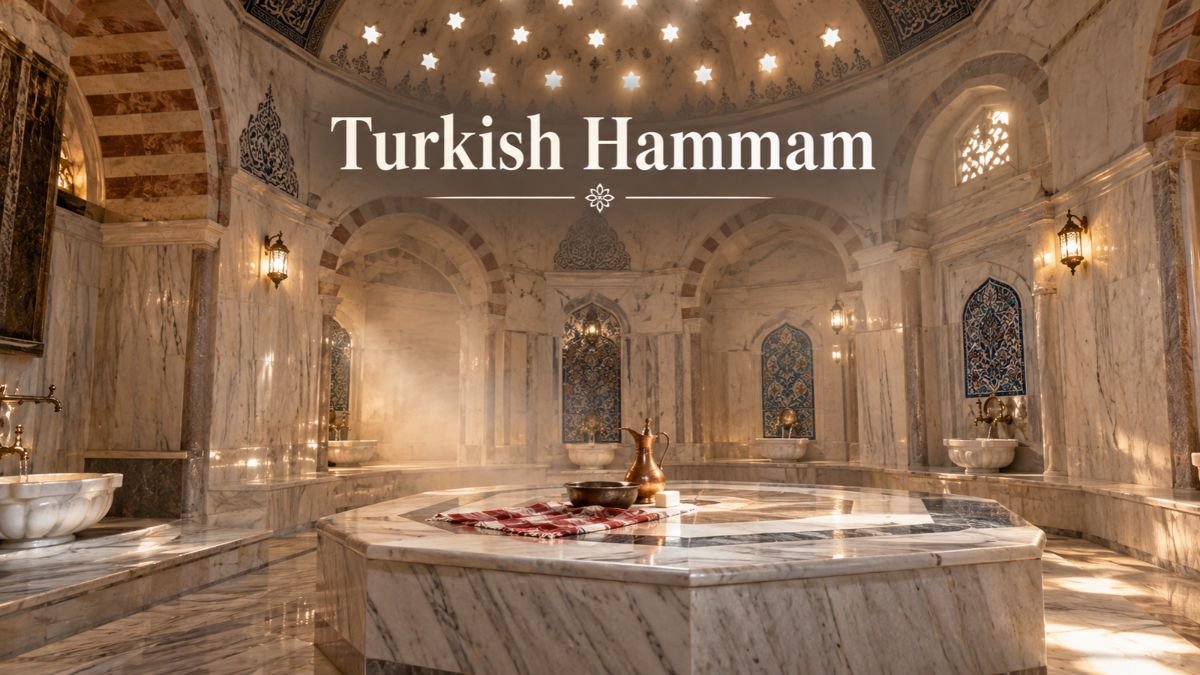
Picture a quiet stone room, lit by tiny star-shaped holes in a dome, with warm marble under your back. Nobody is rushing you. That is the first thing you notice about a Turkish hammam, and it is usually the thing people remember longest.
This guide walks through how a Turkish bath works from the moment you walk in. Inside, you will find Istanbul’s oldest bath buildings, the mineral pools of Pamukkale and a handful of quieter hot-water retreats. We also cover bath manners, ballpark prices and the health situations where a steam room is a bad idea.
So, What Exactly Is a Turkish Hammam?
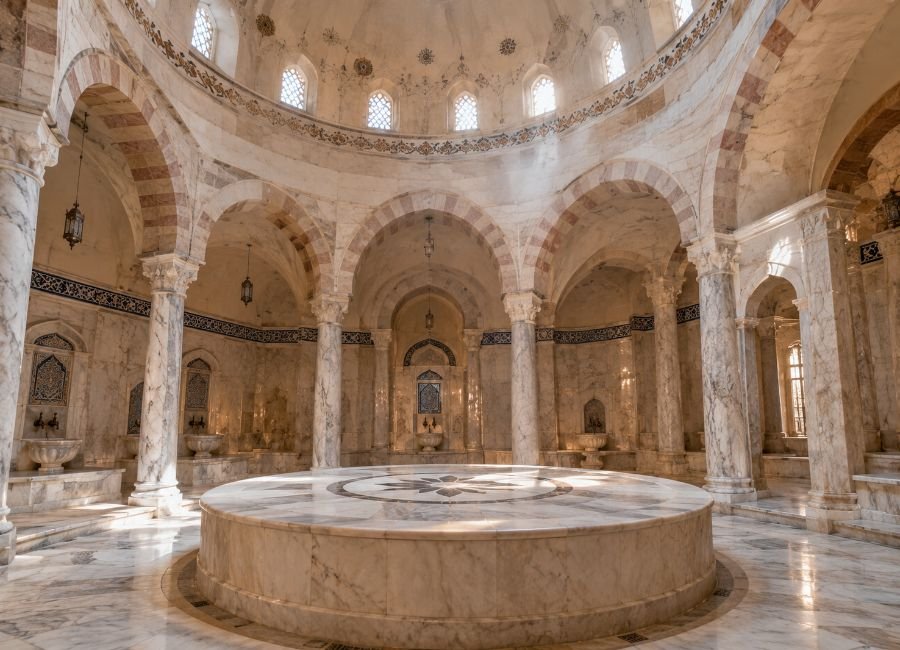
A Turkish hammam is a bathhouse where heat and steam do most of the work. The routine is simple: you warm up until you perspire, an attendant exfoliates your skin by hand, and a foamy wash closes the session. It is a steam bath, not a pool.
The tradition goes back to Roman and Byzantine bathing culture. Under the Ottomans the idea travelled far beyond its origins, and almost every quarter of a town came to have a bathhouse of its own.
For a long time the hammam was a meeting place as much as a place to wash. Neighbors caught up on news there. Before a wedding or after a birth, relatives headed to the bathhouse together, and festivals often began there too.
The spelling changes from site to site. Whichever you meet, hamam, hammam or Turkish bath, the tradition behind the name is identical.
Turkey’s Growing Appeal for Health-Minded Travelers
Hot springs and old bathhouses have long been part of everyday Turkish life. These days, some visitors pick Turkey as a destination for exactly that reason.
Consultancy Simon-Kucher’s 2026 travel trends research reports that nearly 50 percent of visitors to Turkey are planning a wellness-focused trip, with spas and outdoor experiences as their top picks.
The same research describes these travelers as younger, more digital and ready to spend more than the global average. Many also turn to AI assistants and social platforms while organizing the trip.
A Turkish hammam fits that mood neatly. It is rooted in local culture, it costs far less than a high-end spa in Western Europe, and it takes only a couple of hours.
What Happens Inside: The Turkish Hammam Routine
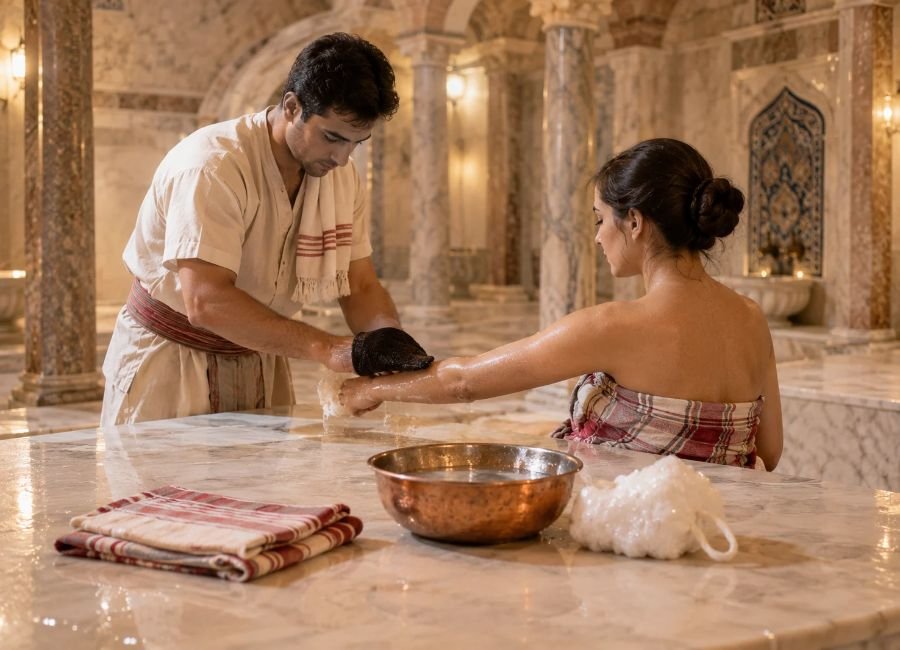
Traditional bathhouses tend to follow one sequence. Once you know it, you can walk into any of them with confidence.
Traditional bathhouses tend to follow one sequence. Once you know it, you can walk into any of them with confidence.
- Arrival. You are handed a thin cotton wrap called a peştemal, a pair of slippers and a locker key. Women and men bathe separately, using their own sections or their own time slots.
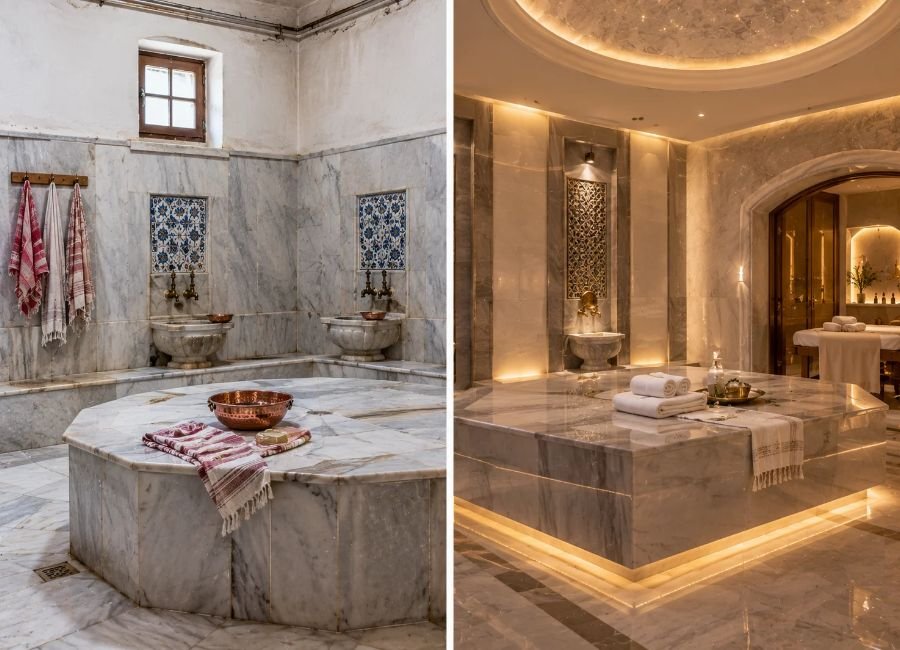
- Sweating. You lie on a warm marble platform at the center of the hot room, the göbek taşı. After ten or fifteen minutes the heat starts to loosen your skin.
- Scrubbing. An attendant works over your body with a rough glove, the kese. The word for a male attendant is tellak; a female attendant is a natır. You may be surprised by how much comes off.
- Foam. A cloth bag is swished through soapy water until it fills with bubbles, and the foam is squeezed over you. A warm rinse follows.
- Massage. Some packages add 15 to 30 minutes of kneading with soap or oil.
- Resting. You are wrapped up and handed tea or water in a cooler room. Take your time here. Many first-timers jump up too fast and feel light-headed, so go slowly.
A plain wash and scrub lasts roughly 45 minutes. Add a massage and you are looking at an hour and a half.
Turkish Hammam, Sauna or Spa: Which Is Which?
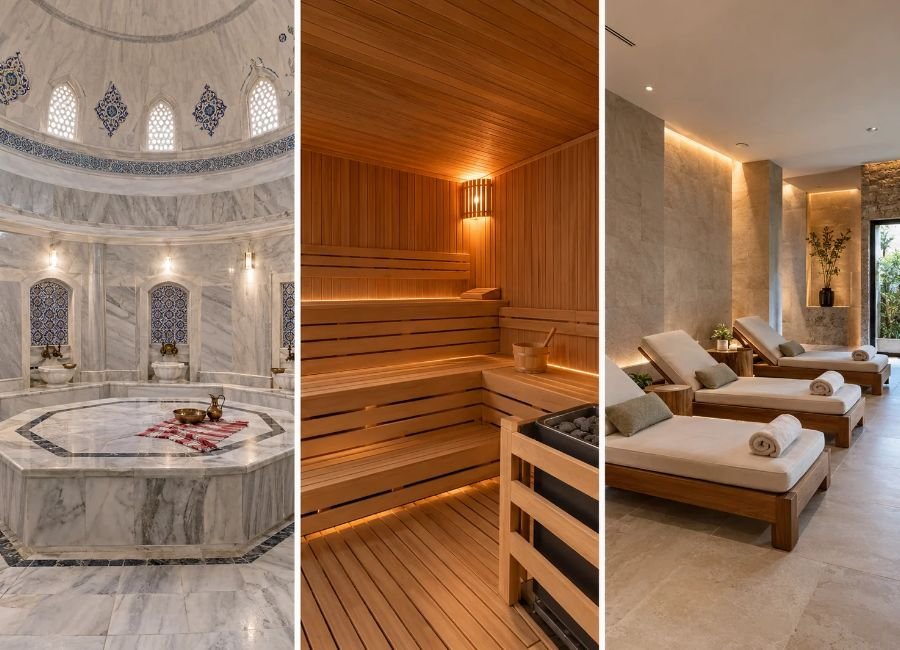
It is easy to mistake a hammam for a sauna, but the two work differently.
Saunas use dry heat, commonly 70 to 100 °C. A hammam runs cooler yet wetter, which makes the air feel gentle on the lungs. That is why staying inside for a while is comfortable for most people.
A modern spa sells treatments and silence. A hammam adds a hands-on wash from a real person, and that scrub is the heart of the visit.
The building itself matters too. Under the domed ceiling, with light falling through small glass-capped holes, an old Turkish bath feels like stepping into a living monument.
What It Feels Like on Your Skin
You will walk out relaxed, a little sleepy and thoroughly clean. Once the kese has done its work, your skin feels silky. The tea afterward tends to taste better than usual.
A firm scrub can be a shock if you have never had one. If it is too strong, just say “yavaş” (slowly) and the attendant will lighten the pressure.
If your skin is sensitive, mention it before you start. Do not exfoliate again at your hotel later, since your skin needs time to recover.
Small Local Habits Worth Copying
Locals follow a few bathhouse habits that visitors can easily adopt.
Regulars often carry a personal kese glove and a block of traditional olive oil soap, known as zeytinyağlı sabun. It is gentle and cheap, and you can buy it in any market.
Brides have long gone to a special hammam gathering before the wedding, known as the gelin hamamı. Friends and relatives sing, eat sweets and make a party of it. You will not see that on a tourist booking, but it explains why the hammam still feels social.
Regulars also go in the evening. It helps them wind down, and it means they sleep well afterward. You can do the same on your first night in Turkey.
Six Historic Hammams in Istanbul
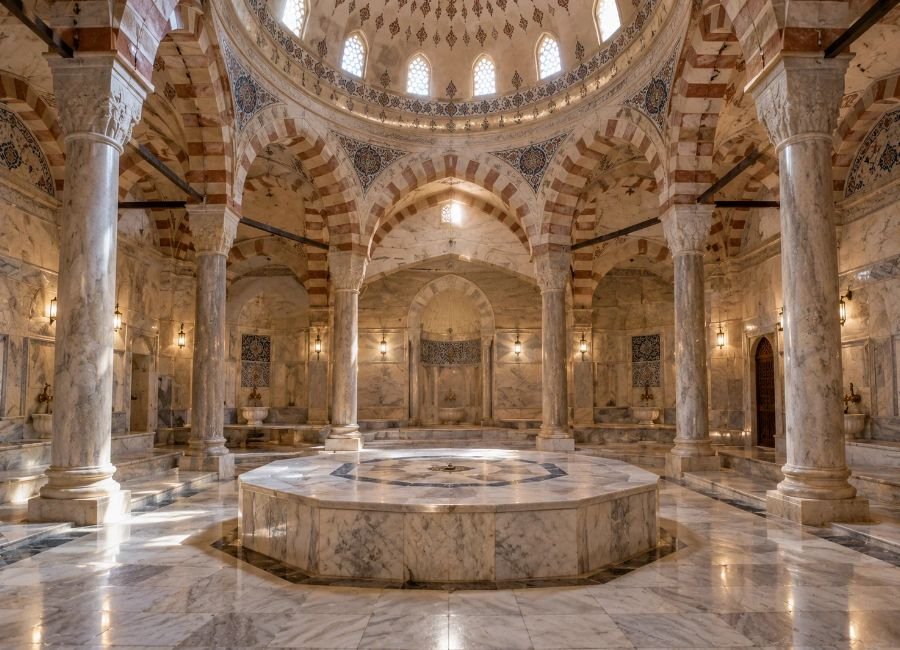
Istanbul has hundreds of bathhouses. They run from monumental Ottoman buildings to small family-run places. The six below come up most often in traveler questions.
| Hammam | Area | Built | What stands out |
| Çemberlitaş Hamamı | Fatih, near Sultanahmet | 1584 | Classic Ottoman look, easy to walk to |
| Cağaloğlu Hamamı | Sultanahmet | 1741 | Grand marble hall, popular with photographers |
| Ayasofya Hürrem Sultan Hamamı | Sultanahmet | 1550s | Stands in the square linking Hagia Sophia and the Blue Mosque |
| Süleymaniye Hamamı | Süleymaniye | 16th century | Part of the Süleymaniye Mosque complex |
| Kılıç Ali Paşa Hamamı | Tophane | 1580 | Restored, calmer atmosphere |
| Galatasaray Hamamı | Beyoğlu | 1481 | One of the oldest, with a neighborhood feel |
Several of these were designed by Mimar Sinan, the celebrated Ottoman architect. Even if you skip the scrub, the buildings are worth seeing.
Opening hours, prices and women-only or mixed sessions change often. Look at each hammam’s own website, or phone ahead, before you go.
Tourist hammam or neighborhood hammam?
A tourist-friendly bathhouse in Sultanahmet is simple to book. The staff speak English and you know what you will get. In return you pay more, and on a busy afternoon the scrub can feel hurried.
A neighborhood hammam costs less and feels more local. The trade-off is that you may find little English, fewer extras and plainer surroundings. Both are good. Choose by what matters to you.
Booking tips that save money and trouble
- Reserve straight with the hammam, not through someone on the street.
- Ask what the price includes and how long the session lasts before you pay.
- Say no to extras you did not request.
- Check recent reviews, since standards can change when a place changes hands.
Pamukkale: Where Hot Springs Built White Terraces
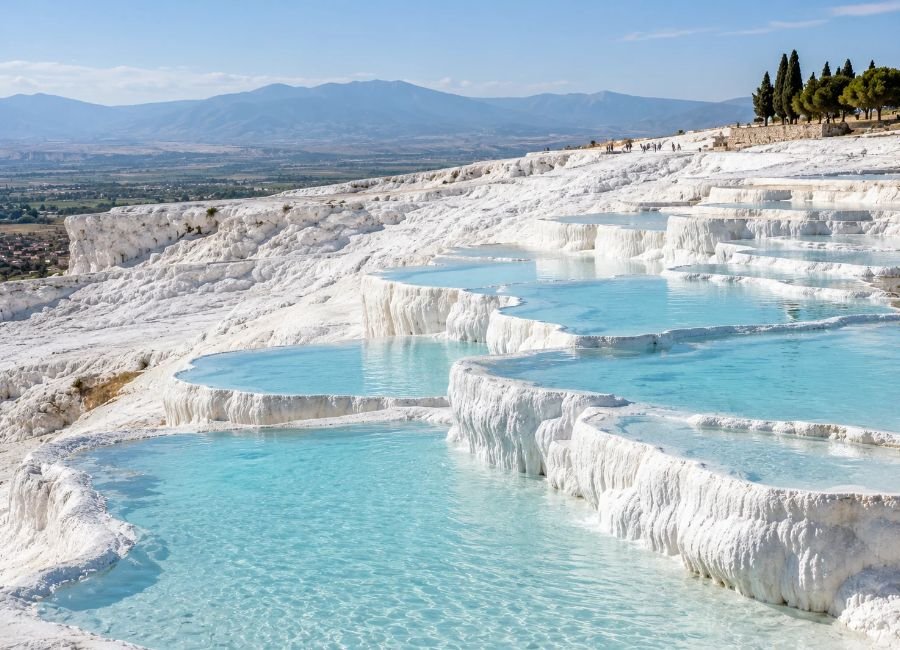
Pamukkale, in the Denizli region, is Turkey’s best-known natural thermal site. The name means “cotton castle”. Mineral-heavy water has run down the hillside for thousands of years and left behind white travertine terraces. Together with the ancient city of Hierapolis, the site joined the UNESCO World Heritage List in 1988.
Walk the terraces barefoot to protect the stone, and carry your shoes in a bag. The shallow pools are pleasantly warm, though how much water you find depends on the day.
Higher up sits the Antique Pool. Here you can swim around fallen Roman columns. It needs a separate ticket on top of the entrance fee, and many visitors say it is worth it.
A few practical points:
- Reserve your Turkish hammam straight with the venue, not through someone on the street.
- Ask what the price includes and how long the session lasts before you pay.
- Say no to extras you did not request.
- Check recent reviews, since standards can change when a place changes hands.
The nearby village of Karahayıt has reddish springs rich in iron. Many hotels around Pamukkale have thermal pools of their own, so you can soak again in the evening.
More Places to Soak: Bursa, Dalyan and Cappadocia
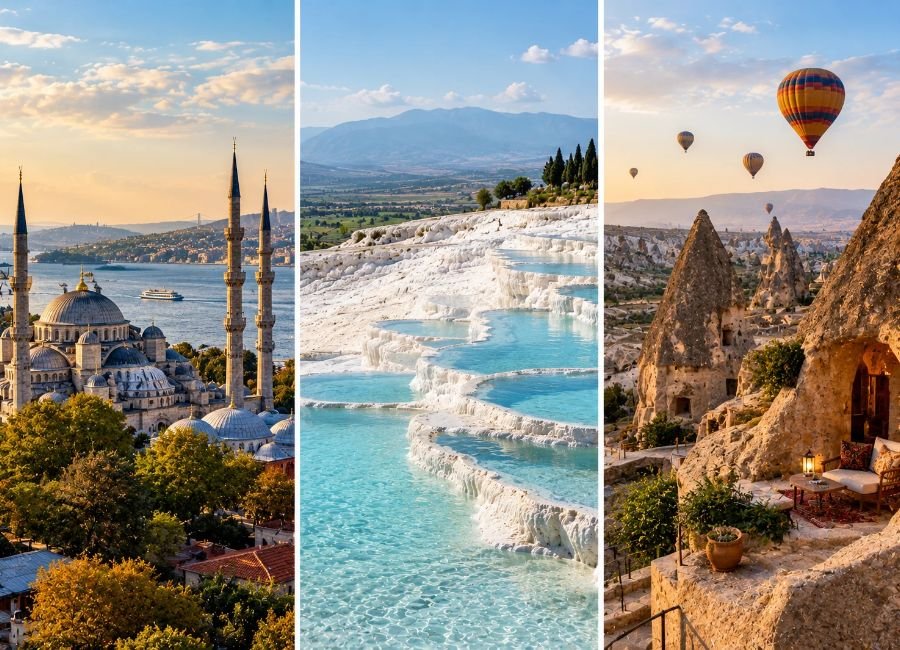
Pamukkale is far from the only choice. Three other spots suit a wellness trip.
Bursa. The first Ottoman capital has used thermal water since Byzantine times. The Çekirge district has old bathhouses and hotels with hot pools. It is a short hop from Istanbul, which makes it good for a quick overnight trip.
Dalyan. Close to Lake Köyceğiz in the southwest, the Dalyan mud baths are a favorite stop on river tours. You smear on mud, let it dry in the sun and rinse off in a warm pool. It is messy and great fun with friends.
Cappadocia cave hotels. Several cave hotels now have a spa dug into the rock. One of them, with an unusually large cavern spa, appeared on Time Magazine’s World’s Greatest Places list for 2026. Floating in warm water inside a cave after a dawn balloon ride is hard to beat. Our Cappadocia guide shows where to go, and the hot air balloon guide helps you plan the early start.
A Five-Day Route That Mixes City, Springs and Caves
This plan keeps travel time reasonable. Shift the days around to suit your flights.
- Day 1, Istanbul: Land, rest and eat something easy. Reserve an evening bath session to shake off flight stiffness.
- Day 2, Istanbul: Tour the old city sights before lunch. Spend the afternoon at a historic bathhouse in the old city.
- Day 3, Pamukkale: Travel to the Denizli area and walk the terraces at sunset.
- Day 4, Pamukkale: Explore Hierapolis early, swim in the Antique Pool, then soak in a hotel thermal pool.
- Day 5, Cappadocia: Connect through Istanbul by air and finish the trip with a soak in a cave hotel’s spa.
If you still need a base in the city, see our guide on where to stay in Istanbul. Couples can adapt the same plan with our Turkey honeymoon itinerary.
Hammam Manners and What to Pack
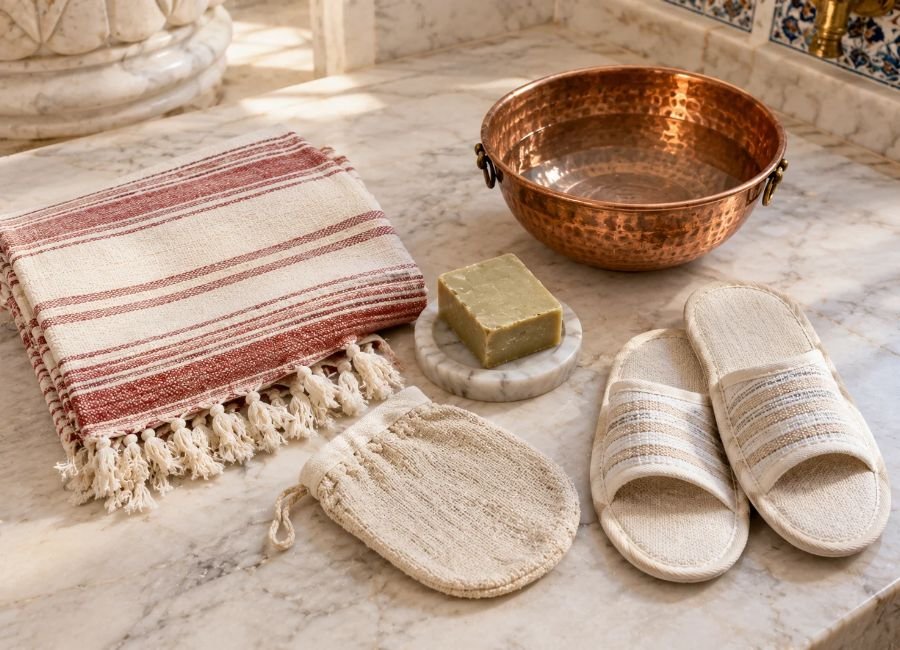
There is no need to be nervous. The staff greet first-timers every single day. These basics will keep things smooth.
- Clothing. Most places give you a peştemal. Under it, wear swimwear or the single-use briefs that many hammams supply.
- Packing. Pack swimwear, a hairbrush and a small bag. Towels and sandals are usually supplied, though it is worth confirming at the time of booking.
- Before you go. Avoid a heavy meal for an hour or two, skip alcohol and drink water.
- Phones. Lock them away. Photos are frowned upon, especially in shared halls.
- Tipping. Leaving something for the attendant is common. A common rule of thumb is about 10 percent, unless a service charge is already included.
- Courtesy. Speak softly and do not touch other guests’ belongings or bowls.
Afterward, enjoy a glass of tea. For how to order one properly, see our Turkish tea guide.
What a Turkish Hammam Costs
Prices change with the neighborhood, the season and what the package covers. These are rough ranges for 2026, so use them as a starting point and confirm current rates before you book.
- Neighborhood hammam: usually the cheapest, sometimes under 20 to 25 euros for entry and a scrub.
- Tourist hammam in Sultanahmet: often 40 to 100 euros or more, depending on the package and any massage.
- Hotel spa: the priciest choice, frequently offering private suites for two.
Before paying, find out whether the fee includes the scrub, foam wash, massage and towels. Some very cheap offers cover admission and nothing else.
When to Skip the Steam
For most people a hammam is gentle. Heat and humidity are not right for everyone, though. Get a doctor’s opinion before visiting if you fall into any of these groups:
- Pregnancy
- Heart disease, or blood pressure that runs very high or very low
- A fever, an open cut, fresh sunburn or a skin infection
- A tendency to feel faint in hot rooms
This is general information and not medical advice. If you feel unwell during a visit, tell the attendant and move to the cooling room straight away.
Best Season for Steam and Thermal Water
A Turkish hammam works all year. Many travelers like it best in winter, when a warm marble room feels like the best possible answer to a cold street. Thermal pools at Pamukkale are also lovely when the air is crisp.
July and August bring heat and crowds, so reserve in advance and aim for early or late sessions. To choose your travel dates, check our best time to visit Turkey article and the Turkey in winter travel guide.
Traveling alone? Our Turkey solo travel guide has advice on staying comfortable and confident, including at spas.
Conclusion
Yes. A Turkish hammam lets you feel the country’s culture with your own skin, and it fits almost any itinerary. It costs little compared with a spa back home, and the whole thing takes under two hours.
Choose an old Istanbul bathhouse for its architecture, visit Pamukkale for the natural warm springs, and, if your schedule allows, end in a Cappadocia cave spa. Double-check prices and opening times before heading out. Listen to your body, and give yourself plenty of time to cool down afterward.
FAQs
Is a Turkish hammam safe for first-timers?
For most healthy adults, yes. Choose a bathhouse with solid recent reviews, hydrate beforehand and give yourself time in the cool room afterward. Anyone with a health condition should consult a doctor first.
What should I wear in a Turkish hammam?
Usually a peştemal wrap over a swimsuit or disposable underwear. Most women choose a bikini or swimsuit, while men go with trunks or only the wrap. Staff explain the rules at check-in.
How long does a Turkish hammam take?
Expect about three quarters of an hour for a basic wash and scrub. Packages that include a massage last from one to one and a half hours. Leave extra time to relax afterward.
Do men and women use the same Turkish hammam together?
In traditional bathhouses, women and men use different halls or different hours. Several tourist-oriented hammams also offer private rooms for couples and families. Confirm this when you book.
Is Pamukkale worth visiting for the thermal pools?
Yes, if you enjoy scenery and history. The white terraces are a striking sight, and you can swim among ancient columns in the Antique Pool. Go early or late in the day to avoid the crowds and the heat.