
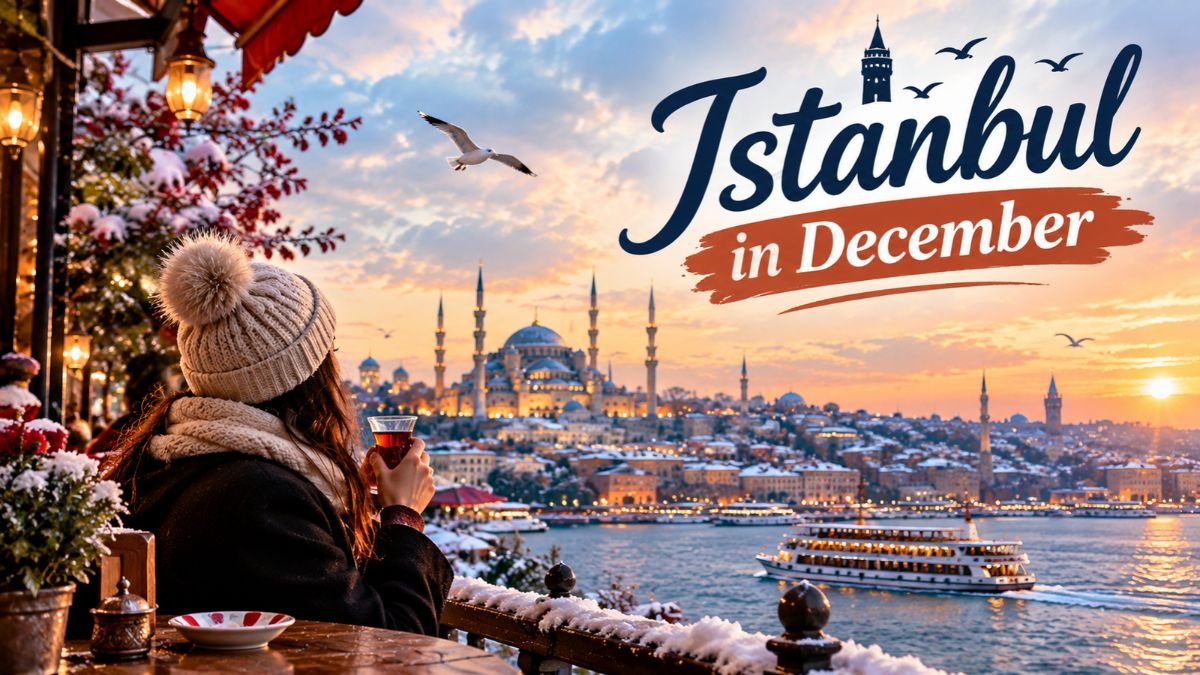
Most people picture Istanbul in summer. Blue skies, packed ferries, rooftop dinners that run late. Istanbul in December is a different city altogether.
The crowds thin out. Salt on the breeze mixes with the smell of chestnuts roasting on street corners. The Bosphorus turns grey and moody, and the call to prayer seems to carry further. The pace is slower, and the city feels closer and more intimate.
It is not a perfect month. Expect wet weather, early sunsets and a few genuinely chilly nights. But if you pack well and plan loosely, a winter trip to Istanbul in December can beat the summer version.
This guide to Istanbul in December covers what you actually need: visa basics, weather, ticket prices, food, New Year’s Eve, hotels, transport and money.
Prices and rules in this guide were last reviewed in October 2026. They change often, so confirm on official sources before you book.
Why Visit Istanbul in December?
- Fewer tourists. Waiting times at Hagia Sophia and Topkapi Palace tend to be far lighter than in peak summer. You can take photos without strangers in every frame.
- Lower prices. Winter is low season, so hotels are often cheaper than in spring or summer. The exception is the New Year period, when prices jump.
- A cosy atmosphere. Tea houses are full of people warming up, a hammam feels like a treat, and hot lentil soup is at its best after a cold walk.
- Moody photography. Fog over the Golden Horn, wet cobblestones and mosque domes under heavy clouds. Photographers love it.
- Festive energy, minus the Christmas rush. Turkey is a Muslim-majority country, so Christmas Day is a normal working day. New Year’s Eve is the exception, when the city throws itself into the party.
Visa Basics for Visiting Turkey
Entry Entry rules can make or break a trip to Istanbul in December, so sort this out before anything else.
Turkey’s rules depend entirely on your passport. Broadly speaking, there are three situations:
- Visa-free. Citizens of many countries can enter for tourism for a limited stay without any visa.
- E-visa. Others can apply online before travelling. Some nationalities qualify only if they hold a valid visa or residence permit from certain countries, such as the US, UK or Schengen states.
- Embassy visa. If you don’t qualify for either option, you apply for a sticker visa through a Turkish embassy, consulate or authorised visa centre.
Most passports need at least six months of validity and a blank page. Fees, stay limits and conditions change, so confirm your own situation on the official e-visa portal (evisa.gov.tr) or with the nearest Turkish embassy before paying anyone. Beware of lookalike sites that charge extra fees.
Istanbul Weather in December
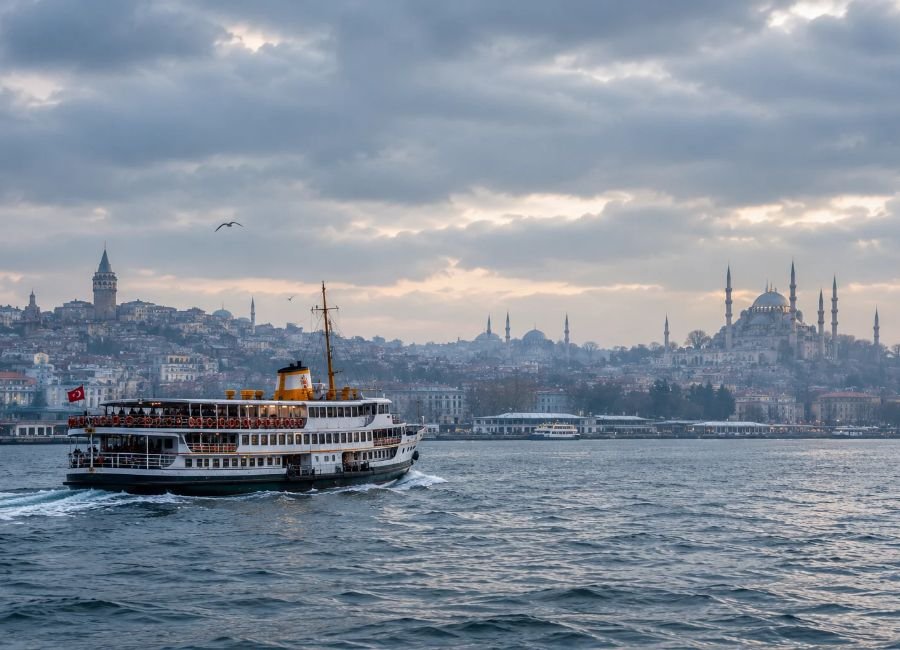
Here is what to expect from Istanbul in December.
- Temperature. Daytime highs are around 11 to 12°C early in the month and drop to about 9°C by the end. Nights are cooler, usually 4 to 7°C, and a few late-December mornings approach 1°C. Gusts blowing in across the water can feel noticeably colder than the forecast suggests.
- Rain. Expect precipitation on roughly 10 to 12 days. Often it is drizzle, but carry an umbrella anyway.
- Snow. Measurable snow is uncommon. It typically falls on only a day or two each winter, mostly in January and February, and melts quickly. If a few flakes do fall, enjoy the surprise, but keep your plans independent of it.
- Sea. The water is around 13°C early in December and cools to about 10°C by New Year’s Eve. Ferries can be delayed or cancelled when it gets rough.
- Daylight. The sun sets around 5 pm. Schedule outdoor sightseeing for the morning and early afternoon, and keep bazaars, museums and long dinners for after dark.
Weather varies from one year to the next, so look at the forecast again shortly before departure. Heading beyond Istanbul? See our guide toTurkey in December.
What to Pack for Istanbul in Winter
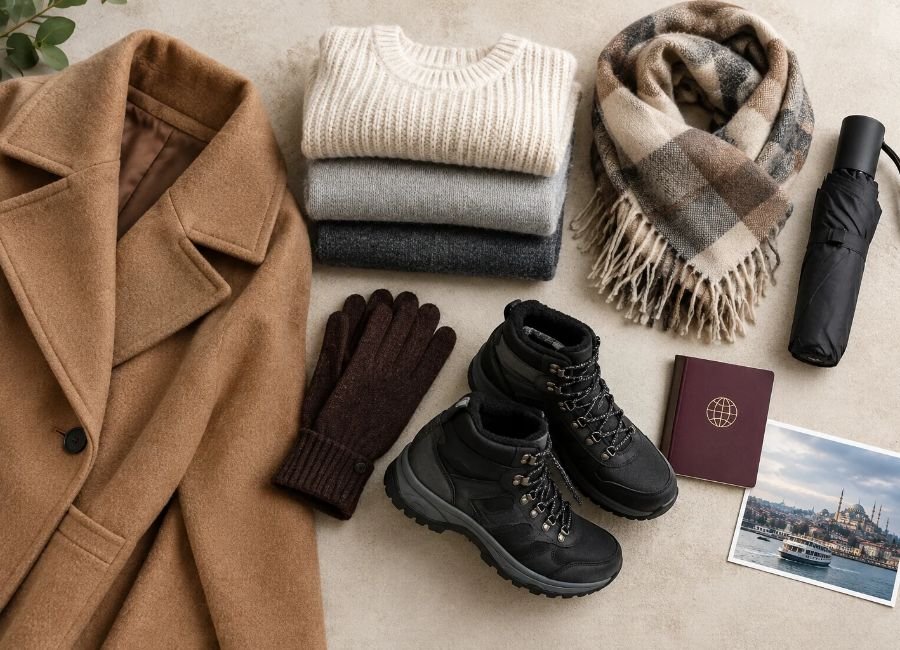
Layers. That is the whole secret to packing for Istanbul in December.
- A warm, waterproof coat that handles wind and rain.
- Thermal base layers. Light, cheap and very effective.
- Sweaters or fleeces that are easy to take off once you step into a warm café.
- Waterproof shoes with grip. Istanbul is hilly and wet stone is slippery.
- Scarf, gloves and a hat.
- A compact umbrella. Cheap ones rarely survive the wind.
- A power bank. Phones lose charge quickly in the cold, and your maps will be in constant use.
- Modest clothing for mosques. Shoulders and knees covered for everyone, and a headscarf for women. Slip-on shoes make life easier, since you remove them at the door.
Don’t overpack. Istanbul has excellent shopping if you forget something.
Top Things to See and Do in Istanbul in December
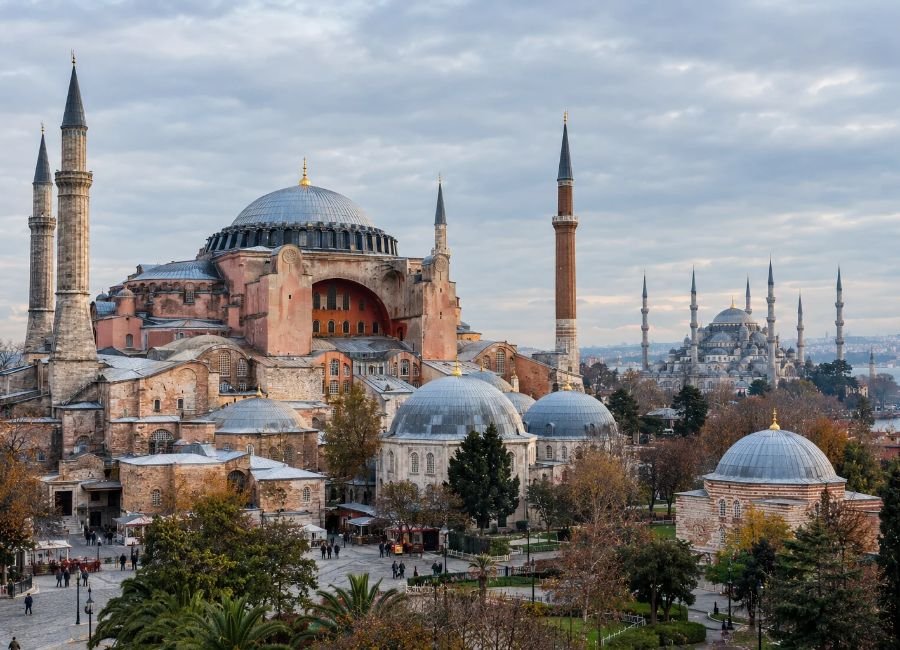
The big historic sights
Go early. Most places open around 9 am, and mornings are calmer.
Hagia Sophia. The official name is the Hagia Sophia History and Experience Museum. It is open every day, with no closed days, from 9:00 am to 8:00 pm, and the box office closes at 7:00 pm, so don’t leave your ticket purchase to the last minute. Visits pause briefly during prayer times, and for longer around Friday midday prayers.
- Ticket price: €25 per foreign visitor above age 8, with an audio guide thrown in.
- What you get: The upper-gallery route. The ground floor is reserved for worship.
- Museum Pass: Not accepted any more.
- A useful tip: Use the entrance near Topkapi Palace’s main gate, which is often quicker than the Sultanahmet Square side. Men and women alike should cover knees and shoulders, and women also need a headscarf.
The Blue Mosque. There is no entrance fee, but the mosque closes for short spells at prayer time. The blue İznik tilework is worth the wait.
Topkapi Palace. Allow two to three hours, and read ourTopkapi Palace guide for first-time visitors before you go. On the National Palaces website, foreign visitors can buy a combined ticket at 2,750 TL (about €50 to €55) that includes the Palace, the Harem and Hagia Irene. The ticket office is open from 9 am to 5 pm. It is shut on Tuesdays but open on New Year’s Day.
The Basilica Cistern. Perfect for a rainy day. It is underground and dimly lit, with hundreds of ancient columns rising from shallow water. It is run by an Istanbul municipality company, so the Museum Pass does not cover it.
- Hours: Open every day of the year, including New Year’s Day. Daytime entry runs from 9:00 am to 6:30 pm, with last admission around 6:00 pm. A separate evening session, the Night Shift, runs from 7:30 pm to 10:00 pm. The cistern is closed between the two sessions.
- Ticket price: When I checked, foreign-visitor tickets were listed at roughly 1,950 to 2,250 TL for the daytime session and about 3,000 TL for the Night Shift. Sources differed, and I could not confirm the exact current rate on an official page.
- Tips: Check the rate at the ticket office or on the official website, go right at opening, and be careful with lookalike ticket websites that add extra fees. Very occasionally the cistern closes for a day for filming or private events, so a quick check a day or two before is worthwhile.
Galata Tower. The official museum page lists €30 for foreign visitors, and the ticket includes an audio guide. One source says the price will rise in April 2027. It is open every day from 8:30 am to 6:30 pm (box office closes at 6:14 pm), with a separate evening session from 6:30 pm to 10 pm. Go on a clear morning or near sunset for the best views.
Dolmabahçe Palace. A grand Ottoman palace on the water. The official National Palaces website lists 2,000 TL for foreign visitors for the main ticket, which covers the Selamlık (state rooms), the Harem and the Painting Museum, and is valid for a week. The palace is closed on Mondays, and the ticket office is open from 9 am to 5 pm. It is also closed on New Year’s Day (1 January), so plan around that if you are staying through the holiday.
Is the Museum Pass Istanbul worth it?
The pass costs about €105 for five days, counted from your first entry. It covers Topkapi Palace and the Harem, the Archaeological Museums, the Chora history section and several other state museums. It does not cover the Hagia Sophia worship floor, the Basilica Cistern, Dolmabahçe or Galata Tower.
It pays off only if you visit four or more covered museums in those five days. If you plan to see just Hagia Sophia, Topkapi and the Cistern, buy individual tickets instead.
Get lost in the bazaars
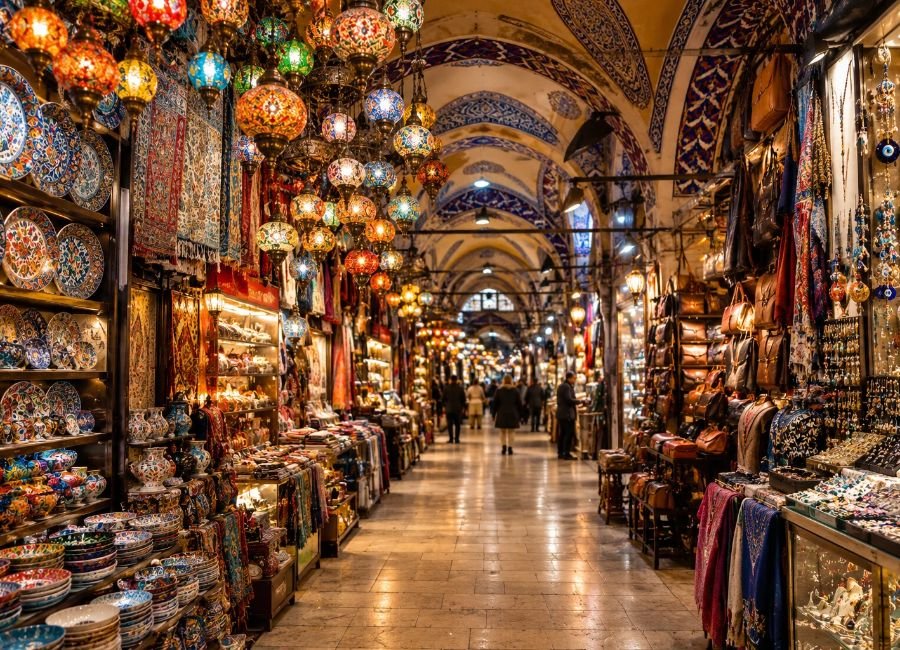
The Grand Bazaar has over 4,000 shops under one roof, which makes it ideal in bad weather. Ceramics, lamps, leather and jewellery fill every corridor. Bargain politely and smile. The Spice Bazaar is smaller and more fragrant, with Turkish delight, dried fruit, nuts and spice blends.
Take a Bosphorus ferry
Yes, even in winter. Public ferries are cheap and give you much the same views as a private tour. Sit inside near a window with a hot tea and watch palaces and wooden mansions slide by. If you prefer a private cruise, pick one with a heated cabin.
Wander Beyoğlu
After Galata Tower, walk down Istiklal Avenue, a long pedestrian street full of shops, bookstores and bakeries. The vintage red tram still rattles along it.
Try a traditional hammam
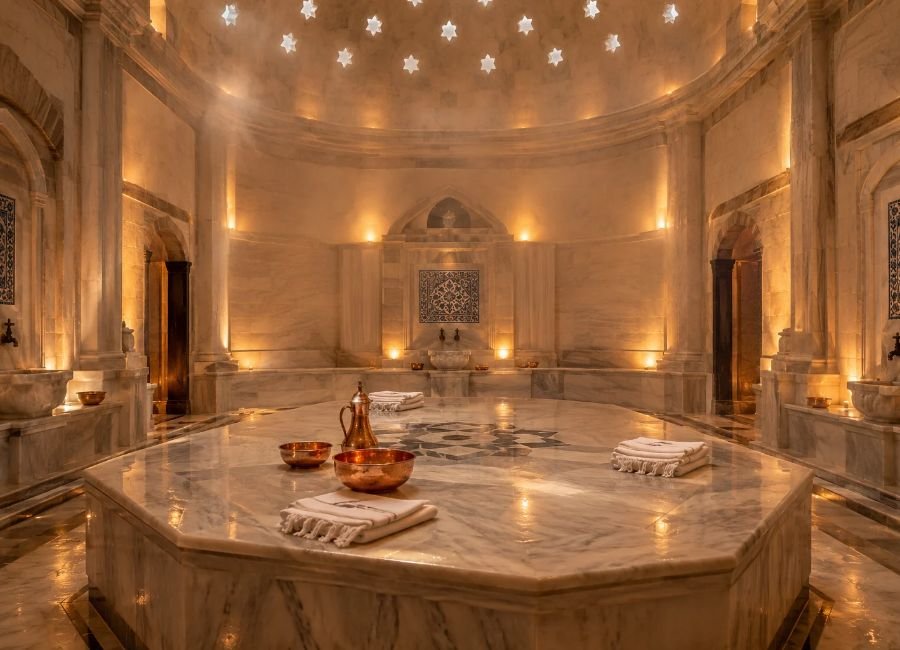
After a day in the cold, a hammam is almost too good to be true. You lie on warm marble, get scrubbed and soaped, then finish with a massage. Historic options like Çemberlitaş and Cağaloğlu are popular, while local neighbourhood hammams are cheaper. Book ahead in busy periods. For more detail, see our Turkish hammam wellness guide.
If you have extra time
- Istanbul Archaeological Museums, a great rainy-day stop near Topkapi. The official museum page lists €15 for foreign visitors, and the ticket includes an audio guide. It is open every day from 9 am to 6:30 pm, and the box office closes at 5:30 pm.
- Süleymaniye Mosque, with beautiful views from its garden.
- Chora Church, famous for its Byzantine mosaics.
- Balat and Fener, colourful streets full of cafés.
- Pierre Loti Hill, for a quiet view over the Golden Horn.
Winter Food and Drinks You Should Try
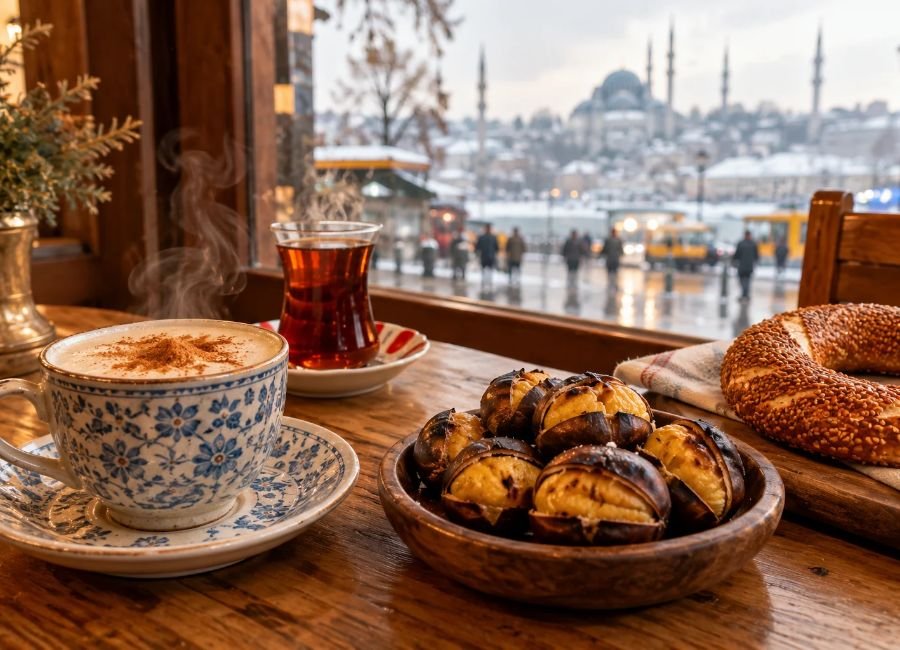
Turkish food in winter is warm and comforting.
- Mercimek çorbası. Red lentil soup with lemon and bread. Cheap, filling and everywhere.
- Salep. A thick, creamy hot drink topped with cinnamon. Sweet and strangely addictive. Winter only.
- Roasted chestnuts. Buy a small bag from a street cart and use it as a hand warmer.
- Simit. A sesame bread ring. Grab one with tea for a quick breakfast.
- Kumpir. A giant baked potato with toppings, popular in Ortaköy.
- Mantı and börek. Turkish dumplings and flaky pastries.
- Baklava and künefe. Syrupy, sweet and best served warm.
- Turkish tea. It comes in small tulip glasses, and you will drink a lot of it. Our Turkish tea guide has more on it.
For a proper meal, try a neighbourhood lokanta, a simple local restaurant serving daily dishes. A lokanta lunch usually costs far less than dinner on a tourist street.
Christmas and New Year in Istanbul
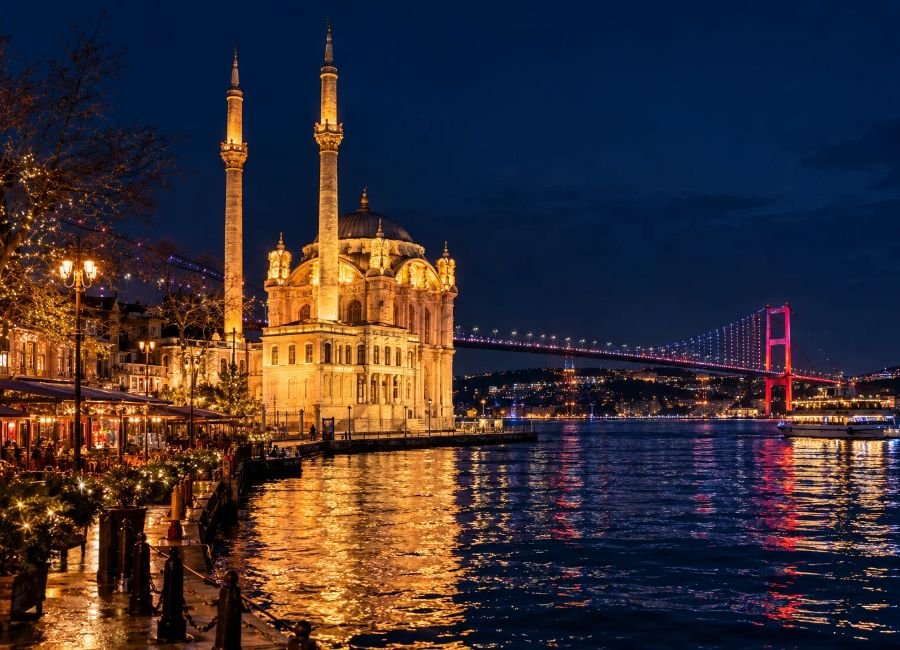
Adjust your expectations for Christmas. It is a normal working day, and there are no big public celebrations. Some hotels, international restaurants and churches host special dinners or services.
New Year’s Eve is when Istanbul in December comes alive. Common options include Bosphorus dinner cruises, hotel galas, rooftop dinners and street celebrations around Taksim and Istiklal Avenue.
A few practical points for 31 December, which falls on a Thursday this year:
- Don’t count on one big citywide fireworks show. Displays often come from boats, hotels and waterfront venues. Beşiktaş and Ortaköy are popular, and the Asian shore faces the European skyline.
- Book early. Reserve your hotel and venue well ahead, and reconfirm around 30 December. Get the pier, boarding time and vessel details in writing before any non-refundable payment.
- Plan your way home. The Night Metro normally runs on Friday and Saturday nights, so don’t assume it will run after midnight on a Thursday. Check for special extensions. Street taxis are hard to find right after midnight.
- Expect security checks and possible diversions around Taksim. Arrive early and keep valuables close.
- Load your Istanbulkart before the rush.
- Plan your sightseeing for 1 January. Topkapi Palace and the Basilica Cistern are open on New Year’s Day, but Dolmabahçe Palace is closed.
If you dislike crowds, a quiet dinner with a Bosphorus view works just as well.
Day Trips From Istanbul in Winter
- Princes’ Islands. Büyükada and its neighbours are peaceful in winter. Walk, cycle and eat fresh fish. Ferries run regularly, though weather can disrupt them.
- Bursa and Uludağ. Bursa is known for its Ottoman heritage and İskender kebab. Uludağ is a ski resort nearby, if snow conditions are good. It is a long day, so many people stay overnight.
- Şile. A Black Sea coastal town with a lighthouse and a wild, windy beach. Best on a calm day.
Where to Stay in Istanbul in December
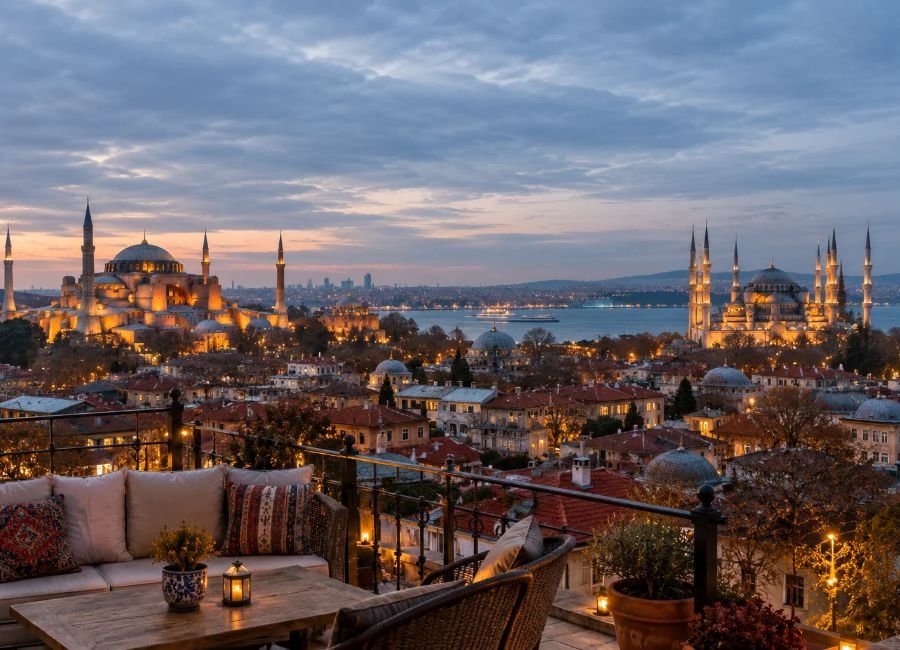
- Sultanahmet. Closest to Hagia Sophia, the Blue Mosque and Topkapi. Great for first-timers, though evenings are quiet.
- Beyoğlu and Karaköy. Livelier, with cafés, galleries and restaurants. Easy access to Galata Tower and the tram.
- Beşiktaş and Ortaköy. Close to the Bosphorus and palaces, with a local feel.
- Kadıköy (Asian side). Less touristy, with a great food scene and markets. The ferry ride is part of the fun.
- Nişantaşı. Upscale, with fashion shops and calm streets.
For Istanbul in December, choose a hotel with reliable heating and read recent reviews about it, since old buildings can be draughty. Breakfast included is a bonus.
For more detail, see our guide on where to stay in Istanbul and our list of the best hotels in Istanbul.
Getting Around Istanbul
- Istanbulkart. Buy one at a kiosk or machine and top it up. The card itself costs roughly 165 TL, and a single ride is around 35 TL according to a mid-2026 guide, though fares are revised regularly. It works on trams, metros, buses, ferries and funiculars, and it is cheaper than single tickets, which cost roughly 42 to 45 TL.
- Trams and metro. The T1 tram connects Sultanahmet, Eminönü and Karaköy. The metro and Marmaray rail line cross between Europe and Asia.
- Ferries. Scenic and practical, but weather can delay them.
- Taxis. Useful late at night or in the rain. Insist on the meter or use a ride-hailing app.
- Airports. Istanbul Airport (IST) is the main international hub, and Sabiha Gökçen (SAW) sits on the Asian side. Both are far from the centre. Check metro and shuttle-bus options in advance, and carry some cash in case a driver asks for it.
How Much Does Istanbul Cost?
Costs shift with exchange rates and inflation, so use these as rough guidance for a trip to Istanbul in December. A mid-2026 guide for Türkiye suggests these daily budgets:
- Budget: about €25 to €45 per day (hostel, street food, public transport, free sights).
- Mid-range: about €55 to €90 per day (3 or 4-star hotel, restaurants, paid sights).
- Luxury: €120 to €300 or more per day.
For Istanbul hotels, expect roughly €10 to €15 for a hostel dorm, from about €30 for a private room and €100 to €180 for a mid-range hotel. These are typical rates, and New Year week will be higher.
A few money tips:
- Pay in Turkish lira when given the choice. Paying in euros or dollars usually means a worse rate.
- Eat where locals eat.
- Buy a SIM card in a city-centre store, not at the airport, where it can be much pricier.
- Avoid exchanging money at the airport.
- Carry some cash for tea houses and small shops, though cards are widely accepted. Note that the Basilica Cistern ticket office may accept cards only, so don’t rely on cash there.
A Simple 4-Day Istanbul Itinerary
Day 1: The old city. Hagia Sophia at opening, then the Blue Mosque. After lunch, visit the Basilica Cistern (last admission is around 6 pm) and finish with dinner in Sultanahmet.
Day 2: Palaces and bazaars. Topkapi Palace in the morning (not on Tuesday). Then the Spice Bazaar and Grand Bazaar. Walk up to Süleymaniye for the view, and eat in Karaköy.
Day 3: Modern Istanbul. Galata Tower, Istiklal Avenue, coffee and pastries, and Cihangir. In the evening, a hammam or seafood dinner.
Day 4: Local life. Take the ferry to Kadıköy. Wander the market, have a long lunch and browse the shops. Come back for a final Bosphorus walk at sunset.
Keep one slot flexible for rain, which is common in Istanbul in December. A museum, café or hammam is always a good backup.
Staying longer? Our 7-day Turkey itinerary shows how to stretch the trip.
Practical Tips Before You Go
- Get travel insurance. Winter weather can disrupt flights and plans.
- Download offline maps and a translation app.
- Learn a few Turkish words. Merhaba (hello), teşekkürler (thank you) and lütfen (please) go a long way.
- Watch out for scams. Politely ignore strangers who offer to guide you to a “friend’s shop.” For a broader picture, read our guide on whether Turkey is safe for tourists.
- Respect prayer times. Mosques pause visitor access for short periods.
- Stay flexible. Weather can change your plans, and that is fine.
Conclusion
Istanbul in December is not the postcard version of the city, and that is exactly why it works. You trade sunshine for space and crowds for conversation. You get warm tea in your hands, steam rising from soup, and monuments that feel like they belong to you for an hour.
Sort out your visa early, pack warm layers, and don’t over-schedule. Book New Year’s Eve plans well ahead, and leave room between the big sights for a chestnut seller, a quiet ferry ride or a long hammam.
If you want a trip that feels more real and less rushed, Istanbul in December might be the best month to go.
FAQs
1. Is December a good time to visit Istanbul?
Yes, Istanbul in December is a good choice if you enjoy fewer crowds and lower prices and don’t mind cool, wet weather. Sights are quieter and hotels are often cheaper, apart from New Year week. The downsides are short days and frequent rain. Pack well and stay flexible.
2. Does it snow in Istanbul in December?
Rarely. Measurable snow usually falls on only a day or two each winter and is more common in January and February. When it does happen, it can briefly disrupt transport and flights. Check the forecast before and during your trip.
3. What should I wear in Istanbul in December?
For Istanbul in December, dress in layers. A waterproof coat, sweater, thermal base layer, scarf, gloves and a hat are all useful, along with waterproof shoes with good grip. Bring modest clothing and a scarf for mosque visits.
4. Are the main attractions open in December?
Yes, the major sights stay open all year. Hagia Sophia is open every day from 9 am to 8 pm (box office closes at 7 pm), with short prayer-time pauses. The Basilica Cistern is also open every day, with a daytime session and a separate evening session. Topkapi Palace is closed on Tuesdays and Dolmabahçe Palace on Mondays. Hours and ticket rules can change, so check official sources before you go.
5. How many days do I need in Istanbul in December?
Three to four days covers the main sights of Istanbul in December. Five days lets you slow down and add a day trip or the Asian side. With short daylight and unpredictable weather, a slightly longer stay gives you flexibility.