

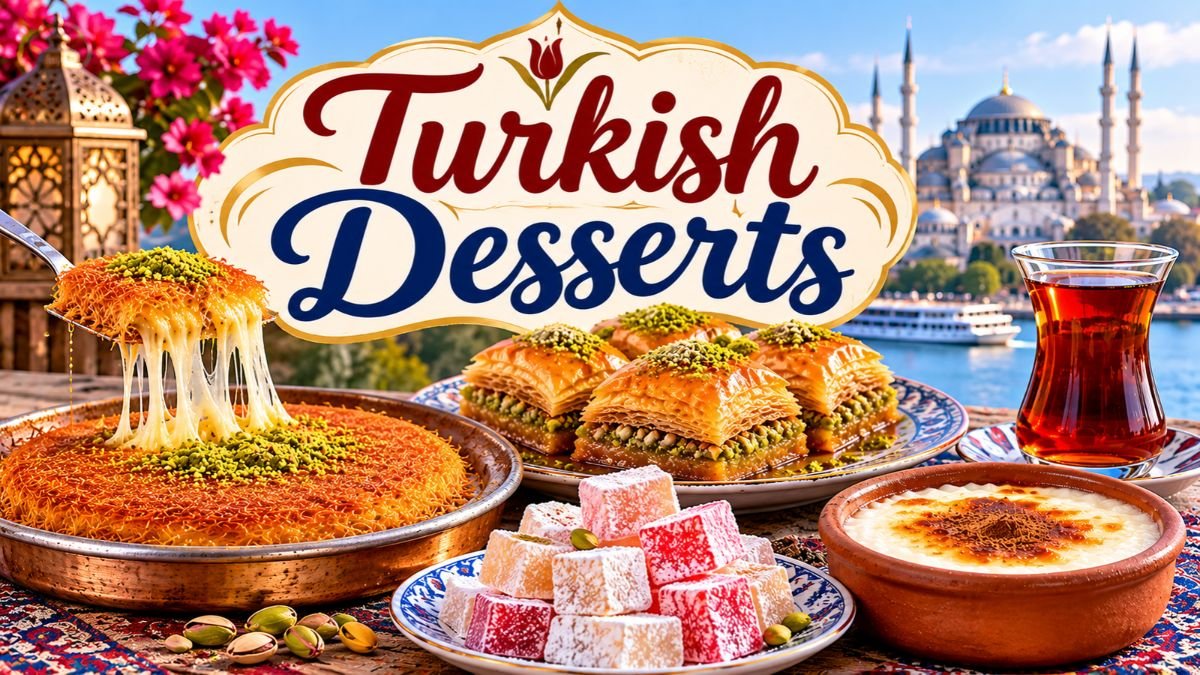
Ask anyone what they remember about Turkish food, and the answer often ends with something sweet. Turkish desserts come in every style. Some are crunchy, some are creamy, some are served hot, and one of them even has chicken in it.
This guide covers 15 Turkish desserts, what each one is made of and how people usually enjoy it.
You do not need to know any Turkish to follow it. You only need an appetite. Names like sütlaç and künefe may look hard at first, but each section explains them in plain words.
Quick answer: If you only try three, start with baklava, künefe and sütlaç. Baklava is crunchy and sweet, künefe is hot with stretchy cheese, and sütlaç is a soft rice pudding. A small glass of Turkish tea goes well with all three.
What Are the Main Types of Turkish Desserts?
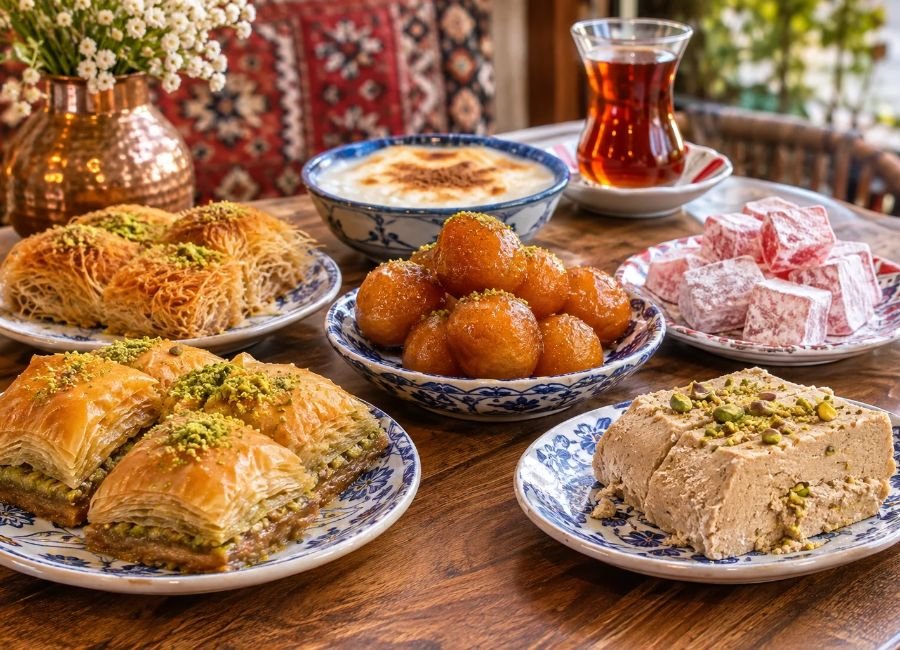
Most of them fit into a few simple families. Once you know them, any menu is easier to read.
- Syrup pastries and cakes: baklava, revani, şekerpare and the kadayıf family. Dough or cake soaked in sugar syrup.
- Fried dough: lokma and tulumba. Fried, then soaked in syrup.
- Milk puddings: sütlaç, kazandibi, tavuk göğsü and güllaç. Soft and gentle.
- Cheese desserts: künefe and höşmerim. Warm, stretchy and sweet.
- Candy and halva: Turkish delight and helva.
- Shared sweets: aşure, which families give to neighbors at a set time of year.
- Cold treats: Maraş dondurması, the famous Turkish ice cream.
Desserts are often served after a meal, at celebrations, or with tea or coffee. Many of these sweets are heavier and more common in the colder months. Autumn and winter are a good time to try them.
Where Do Turkish Desserts Come From?
Several of them are linked to Ottoman-era kitchens. Revani, the soft semolina cake, is a legacy of Ottoman cuisine.
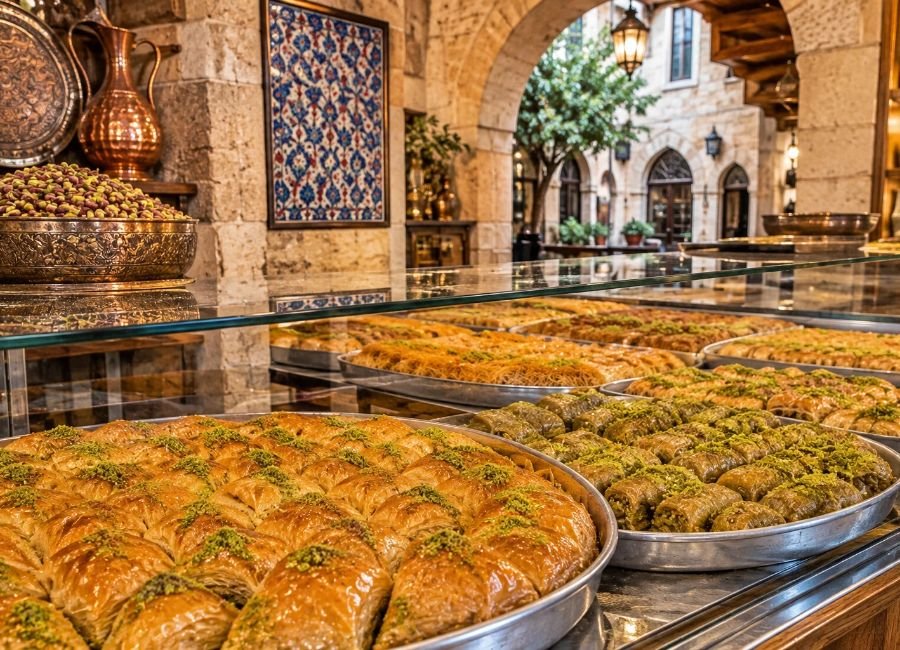
Baklava is harder to pin down, because its exact origin is debated. What is clear is that today the sweet is closely tied to Gaziantep in southeastern Turkey.
Other sweets belong to one place. Künefe comes from Antakya, and Maraş ice cream comes from Kahramanmaraş. That is why a dessert menu in Turkey can feel like a small map of the country.
1. Baklava: Crunchy Layers With Syrup
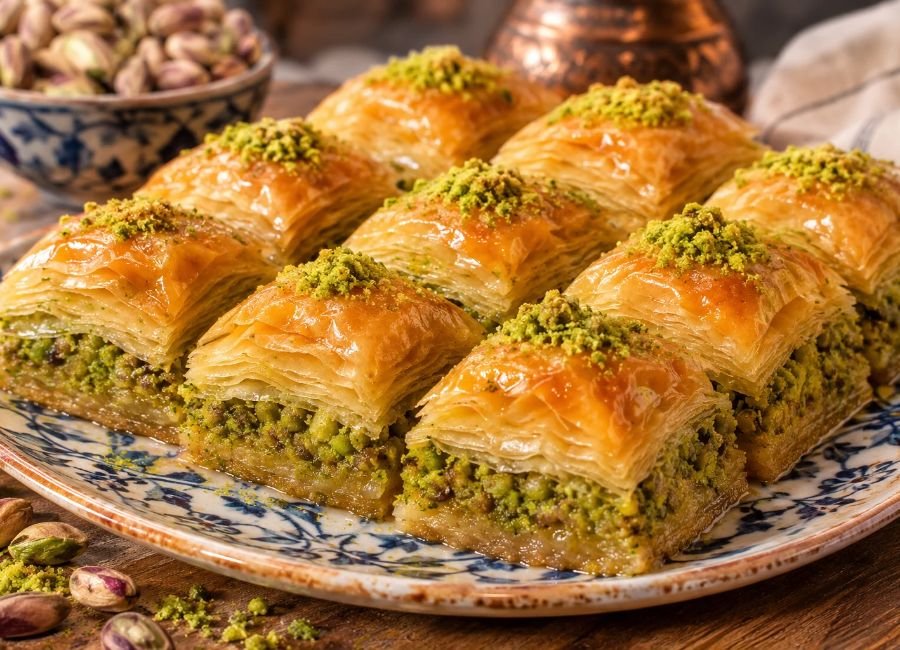
Picture thin layers of pastry, chopped nuts and shiny syrup. That is baklava.
It is made from filo dough filled with nuts, usually pistachio or walnut, then soaked in syrup or honey. The result is crunchy and sweet all the way through.
There are many types, with names like bülbül yuvası, sütlü nuriye, şöbiyet and dilber dudağı.
Gaziantep is the city most linked with baklava. Antep baklavası was the first Turkish product registered by the European Union as a geographical indication.
Genuine boxes carry an official logo. Check the box if you want the real thing.
2. Künefe: The Hot Turkish Dessert With Cheese
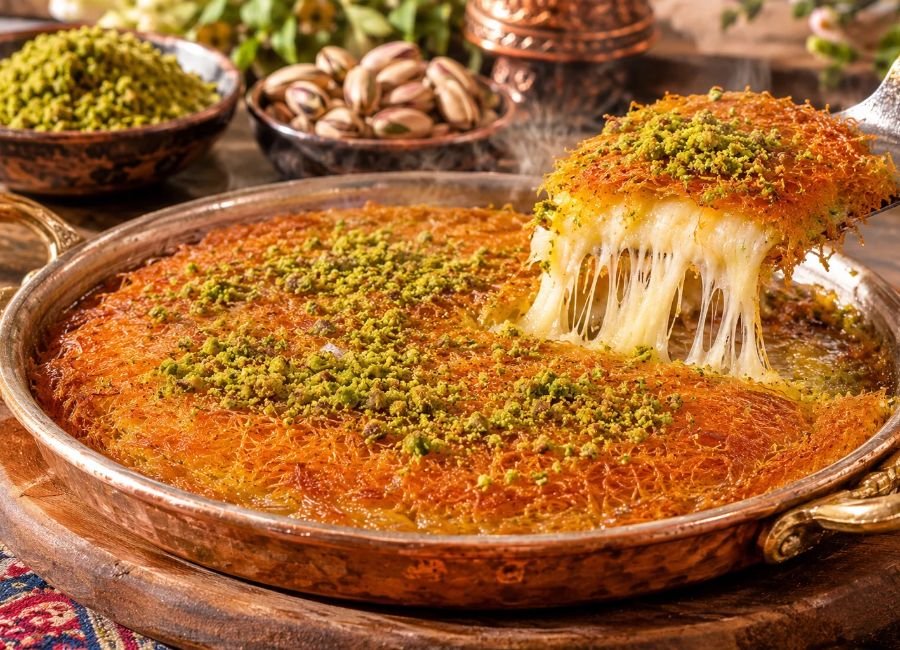
Here is a dessert that has to be eaten hot. Künefe is made from buttered, shredded pastry (tel kadayıf) wrapped around a layer of soft cheese, with sugar syrup poured over it. It is crispy outside and creamy inside, and the cheese stays stretchy while it is warm.
The dessert comes from Antakya in Hatay province. The European Union registered Antakya künefesi as a protected geographical indication in March 2023. The application came from the Antakya Chamber of Commerce and Industry.
The cheese is a special type made for künefe in Hatay. Eat it straight away, because künefe is at its best while it is hot.
Another cheese dessert is höşmerim, a cheese halva made from cheese, semolina and powdered sugar. It is often served with ice cream, honey or nuts, and it comes from the Marmara region, especially Balıkesir.
3. Turkish Delight (Lokum): The Famous Gift Sweet
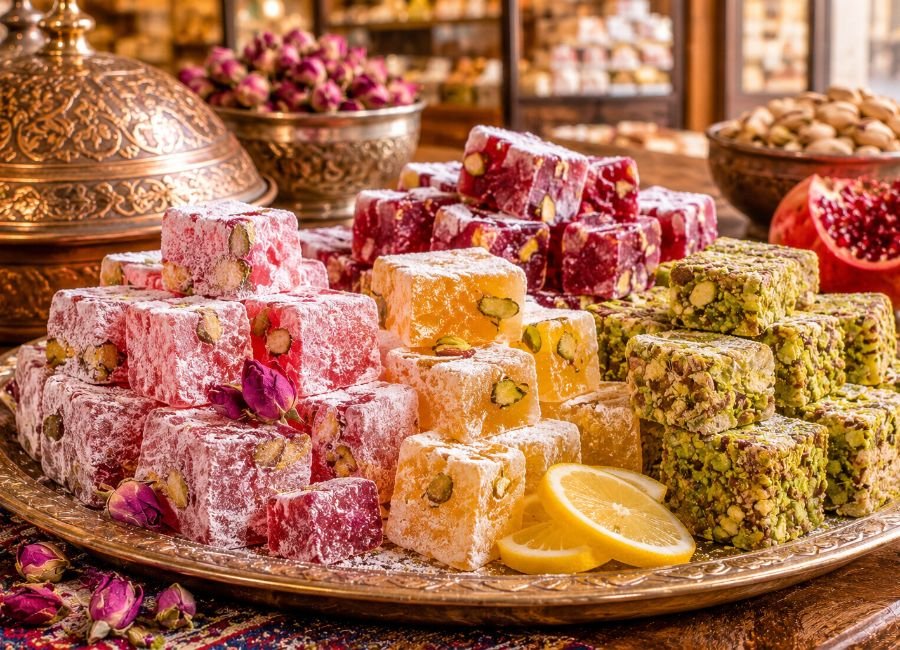
Turkish delight is probably the Turkish sweet most people know by name. Lokum is soft and chewy, usually dusted with powdered sugar. You will find it in flavors like rose, lemon, pomegranate and pistachio.
It is easy to carry, which makes it a popular gift.
One of the best-known names in lokum is Hacı Bekir. Its founder, Hacı Bekir Effendi, came to Istanbul from Araç in Kastamonu in 1777 and opened a small shop in Bahçekapı.
A popular story says an English customer called the sweets “Turkish Delight,” a name he made up himself. True or not, the name stuck in English.
4. Sütlaç: The Gentle Rice Pudding
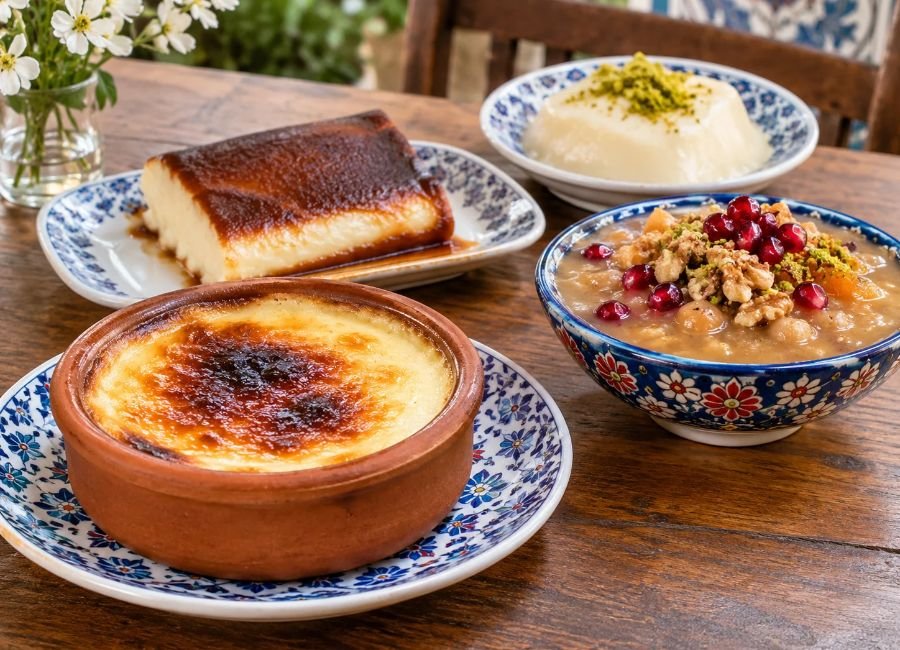
If you like rice pudding, this one is for you. Sütlaç is made with rice, milk, sugar and a little rice flour.
The baked version, fırın sütlaç, is cooked in a clay dish. Depending on the recipe, cinnamon, vanilla or raisins may be added.
It is lighter than the syrup-soaked sweets, so it is a good choice after a big meal. If baklava feels too sweet for you, sütlaç is a gentler place to start.
5. Kazandibi: The Pudding With a Burnt Top
Some desserts are meant to be burnt. Kazandibi is a caramelized milk pudding, and the top is burnt on purpose, so that layer turns dark and caramel-like. The name means “bottom of the cauldron,” which describes that layer well.
Some versions are made on a tavuk göğsü base (see the next dessert), so ask first if you avoid meat.
6. Tavuk Göğsü: The Turkish Pudding With Chicken
Yes, this one has chicken in it. Tavuk göğsü is a milk pudding made with very fine threads of chicken breast. During cooking, the chicken loses its smell and taste, and it gives the pudding a soft, stretchy texture.
It is usually sprinkled with cinnamon. If you avoid meat, remember that this dessert does contain chicken.
7. Aşure: Noah’s Pudding
Aşure comes with a custom attached to it. It is made from grains, beans, dried fruit, nuts and sugar. Depending on the recipe, it can include chickpeas, white beans, rice, wheat, dried fruit and pomegranate seeds, often topped with ground pistachios.
It is also called Noah’s Pudding and is seen as a symbol of abundance.
Aşure is not an everyday dessert. It is prepared at a special time in the Islamic calendar. Households often share it with their neighbors, especially in the month of Muharram.
8. Lokma: Fried Dough Balls in Syrup
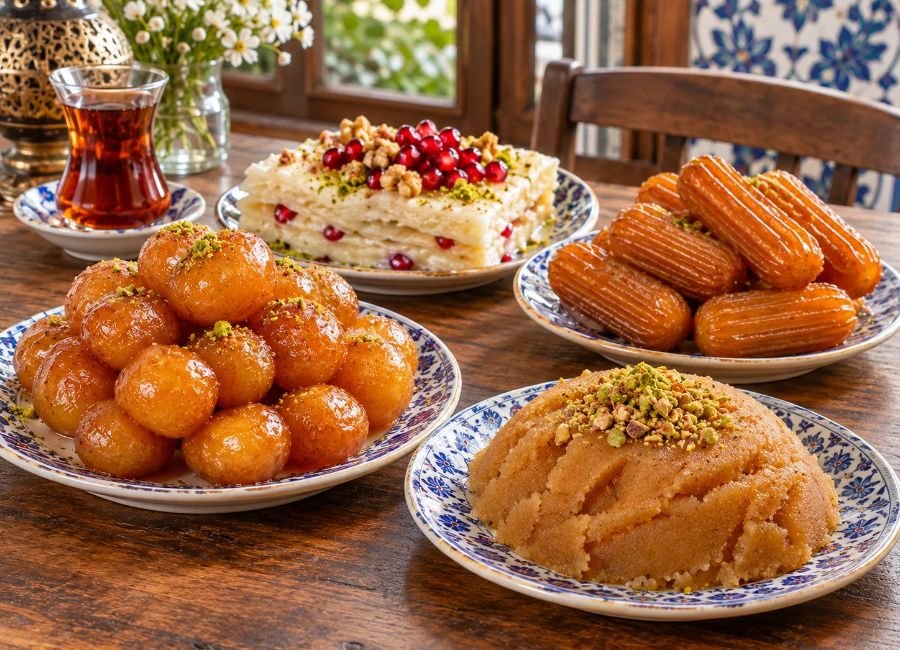
Fried dough soaked in syrup is an idea that many cuisines share, and lokma is the Turkish version. It is leavened dough, deep-fried and soaked in syrup.
Traditionally it has no toppings. It is common in Aegean cities such as İzmir and Ayvalık.
Lokma also has a place in Turkish tradition. It is made for “hayır” ceremonies that mark events such as engagements and memorial days.
It is often handed out for free. Those who eat it say a prayer.
9. Tulumba: The Street Dessert
Order tulumba when you see it coming out of the fryer. It is fried batter dough soaked in lemon-scented syrup. It looks a lot like lokma, and the main difference is the shape.
Tulumba is a street dessert, and it is best eaten fresh and hot.
10. Güllaç: The Ramadan Milk Dessert
Güllaç is the dessert most tied to Ramadan. It is made from very thin sheets of starch dough.
The sheets are soaked in milk and rose water, then topped with pomegranate and nuts such as walnuts. It feels like a mix of custard and baklava.
11. Helva: Semolina and Tahini Sweets
Helva has more than one version. İrmik helvası is made by cooking semolina in butter, milk and sugar with pine nuts, and it is served with cinnamon. Tahin helvası is made from tahini, flour and sugar, and is shaped into a block.
There is also a baked tahini helva with a soft, mousse-like texture, which is eaten with fresh white bread. Helva is also traditional at religious ceremonies and family meals.
12. Ekmek Kadayıfı: Bread Pudding With Cream
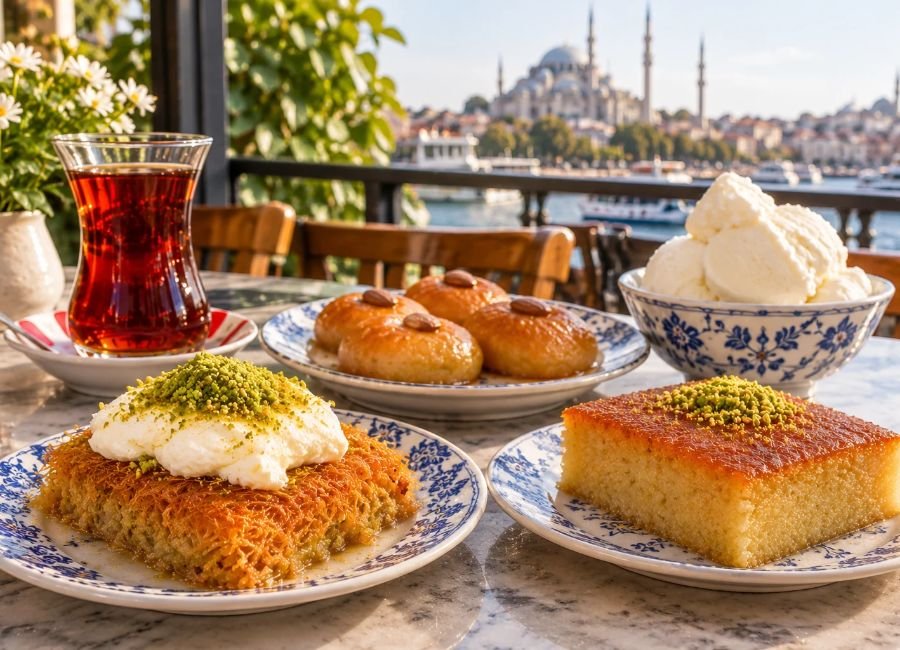
Bread, syrup and thick cream: that is the whole idea. Ekmek kadayıfı is a bread dessert that is baked, soaked in syrup and served with kaymak, a thick clotted cream. Some versions have a custard center or a topping of crushed pistachios, walnuts or hazelnuts.
You will also see kaymak on a Turkish breakfast table.
Ekmek kadayıfı belongs to the kadayıf family. The family also includes yassı kadayıf (a fried, crescent-shaped dough) and the tel kadayıf used in künefe. These sweets are doused in sugar syrup, just like baklava.
13. Revani: The Soft Semolina Cake
If you like lemon cake, you will like revani. It is a light semolina cake soaked in lemony syrup, often topped with shredded coconut or pistachios. If baklava feels too heavy, revani is a softer way to enjoy a syrup sweet.
14. Şekerpare: Almond Pastry in Lemon Syrup
Şekerpare is the one to try if you love almonds. It is a soft almond pastry soaked in lemon-flavored syrup. The lemon gives it a fresh taste, so it pairs well with a strong cup of Turkish coffee.
15. Maraş Dondurması: The Famous Turkish Ice Cream
Not every Turkish dessert is warm or syrupy. Maraş dondurması is a traditional ice cream from Kahramanmaraş.
It is known for ice cream sellers who joke with customers while they serve. The most traditional flavor is based on mastic, called damla sakızı.
It is the one cold treat on this list, and a fun way to end a day of sightseeing.
Turkish Desserts at a Glance
This table gives you a quick view of all 15 Turkish desserts.
| Dessert | What it is | Good to know |
| Baklava | Filo, nuts and syrup | Gaziantep is the best-known home |
| Künefe | Shredded pastry with cheese | Eat it hot |
| Lokum | Soft, chewy candy | Popular as a gift |
| Sütlaç | Rice pudding | Light after a meal |
| Kazandibi | Caramelized milk pudding | Some versions contain chicken |
| Tavuk göğsü | Milk pudding with chicken | Not vegetarian |
| Aşure | Grain and fruit pudding | Shared in Muharram |
| Lokma | Fried dough in syrup | Often given at ceremonies |
| Tulumba | Fried batter in syrup | Best fresh and hot |
| Güllaç | Milk and rose water dessert | Eaten in Ramadan |
| Helva | Semolina or tahini sweet | Served at ceremonies and meals |
| Ekmek kadayıfı | Bread dessert with kaymak | Served with thick cream |
| Revani | Semolina cake in syrup | Soft and lemony |
| Şekerpare | Almond pastry in syrup | Lemon flavor |
| Maraş dondurması | Traditional ice cream | Mastic flavor |
Which Turkish Dessert Should You Try First?
Not sure where to start? Match it to something you already like.
- You like rice pudding: sütlaç.
- You like lemon cake: revani.
- You like doughnuts: lokma or tulumba.
- You like caramelized sugar on top: kazandibi.
- You like nuts and crunch: baklava.
- You want something hot and cheesy: künefe.
- You want a gift to take home: lokum.
- You want something cold: Maraş dondurması.
If you are new to Turkish desserts, begin with the one you already know, then add one new dessert each time. My own advice is to try one syrup sweet and one milk pudding in the same sitting. That way you taste both sides of Turkish dessert culture without getting too full.
Turkish Desserts for Special Occasions
Many are tied to a moment in the year or in life. That is part of what makes them interesting.
Aşure is prepared at a special time in the Islamic calendar and shared with neighbors, especially in Muharram. Güllaç is mainly enjoyed during Ramadan. Lokma is handed out at hayır ceremonies, and helva is traditional at religious ceremonies and family meals.
These customs show that many Turkish sweets are made to be shared, not just eaten.
Easy Tips for Enjoying Turkish Desserts
A few simple habits make it easier to enjoy Turkish desserts without feeling overwhelmed.
- Share plates. Many sweets are rich, so ordering a few and sharing them lets you try more.
- Pair them with a hot drink. A small glass of tea or a cup of strong coffee balances the sugar. Our Turkish tea guide explains how tea is served, and our post on Turkish coffee covers the coffee side.
- Know the shop type. Milk puddings are often sold in muhallebici shops, which are pudding shops. Pastries like baklava and lokma are usually found in pastry or baklava shops.
- Eat künefe and tulumba hot. Do not wait for photos. Both are best while they are warm.
- Ask about nuts. Many Turkish desserts use pistachio, walnut or hazelnut. If you have a nut allergy, ask before you order.
- Check the ingredients. Many Turkish desserts are vegetarian, but milk, butter and eggs are common, and tavuk göğsü has chicken. If you follow a special diet, ask first.
- Check prices and hours. Prices and opening times change, so check the menu or the shop’s own information before you go.
- Try them in the cooler months. Rich desserts feel right on a chilly day. Our guide to Istanbul in December shows what the city is like in winter.
Simple Mistakes to Avoid When Ordering Sweets
Most problems are easy to avoid. These are the ones I would watch for.
- Ordering too many syrup sweets at once. Baklava, revani and tulumba are all sweet and heavy. Mix them with a milk pudding or a plain tea.
- Letting künefe go cold. Once the cheese sets, the dessert loses what makes it special.
- Buying “baklava” without checking the box. If you want Antep baklavası, look for the official logo.
- Assuming every pudding is vegetarian. Tavuk göğsü and some kazandibi contain chicken.
- Skipping the drink. A hot tea or coffee is part of the experience, not an extra.
If you are not sure what something is, point at it and ask what it is made of before you order.
Can You Make Turkish Desserts at Home?
Some are easier than others. Sütlaç and revani use simple ingredients like rice, milk, sugar and semolina, so they are a good place to start.
Baklava and künefe take more skill. Baklava needs thin dough and careful layering, and künefe needs the right pastry and cheese. Many people buy these two from a good bakery instead.
Where to Find Turkish Desserts Near You
You do not have to fly to Turkey to try Turkish desserts. Many of them are sold in Middle Eastern and Mediterranean restaurants and bakeries outside Turkey.
Look for a Turkish bakery in your city. Check the menu for the names in this guide, and ask what is made fresh that day.
Baklava is usually the easiest to find. Künefe is best hot, so eat it at the shop.
If you are planning the trip itself, our first-time visitor guide to Istanbul covers flights and first-day tips.
Where to Try Turkish Desserts on Your Trip
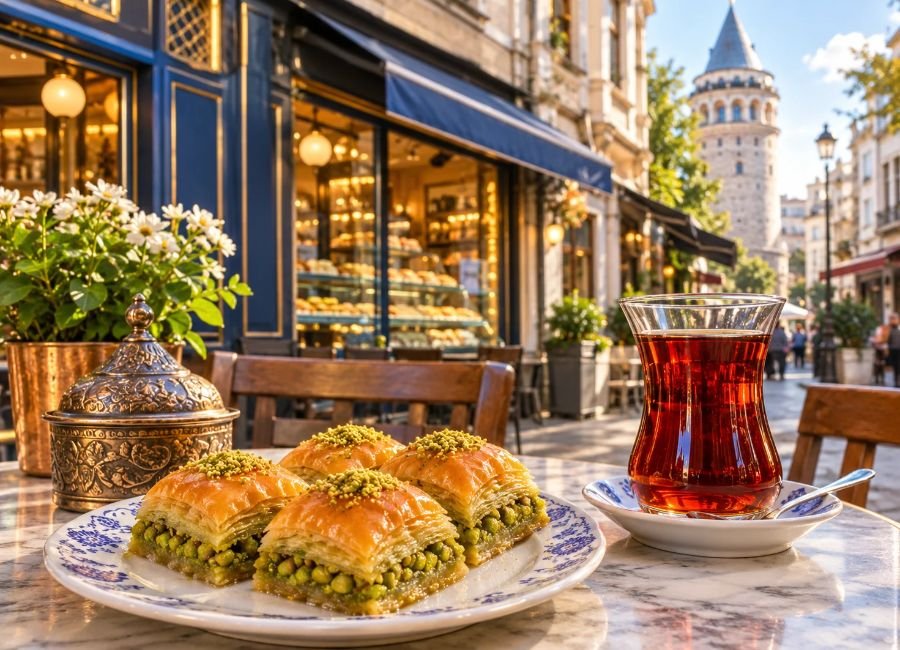
Istanbul has plenty of pastry and pudding shops, and they fit easily between sights. Our guide to things to do in Istanbul can help you plan the day around a sweet stop.
If you are building a bigger food trip, Gaziantep is the name to know for baklava. Antakya in Hatay is the home of künefe. Check current travel and local conditions before you plan a stop in Hatay.
Our 7-day Turkey itinerary is a good base for adding food stops. Our guide to famous Turkish dishes covers the savory side of the table.
Conclusion
Turkish desserts are easy to love. There is a crunchy one, a creamy one, a hot one and a cold one. Each has its own place on the table.
Start with baklava, add one pudding and one hot künefe. You will taste a big part of the sweet side of Turkey. Order a small plate, take your time and enjoy it with a glass of tea.
Save this list of Turkish desserts on your phone and tick them off one by one. By the end, you will have your own favorite.
FAQs
What is the most popular Turkish dessert?
Baklava is the best known, and Turkish delight and künefe are close behind.
What is the Turkish dessert with cheese called?
Künefe is the best-known one. It is made from shredded pastry and cheese, soaked in syrup, and served hot. Höşmerim is a cheese halva that is often served with ice cream, honey or nuts.
What is the Turkish dessert with chicken called?
It is called tavuk göğsü, a milk pudding made with finely shredded chicken breast. Some kazandibi is made on the same base, so ask before you order.
Where can I buy Turkish desserts near me?
Look for Turkish, Middle Eastern or Mediterranean bakeries and restaurants in your city. Baklava is the most common, and some places also sell lokum or künefe. Check the menu or ask what is available.
Are Turkish desserts very sweet?
Many are, especially the syrup pastries. Milk puddings like sütlaç are lighter. A small portion with tea or coffee helps balance the sweetness.